Visiting The Lake District Without A Car: Where To Stay, Buses, Ferries + More
Having a car in the Lake District does make life easier. There’s no point lying about it. Some trailheads are remote, buses don’t run everywhere, and services don’t run so much in the evening. But visiting the Lake District without a car is absolutely doable.
I’ve visited the Lakes without a car several times. As long as you choose the right base, and visit at the right time of year, it’s completely possible to have a fantastic time and not feel limited. Many of the area’s most popular and rewarding walks are accessible on foot, by bus, or even by boat.
It’s also worth knowing that Alfred Wainwright (the legendary fellwalker) didn’t drive. He explored huge parts of the Lake District using buses and trains, which probably explains why so many of his classic walks still connect so well with public transport today.
In this guide, I’ll walk through the realistic ways of getting around the Lake District without a car, where to stay to make things easier, and which walks/activities are most accessible via public transport. I won’t pretend the Lake District is perfectly car-free friendly, but I will show you that it’s manageable and enjoyable with a bit of planning.
Is the Lake District doable without a car?
Short answer: yes, but you’ll need to stay in the right place.
Obviously, having a car gives you a lot more flexibility for exploring, but the Lake District is still very manageable without one if you choose a good base. I recommend Keswick, Ambleside, Grasmere, or Windermere & Bowness.
I go into these places in detail further down, to help you choose the right one for you. But if you stay in any of these areas, you can get around by bus, boat, and on foot surprisingly easily. You won’t be able to reach every remote valley, but you’ll still be able to see a lot during your visit.
Many of the classic walks start directly from these towns, and the bus network is designed with walkers in mind, passing through places like Borrowdale, Rydal, and Buttermere. In peak season, services are frequent and full of walkers doing exactly the same thing as you.
It does take a bit more planning, but you absolutely don’t need a car to enjoy the Lakes. In fact, I would argue that parking can sometimes be a bit of a faff anyway.

⚠️ If you do plan to visit the Lakes without a car, you’ll want to visit during May – October. Outside of these months, bus services decline, so getting around without a car becomes much harder.
Getting to the Lake District without a car
By train
Travelling by train is the most straightforward option for most people.
The main gateway stations for the Lake District are Oxenholme and Penrith, both of which sit on the West Coast Main Line. From here, you can connect onwards by bus, or in Oxenholme’s case, by branch line.
If you want to arrive directly into the Lakes, the branch line from Oxenholme runs straight to Windermere. It’s a slow but scenic journey, and very convenient if you’re planning to base yourself in Windermere, Bowness, or Ambleside.
Penrith works well if you’re heading for the northern Lakes, particularly Keswick, which doesn’t have its own train station but is easily reached by bus from Penrith.
Booking in advance is essential to get decent fares. I use Trainline to book train tickets.

By coach
Long-distance coaches can be a cheaper alternative, particularly if you’re travelling from further afield. Services usually run to Penrith or Kendal, where you can then connect by local bus.
They’re slower and less flexible than trains, but perfectly workable if you’re not in a rush and want to keep costs down. I’ve used National Express before to get to Penrith from London, and while it did take a gruelling 8.5 hours, it only cost me £13.70.
Where to stay in the Lake District without a car
If you don’t have a car, you’ll want to base yourself somewhere with good bus connections, a walkable centre, and direct access to footpaths. Here are some good options.
Keswick
If you’re a keen hiker visiting the Lake District without a car for the first time, Keswick is, in my opinion, the best option. I could be biased, but I personally think the hiking around Keswick is the best in the national park. You can easily hit iconic fells like Catbells, Skiddaw, Blencathra, and Helvellyn from here.
It’s also compact, lively, and very geared towards hikers, with plenty of outdoor shops, accommodation, pubs, and places to eat.
Keswick is the main bus hub for the northern Lakes, with regular services into Borrowdale, Buttermere, Grasmere, and beyond. You can also walk straight out of town onto routes like Catbells, Walla Crag, Skiddaw, and Latrigg, which makes it ideal if you don’t want to rely on buses completely.
Keswick is the place I stay most often when visiting the Lakes. When visiting without a car, I usually take the train from London to Penrith, then jump on the X4 bus to Keswick.

Ambleside
Ambleside sits in the central-southern Lakes, which makes it very practical for getting around.
Bus connections are excellent, with regular services to Windermere, Grasmere, Keswick, Coniston, Great Langdale, and Hawkshead. If you want to explore different areas of the national park each day, Ambleside is perfect for that.
There are also plenty of walks accessible straight from town. Loughrigg Fell is one of my favourites, but you can also head to Stock Ghyll Force, Rydal Water, Wansfell Pike, or longer routes like the Fairfield Horseshoe.
Ambleside itself is a little busier and more built up than Keswick, but it has loads of useful amenities: supermarkets, gear shops, cafes, pubs, restaurants, and accommodation across most budgets. If you want convenience, Ambleside delivers.

Grasmere
Grasmere is smaller and less busy than Keswick or Ambleside, so it suits people who want a more low-key place to stay. It sits neatly between Ambleside and Keswick on the main bus corridor, so getting around is still straightforward.
From the village centre, you can walk directly onto routes like Helm Crag, Easedale Tarn, Alcock Tarn, Silver How, and longer hikes towards Fairfield.
Grasmere itself is lovely, with stone cottages, independent shops, cafes, and plenty of places to eat. It feels more relaxed than Ambleside, especially in the evenings, though it can still get busy during peak season because everyone else has also noticed how lovely it is.
Because it’s a relatively small village, you’ll have fewer accommodation options, fewer amenities, and less nightlife than the other towns I’ve suggested. But if you’re happy with that, Grasmere is a wonderful base.

Windermere & Bowness
Windermere is probably the easiest place in the Lake District to reach by public transport, due to the fact that it has its own railway station. That alone makes it one of the most convenient choices for a car-free trip, especially for shorter breaks.
Windermere and neighbouring Bowness are noticeably more built-up and tourist-oriented than the other bases I’ve suggested. They attract plenty of day-trippers and first-time visitors, so the atmosphere feels busier and less outdoorsy than some of the other Lake District towns.
That said, there are clear upsides to that popularity. You’ll find a huge choice of hotels, guesthouses, restaurants, pubs, cafes, shops, and rainy-day attractions, which makes it a very easy place to stay. This definitely suits many people. I think it would be ideal if you’re less into hiking, but still want to see the beauty of the Lakes.
Bus links are strong, with regular services to Ambleside, Grasmere, Coniston, and other parts of the central Lakes, so you can get around without much hassle.

Getting around by bus
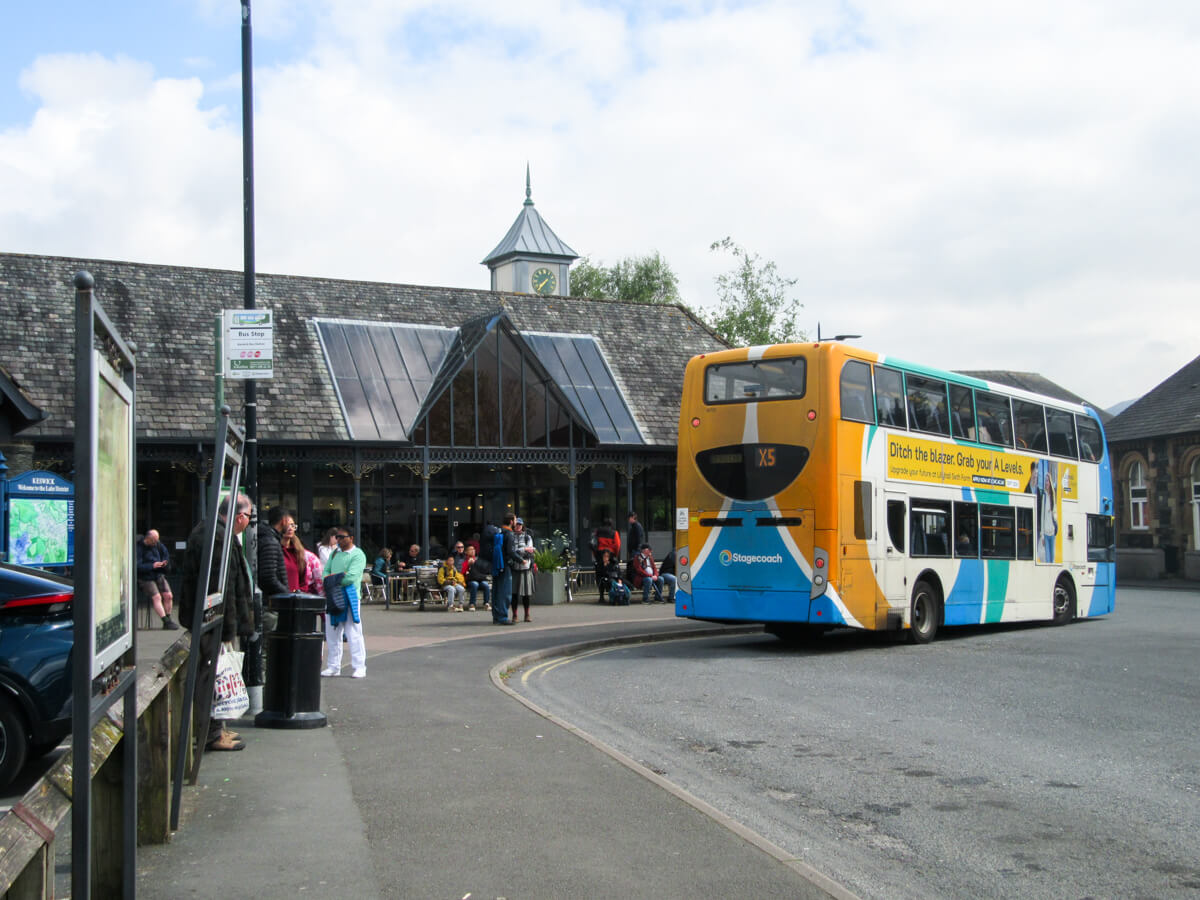
If you’re travelling around the Lake District without a car, buses will likely be your main way of getting around. They’re not perfect, and they won’t take you absolutely everywhere, but I think they’re really well set up.
The Lake District’s bus network is designed around villages, valleys, and popular walking areas rather than quick point-to-point travel. This makes it particularly well-suited to hikers and tourists, especially if you’re staying somewhere with good connections, like any of the four towns I recommended above.
In peak season, particularly from spring through early autumn, services on the main routes are frequent and reliable. Outside of that, buses still run, but with reduced timetables.

Planning your day around buses
A few things to think about:
- Always check the last bus back, not just the outward one
- Avoid finishing walks too late unless you’re walking back to your base
- Build in a bit of buffer time so you’re not rushing off a summit
It’s also worth keeping in mind that buses leaving Buttermere and Grasmere later in the day can get very busy, as lots of walkers will be heading back after finishing their hikes. Most people will be going all the way to Keswick, so seats often don’t free up once the bus gets going. If you’re near the back of the queue at the bus stop, you might end up standing for much of the journey, which is not much fun after a long walk. I recommend getting to the bus stop a little early. Buttermere and Grasmere are the only places where I’ve had this issue; other routes have been fine.

Tickets and paying
Most buses in the Lake District accept contactless payment, and there are also day and multi-day tickets that can work out cheaper if you’re using buses every day. I use the Stagecoach app to purchase multi-day tickets — you just show the driver your QR code and walk on.
Drivers are used to visitors and are generally happy to tell you where to get off if you’re unsure.
Fares are currently capped at £3, so you’ll never pay more than this for a single journey. You can buy your ticket on board, or you can purchase online in advance. Given that many of the National Trust car parks cost about £7, you’re saving a decent amount.

Useful bus routes to know
Here are a few useful bus routes to know, although there are more:
Stagecoach 555: Lancaster – Kendal – Windermere – Ambleside – Grasmere – Keswick.
Stagecoach 599: Kendal – Windermere – Bowness – Ambleside – Grasmere.
Ullswater Bus 509: Keswick – Aira Force – Glenridding – Patterdale – Pooley Bridge – Lowther – Penrith.
Stagecoach 6: Barrow – Dalton – Ulverston – Newby Bridge – Bowness-on-Windermere – Windermere.
Stagecoach 508: Penrith – Aira Force – Glenridding – Patterdale.
Stagecoach 77: Keswick – Catbells – Seatoller – Honister – Buttermere – Cockermouth.
🚌 Check out the Lake District buses timetable here.

Getting around by ferry
The good thing about the Lake District is that, unsurprisingly, there are lots of lakes. This means there are also plenty of ferries that can be used to get around. The ferries are very walker-friendly, often taking you to starting points for trails. It’s also just a lovely way to start or finish a walk.
Keep in mind that the ferries are seasonal, usually running from spring to autumn only. They can also get quite busy in the summer, so you’ll want to allow some flexibility. You can buy a ticket on the ferry once you board.
Derwentwater Ferries (Keswick)
If you’re staying in Keswick, the launches on Derwentwater are incredibly useful.
The boats, run by Derwentwater Launch, operate as a hop-on, hop-off service around the lake, stopping at places like Hawse End, Nichol End, and Lodore.
For walkers, this is particularly handy for:
- Catbells, where you can ferry across the lake rather than walking or busing around it
- Borrowdale-based walks that finish away from Keswick
- Heading back to Keswick via ferry if walking around Derwentwater itself

Ullswater Steamers
If you’re based near Penrith or visiting the eastern Lakes, the boats on Ullswater are worth knowing about.
The historic steamers, run by Ullswater Steamers, connect Glenridding, Pooley Bridge, and Howtown, making it easy to combine lake travel with walking.
This works particularly well for linear routes, where you walk along part of the lake and take the boat back, or vice versa.
Windermere Ferries
On Windermere, ferries are more about moving between towns and trailheads than quick crossings.
Services run by Windermere Lake Cruises connect places like Bowness, Ambleside, and Lakeside, and they can be used to:
- Link lakeside walks together
- Shorten longer routes
- Avoid backtracking along busy roads
They’re especially useful if you’re staying in Windermere or Bowness and want a more scenic way to reach somewhere like Ambleside.

Best Lake District walks accessible by Foot or public transport
One of the best things about visiting the Lake District without a car is that many classic walks are surprisingly easy to reach by bus, boat, or simply on foot from town centres.
Walks from Keswick
If you’re staying in Keswick, there are several excellent walks you can start straight from town without needing any transport at all:
- Skiddaw
- Latrigg
- Derwentwater Circular
- Walla Crag
- Castlerigg Stone Circle
This is one of the reasons I think Keswick works so well as a base for a car-free trip.

Walks from Ambleside
Ambleside is another great base without a car, especially if you want a mix of hiking, cafes, pubs, and easier sightseeing.
You can walk directly from town to places including:
- Loughrigg Fell
- Stock Ghyll Force
- Wansfell Pike
- Rydal Water
- Fairfield Horseshoe
There are also buses from Ambleside to Great Langdale, where you can access walks like Lingmoor Fell and the Langdale Pikes.

Walks from Grasmere
Grasmere works particularly well for gentler and mid-range hikes.
Good options directly from the village include:
- Helm Crag
- Easedale Tarn
- Alcock Tarn
- Silver How
- Fairfield
Because Grasmere sits on the main bus corridor between Keswick and Ambleside, it’s also easy to combine with other areas.

Walks from Windermere & Bowness
Windermere and Bowness are less hiking-focused than Keswick, but there are still some nice walks accessible without a car.
These include:
- Orrest Head
- School Knott
- Claife Heights
- Lakeside walks along Windermere
The ferries on Windermere also make it easy to combine walking with boat travel, which is a really enjoyable way to explore the area.

Walks accessible via the 77 / 77A buses
The 77 and 77A buses are incredibly useful for hikers. They connect Keswick with Borrowdale, Honister, Buttermere, and Cockermouth, passing several fantastic trailheads along the way.
You can use them for walks including:
- Catbells (get off at Hawse End)
- Haystacks
- Fleetwith Pike
- Buttermere Circular
- Rannerdale Knotts
- Forest walks from Whinlatter Visitor Centre
Honestly, the bus journey itself is part of the experience. The route through Borrowdale and over Honister Pass is beautiful.

Walks accessible via the 555 bus
The 555 runs between Keswick and Windermere, stopping at places including Thirlmere, Grasmere, Rydal, Ambleside, and Windermere.
Walks accessible from the 555 include:
- Helvellyn from Swirls
- Rydal Cave
- Loughrigg Fell
- Helm Crag
- Easedale Tarn
- Walks around Grasmere and Rydal Water
The 555 is also excellent for general exploring. Keswick, Grasmere, Ambleside, and Windermere are all nice places to spend a day simply wandering around.

Walks accessible via the X5 bus
The X5 bus runs through Threlkeld, making it useful for accessing:
- Blencathra via Blease Fell
- The Keswick to Threlkeld Railway Trail

Walks accessible via the 78 Borrowdale Bus
The 78, also known as the Borrowdale Bus, runs from Keswick to Seatoller through one of the most scenic valleys in the national park.
It’s useful for getting to:
- Walla Crag
- Castle Crag
- Scafell Pike via the Corridor Route
- Rosthwaite to Watendlath
- Longer Borrowdale Valley walks
What I got up to on my last car-free visit
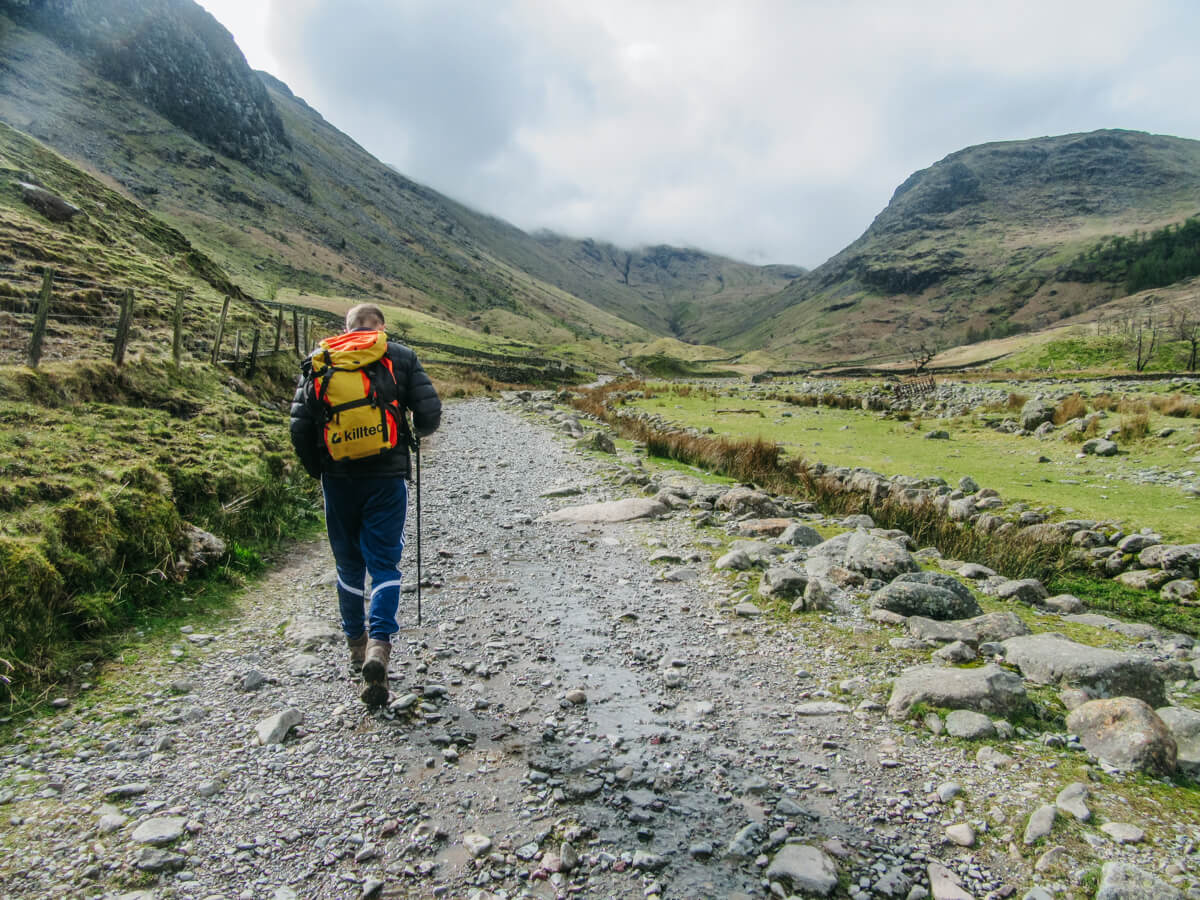
I last visited the Lake District without a car in early May 2026. I stayed in an apartment in Keswick, and spent eight days doing plenty of hiking, as well as some general exploring. Everywhere I went was accessible by foot, boat, or bus:
Catbells: I took the 77 bus to Hawse End, which is right at the starting point for Catbells. I climbed Catbells, then continued on the ridge to climb Maiden Moor and High Spy as well.
Helvellyn: I climbed Helvellyn from Swirls, which was 20 minutes on the 555 bus.
Ambleside: I took the 555 bus down to Ambleside, which took about 45 minutes. Explored the town, visited some nice cafes, and took a little walk to Stock Ghyll Force.
Blencathra: I climbed Blencathra from the town of Threlkeld, which was just 15 minutes on the X5 bus.
Loop of Derwentwater: I walked around the entirety of Derwentwater, starting from Keswick’s town centre.
Haystacks: I walked along Buttermere Lake and then up to Haystacks. The 77 and 77A buses run between Keswick and Buttermere, and take about 50 minutes. It’s a very scenic bus ride.
Keswick: Mooched around Keswick’s market and shops, had a nice lunch, and met my father for dinner, who was also in town.
Rannerdale Knotts: I climbed Rannerdale Knotts from Crummock Water, which was about 45 minutes on the 77A bus.

Hitchhiking in the Lake District
I’ve deliberately put this section near the bottom of the post. While hitchhiking can be a way to get around, it isn’t something I fully recommend. The Lake District is generally very safe, but as a woman who often travels on her own, I’m not someone who advocates hitchhiking as a go-to option.
That said, in my experience, hikers tend to be sympathetic to other hikers. They know what it feels like to finish a walk utterly exhausted, and there’s an unspoken understanding that if you’re standing by the side of the road in hiking boots with a backpack on, you probably just want to get back to where you’re staying.
I’ve hitchhiked in the Lake District a couple of times myself, but never on my own. I’ve always been with my dad and/or my brother.
One example was after finishing the Corridor Route to Scafell Pike with my brother. We were exhausted, and the bus stop back towards our campsite in Manesty was a fair walk away. In that moment, we decided to hitchhike instead. We were picked up by the third car that passed us, and they happily dropped us right by our campsite. It really can be that straightforward.
That said, I’d always treat hitchhiking as a backup option rather than a strategy. I’d only ever consider it in daylight, in busy areas, and in situations where it genuinely feels safe. If it doesn’t feel right, trust your gut and don’t get in the car.

Downsides of visiting the Lake District without a car
Hopefully, I’ve proven to you that you can have a fantastic car-free Lake District trip. However, I do also want to be realistic about the downsides.
One of the main issues is that buses don’t run particularly late, especially outside peak season. If you finish a hike later than expected, decide to stop at a pub afterwards, or want to go out somewhere further for the evening, your options can become quite limited.
Some of the more remote areas of the Lake District are also much harder to reach without a car. Places like Wasdale, Ennerdale, and parts of the western Lakes either have very limited public transport or none at all. You can still access huge parts of the national park without driving, but you won’t have complete freedom to go absolutely everywhere.
The weather can also cause some annoyances. Waiting half an hour at a bus stop in sideways rain after a long hike is a real character-building experience.
There are also some trailheads that are kind of awkward to reach by public transport. In some cases, you may need to combine buses with a longer walk along the road at the start or end of a hike. (The Scafell Pike Corridor Route is one such example, where you need to walk about 25 minutes down the road from Seatoller to reach the start).
So while you do need to plan a little more carefully when relying on public transport, the trade-off is that you still get to experience what is, in my opinion, the most beautiful part of the UK.
More Lake District inspiration

PLANNING
Where To Stay In The Lake District
Compare Keswick, Ambleside, Grasmere, Borrowdale, and more.
PLANNING
Best Time To Visit The Lake District
Weather, wildlife, crowds, and seasonal quirks throughout the year.

WALKS
A short but punchy fell that has earned its place as a classic Lake District walk.
- Check out my roundup of the very best walks in the Lake District.
- Trying to decide where to stay? Here’s my guide on choosing where to base yourself in the Lakes.
- Discover the best time of year to visit the Lake District.
- Try my four-day Northern Lakes itinerary, based in Keswick.
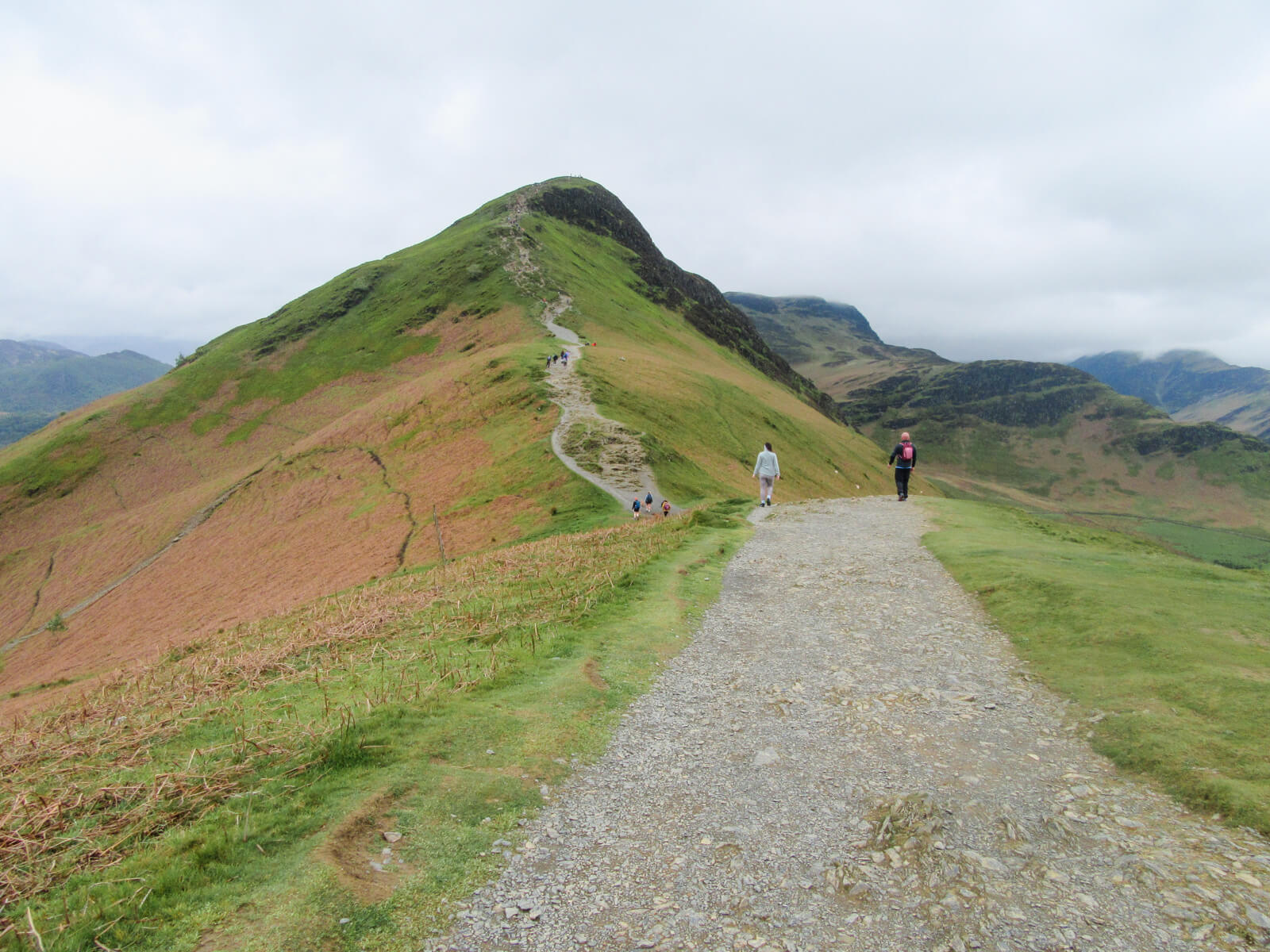
- My guide for hiking Catbells.
⛰️ Want even more? Visit my Lake District Hub to browse all my walking guides and planning tips.
Thank you for reading! If you found this post useful, I’d be grateful if you would consider using the affiliate links below when planning your travels. I’ll make a small commission at no extra cost to you. This will help me to keep this blog running. Thanks for your support — Lauren.
Accommodation – Booking.com
Flights – Booking.com
Travel insurance – World Nomads
Excursions & tours – Viator
Outdoor gear – Decathlon
eSIMs – Airalo
Alternatively, you could buy me a coffee to say thanks!


About The Author
Lauren Pears is a freelance travel writer and blogger who writes about active adventure travel. She’s been blogging for almost 10 years, and has written for publications such as Lonely Planet, World Nomads, and Southeast Asia Backpacker.