
Cycling Anuradhapura: Exploring The Ancient City By Bike

Nestled in the northern plains of Sri Lanka’s Cultural Triangle, the sacred city of Anuradhapura is one of the country’s most treasured archaeological marvels. As the first capital of ancient Sri Lanka, it’s home to soaring dagobas, crumbling monasteries, and age-old banyan trees — including the revered Sri Maha Bodhi, said to be the oldest living tree planted by human hands.
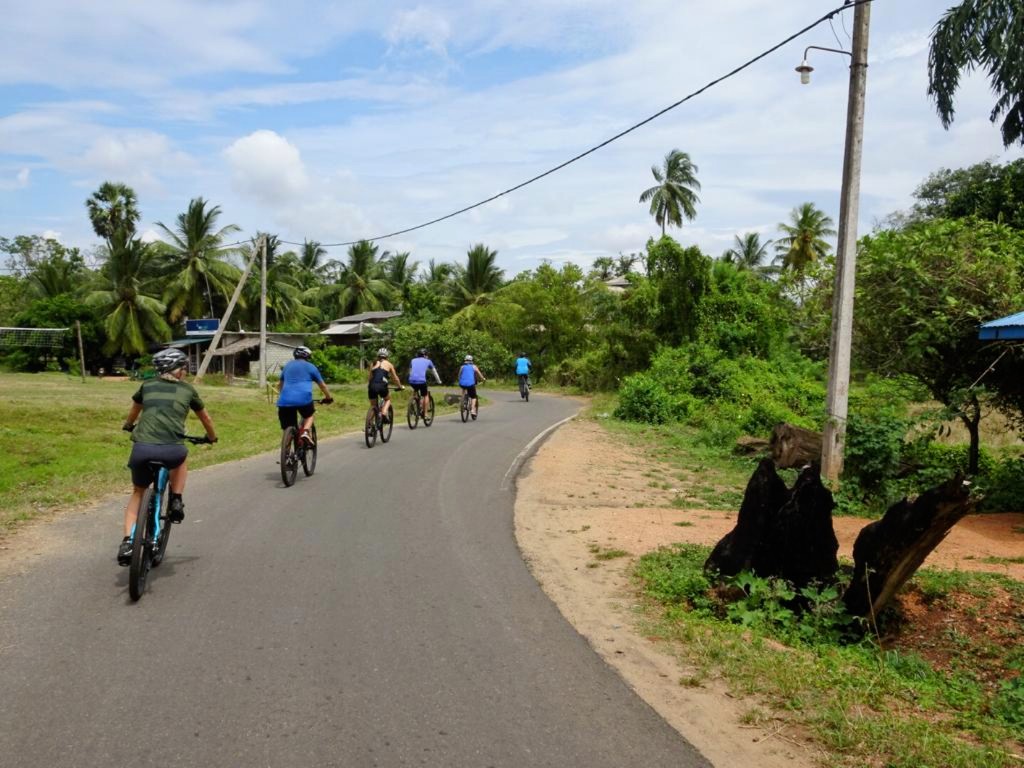
Anuradhapura’s ancient city is now a sprawling UNESCO World Heritage Site dotted with historical landmarks and ruins. The archaeological zone covers a large area, with key sites spread out over several kilometres — far too vast to comfortably explore on foot. While many opt for tuk-tuks or guided tours, I think cycling is the best way to explore it.
The roads around Anuradhapura are flat, quiet, and often flanked by lush greenery, making for a peaceful and enjoyable ride — especially in the early morning or late afternoon when the heat isn’t so harsh. Cycling gives you the freedom to move at your own pace, stop at less-visited ruins, and take detours that you might otherwise miss. It also feels much more immersive than zipping between sites in a tuk-tuk.
In this blog post, I’ll share my cycling route for Anuradhapura, featuring the highlights and must-see ruins of the ancient city. This includes a map, practical tips, and information on where you can hire a bicycle.

Where to hire bikes in Anuradhapura
Most guesthouses and hotels in Anuradhapura can arrange bicycle hire for you. Just ask at reception. It should cost around 10 USD per day.
Alternatively, there is a bicycle hire place called Sun Cycles a few minutes’ ride from the start of the route I’ve detailed below. They also offer bicycle tours from here, if you decide you’d prefer to explore Anuradhapura on a guided cycle tour. Bikes Rental 4 U is another option for renting a bike.

Anuradhapura cycling route and itinerary
Anuradhapura’s ancient city is vast, but many of the key ruins and temples are conveniently grouped into clusters. This cycling itinerary is designed around three clusters to help you see the main highlights in a logical order. At each cluster, you’ll find multiple sites within walking distance of each other, so you can park your bike and explore the area on foot at your own pace.
This route covers 10.3 km in total, which equates to about 45 minutes to an hour of actual cycling. That said, you’ll want to allow 3–4 hours to explore the monuments and sites themselves, so plan for a total tour time of around 4–5 hours.
I’ve created a map below to help you navigate your way. A suggested bike rental location is marked in red, and the temples are coloured dark blue. I’ve also pinned car park locations (the red stars) where you can leave your bike to explore the nearby ruins on foot.
🚲 Cluster One: Jetavanarama Complex
Start your Anuradhapura bike tour at the Jetavanarama Complex. This area is home to the Jethawanaramaya stupa, which was once among the tallest structures in the ancient world. It’s also where you’ll find a ticket office (although there are many ticket kiosks dotted around the sacred city) and museum, making it the logical place to begin your day.
🛕 Jetavanarama Museum
Your first stop is the Jetavanarama Museum, where you can purchase an entry ticket for access to Anuradhapura’s ancient sites. Tickets cost 9,030 LKR (around 30 USD) per person and grant entry to all the ruins mentioned in this itinerary. If you’re a citizen of a SAARC country (such as India, Nepal, or Bangladesh), you’re eligible for a 50% discount — just remember to bring a valid ID. Once you’ve got your ticket in hand, you’re ready to explore!
The Jetavanarama Museum is quite small but is worth 15-20 minutes of your time. It showcases artefacts discovered during excavations of the complex — stone carvings, tools, pottery, and even inscriptions. It’s a great place to begin your time in the ancient city, as it provides some context for the sites you’re about to see.
🛕 Jethawanaramaya Stupa
From the museum, it’s a very short cycle to the Jethawanaramaya stupa. Once believed to be the third-tallest structure in the ancient world, this brick stupa is absolutely massive. Built in the 3rd century AD, it still exudes a sense of grandeur and power. While the top is partially ruined, the base remains awe-inspiring in scale.
🚲 Cluster Two: Abhayagiri Monastery Complex
Now, it’s time to hop on your bike and cycle around 20 minutes to reach the next cluster of ruins: the Abhayagiri Monastery Complex. You can park your bike at the Moonstone Car Park, and then head into the complex on foot.
This huge archaeological zone once hosted thousands of monks and scholars, forming one of the most important monastic centres in ancient Anuradhapura. There are plenty of things to explore here — the complex is full of forest paths that lead to hidden ruins — but here are a few of my suggestions:
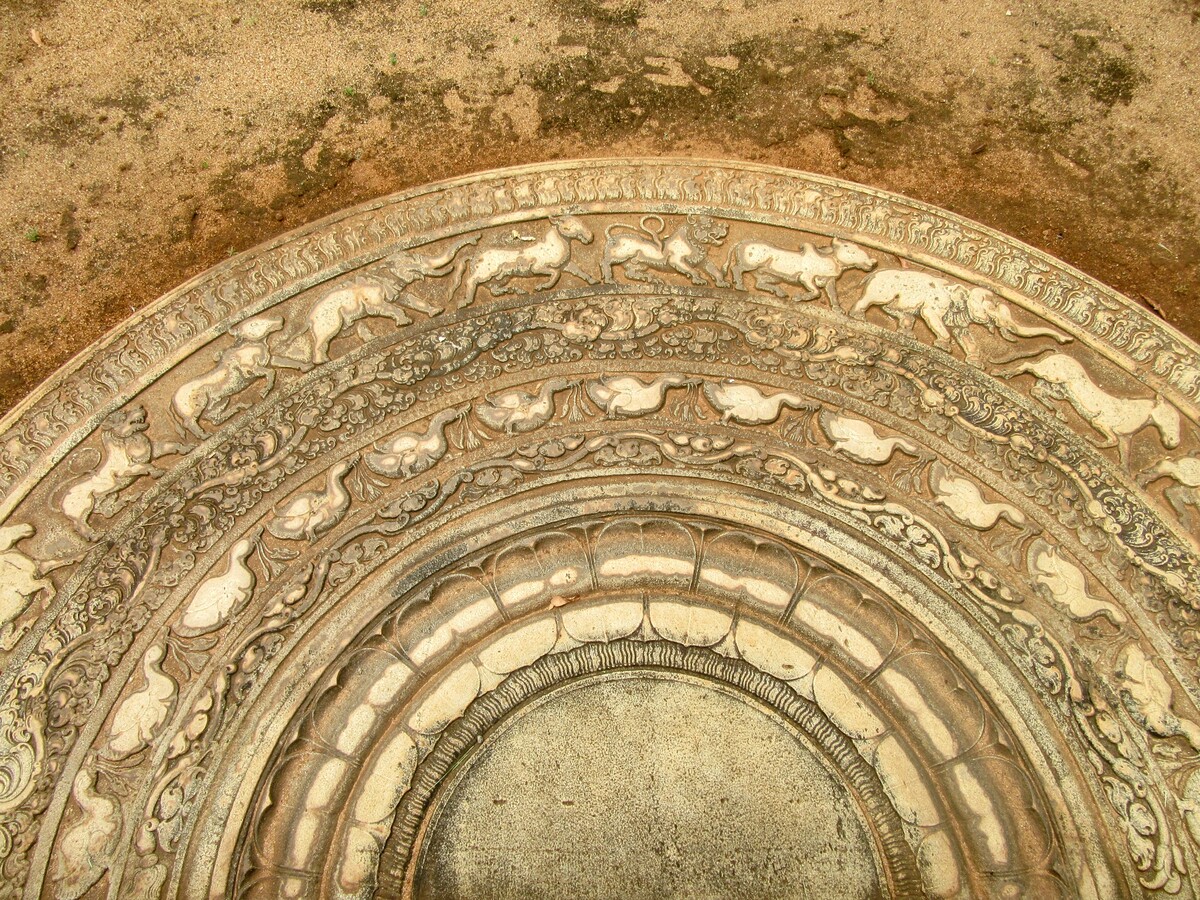
🛕 Anuradhapura Moonstone
One of the finest examples of Sri Lankan stone carving, this moonstone marks the entrance to a former monastery. It’s a semi-circular slab decorated with layers of symbolic animals and patterns representing the cycle of life, death, and rebirth.
🛕 Abhayagiri Dagoba
The Abhayagiri Dagoba is an enormous brick stupa built in the 1st century BCE, rising to an impressive height of around 75 metres. Once adorned with a golden pinnacle, it was one of the tallest structures of the ancient world. Even in its weathered state, the stupa remains a striking sight, dominating the landscape with its sheer size. Its perfectly rounded dome is a testament to the engineering skill of ancient Sri Lankan builders.

🛕 Elephant Pond
This enormous bathing tank was likely used by the monks of Abhayagiri. It’s over 150 metres long and still impressively intact. You’ll often have this area all to yourself — perfect for a water break in the shade while imagining life here centuries ago.

🚲 Cycle along Basawakkulama Tank
Cycle from the Abhayagiri Monastery Complex to the third and final cluster of ruins, Mahamewna Gardens, via the scenic Basawakkulama Tank.
The Basawakkulama Tank is one of the oldest man-made reservoirs in Sri Lanka. Built in the 4th century BCE by King Pandukabhaya, it played a key role in supplying water to ancient Anuradhapura. Historical significance aside, cycling along the edge of the tank is super scenic and offers a nice break from the busier temple areas. As you pedal, you’ll catch occasional glimpses of nearby ruins and stupas.

🚲 Cluster Three: Mahamewna Gardens
Once you reach Abhayawewa Road, you’ll cycle away from Basawakkulama Tank and to the entrance of Mahamewna Gardens — the final cluster of ruins on this itinerary. I believe I’ve saved the best for last, as Mahamewna Gardens is home to many of the most iconic landmarks in Anuradhapura. You’ll find the Ruwanwelisaya here, along with the famous Bodhi tree, the Thuparamaya, and other notable ruins, all within easy walking distance of each other.
I suggest parking your bike here (as pinned on my map above), and then heading into Mahamewna Gardens on foot. There’s lots to see here, but here are a few highlights:
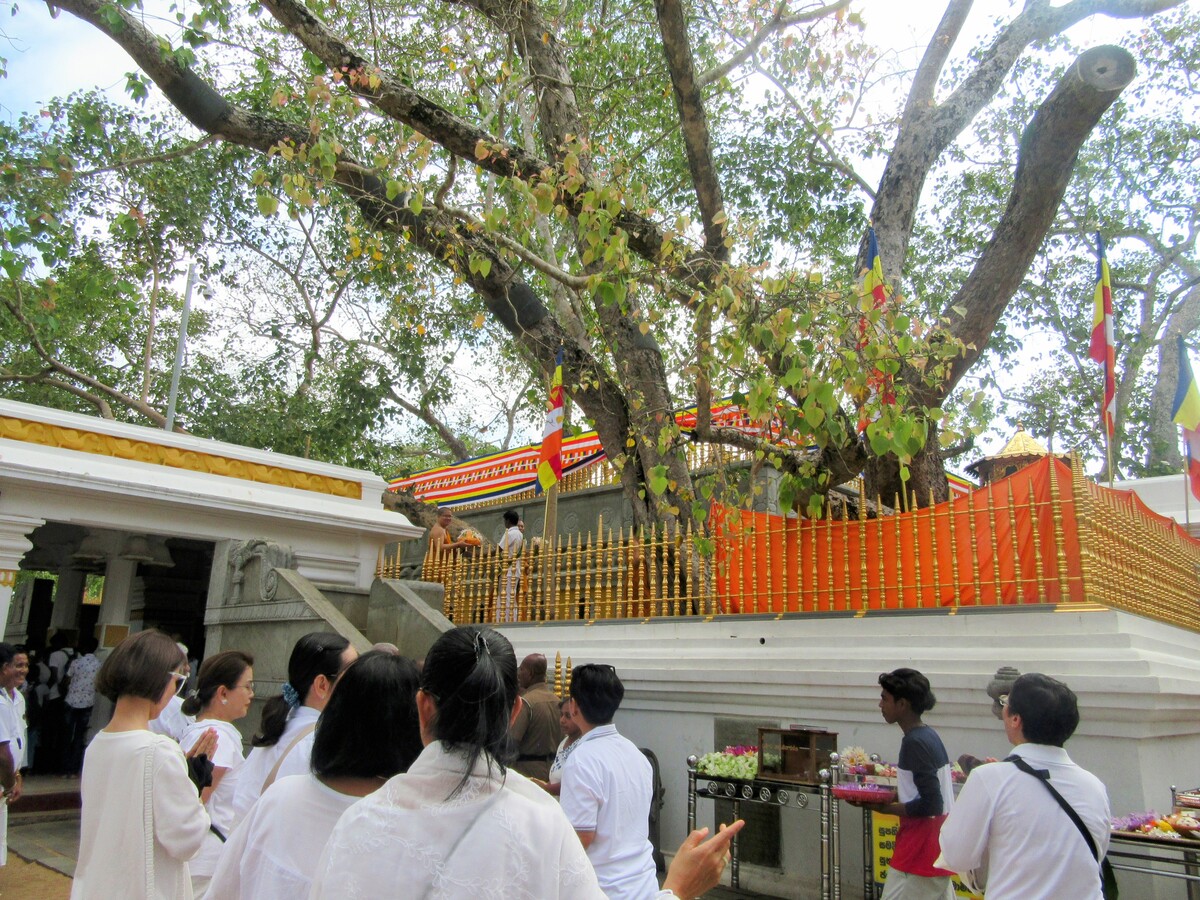
🛕 Jaya Sri Maha Bodhi (the Bodhi Tree)
Jaya Sri Maha Bodhi (the Bodhi tree) is one of the most sacred sites in Anuradhapura and holds immense significance for Buddhists around the world. This ancient fig tree is believed to be a sapling from the original Bodhi tree in Bodh Gaya, India, under which Siddhartha Gautama attained enlightenment and became the Buddha.
Brought to Sri Lanka in 288 BCE by Sangamitta Theri, the daughter of Emperor Ashoka, the tree was planted in the Mahamewna Gardens and has been venerated ever since. It’s not only the oldest living human-planted tree in the world with a known planting date, but also a symbol of the deep-rooted Buddhist heritage in Sri Lanka.
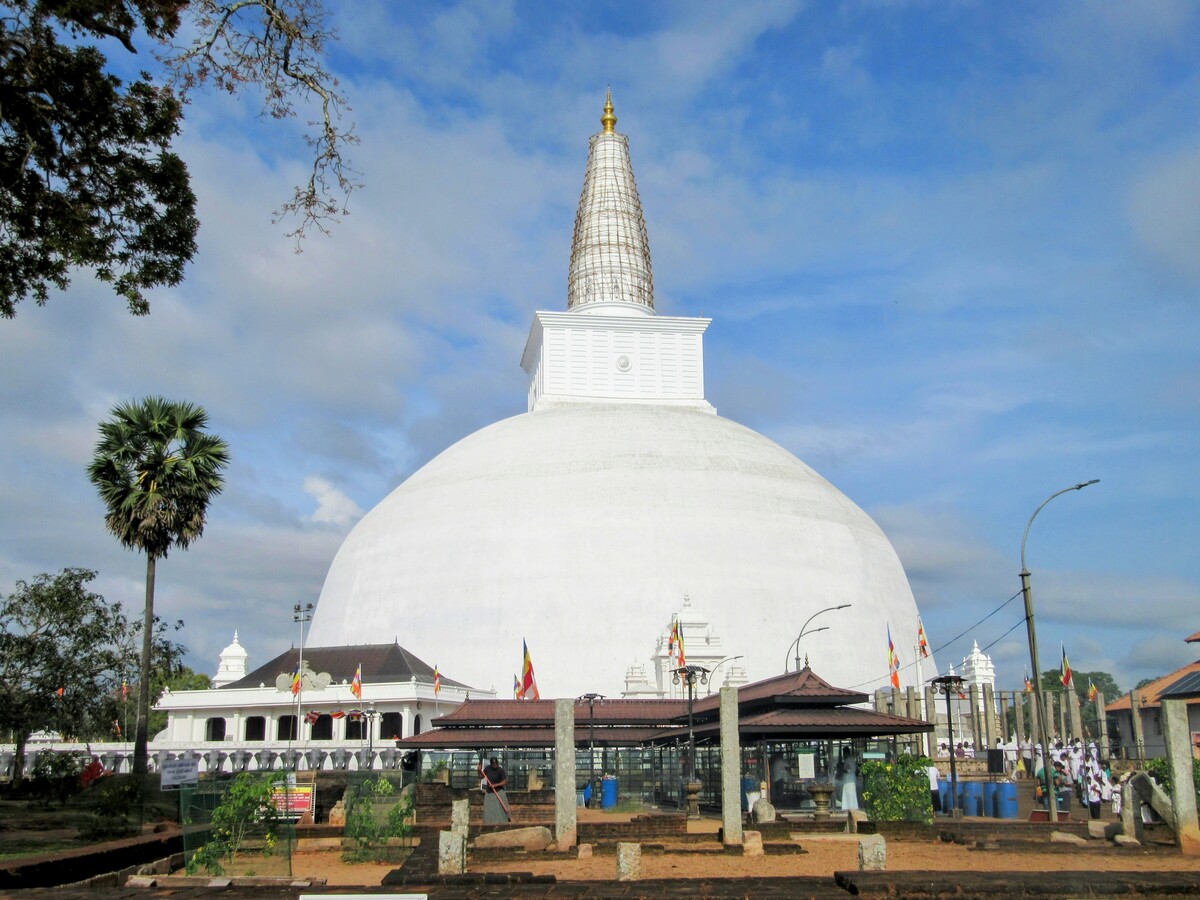
🛕 Ruwanwelisaya
The Ruwanwelisaya is one of the most recognisable stupas in all of Anuradhapura, a huge white dome built in the 2nd century BCE by King Dutugemunu. The stupa is considered a major symbol of Sinhalese pride and Buddhist devotion, said to enshrine sacred relics of the Buddha. Walking up to Ruwanwelisaya, you’ll notice a row of stone elephants encircling the base — one of its most famous features.
Ruwanwelisaya was probably my favourite of all the sites we visited. You can walk around the whole base of the stupa and take it in from all angles. While we were walking, a group of monks passed by in a procession, each carrying a basket of offerings, which was interesting to see. I also loved the elephant statues.
🛕 Thuparamaya
Thuparamaya is considered the first stupa built in Sri Lanka after the arrival of Buddhism, dating back to the 3rd century BCE during the reign of King Devanampiyatissa. It was constructed to enshrine the right collarbone relic of the Buddha, making it one of the most historically significant religious sites in the country. While the stupa has been restored over time, the current structure still reflects its ancient roots.

A Note on Temple Etiquette in Anuradhapura
Anuradhapura is a sacred place for Sri Lankan Buddhists, so it’s important to approach the temples and stupas with respect. Always remove your shoes and hat before entering the temple grounds or walking around a stupa (there are designated areas to leave them). Dress modestly with shoulders and knees covered, and avoid turning your back to Buddha statues when taking photos. It’s also a good idea to keep your voice low, especially around people who may be praying or offering flowers.
Keep planning your Sri Lanka trip 🐘🌿
- My experience cycle touring through Sri Lanka
- How to spend two weeks in Sri Lanka
- Explore Polonnaruwa by bike
- 2 day Kandy itinerary
- Top places to see wildlife in Sri Lanka
- Yala safari guide
If you’re planning on cycling Anuradhapura, I’d love to hear about it — drop a comment or ask anything below!
Thank you for reading! If you found this post useful, I’d be grateful if you would consider using the affiliate links below when planning your travels. I’ll make a small commission at no extra cost to you. This will help me to keep this blog running. Thanks for your support — Lauren.
Accommodation – Booking.com
Flights – Booking.com
Travel insurance – World Nomads
Excursions & tours – Viator
Outdoor gear – Decathlon
eSIMs – Airalo
Alternatively, you could buy me a coffee to say thanks!


About The Author
Lauren Pears is a freelance travel writer and blogger who writes about active adventure travel. She’s been blogging for almost 10 years, and has written for publications such as Lonely Planet, World Nomads, and Southeast Asia Backpacker.


