How To Visit Aiguille du Midi (+ Is It Worth €80?)
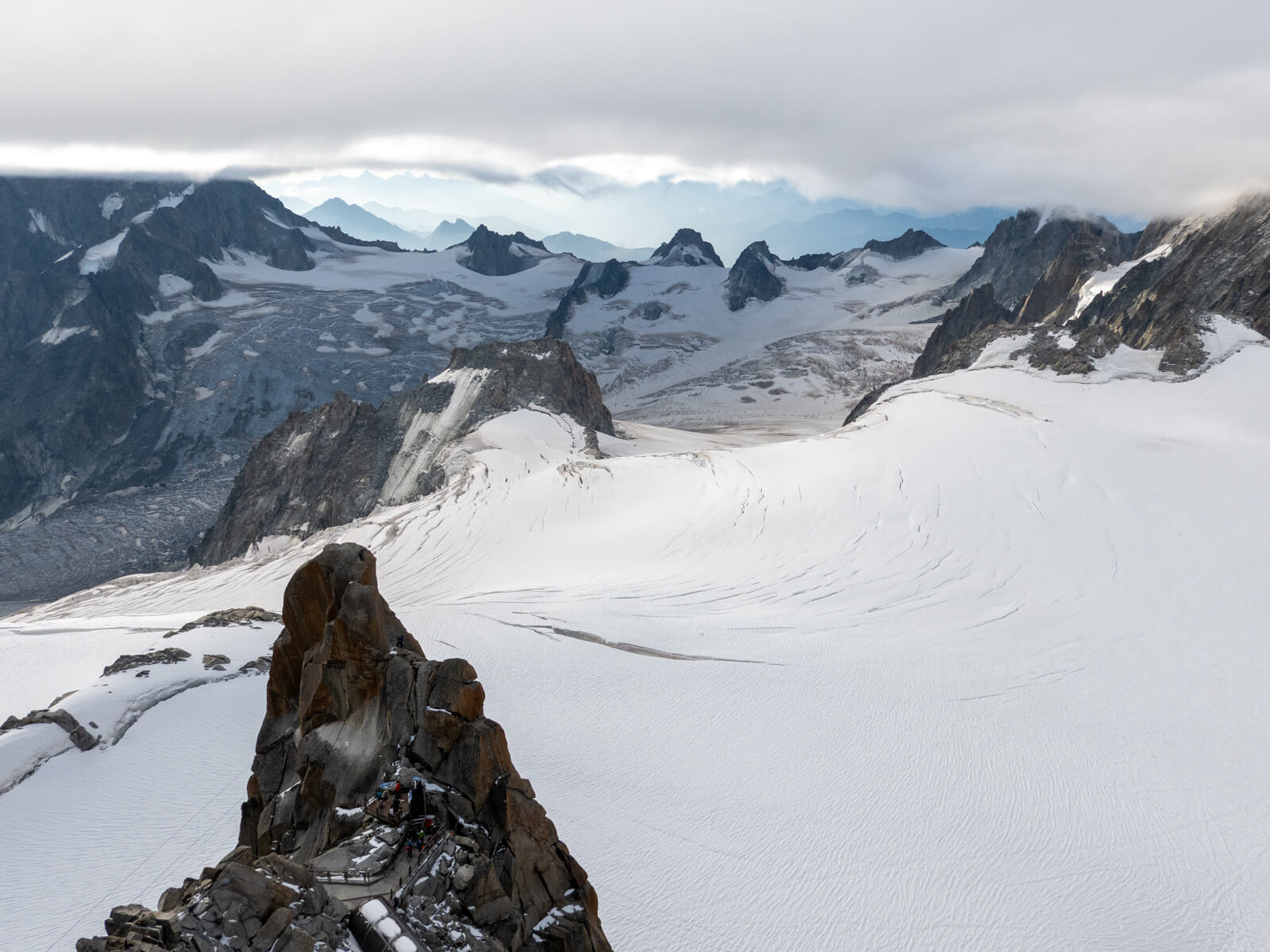
At 3,842 metres high, the Aiguille du Midi offers some of the most spectacular views of Mont Blanc and the surrounding French Alps. It’s easy to see why it’s one of the most popular attractions in Chamonix.
I’ll be honest, I wasn’t completely sold on it at first. I was in Chamonix for hiking, and I assumed that the views I’d get on the trails would make the Aiguille du Midi a bit unnecessary, especially with the price sitting around €80 for a return ticket.
I ended up going anyway, and it really quite surprised me. It’s not just another viewpoint; at that height, you’re in a completely different environment from anything you’ll experience on most hikes in the area. The scale feels bigger, and the views look surreal at that altitude.
Here’s everything you need to know about visiting Aiguille du Midi, including how the cable cars work, what to see at the summit, and whether I think it’s worth the cost.
Quick overview
If you just want the key details before deciding whether to go, this should give you a clear picture.
- Location: Chamonix, France
- Altitude: 3,842 metres
- Ticket price: €60 – €83 return (or included in the Mont Blanc Multipass)
- Time needed: 2 – 3 hours
- How to get there: Cable car from Chamonix centre (two-stage journey)
- Booking: Advance booking required
- Best time to visit: Early summer morning on a clear day
- Difficulty: No hiking required, but expect stairs, walking, and high altitude
- Worth it?: YES, but only if the weather is clear; if it’s cloudy, you’ll see nothing
What is the Aiguille du Midi?
The Aiguille du Midi is one of the most famous viewpoints in the Alps. Rising to 3,842 metres above Chamonix, it’s a dramatic rocky summit reached by cable car.
Its name translates roughly to Needle of the Midday, referring to the sharp, spire-like peak and the fact that the sun sits directly above it at noon. It’s one of the only ways to get this high into the Mont Blanc massif without any technical climbing!
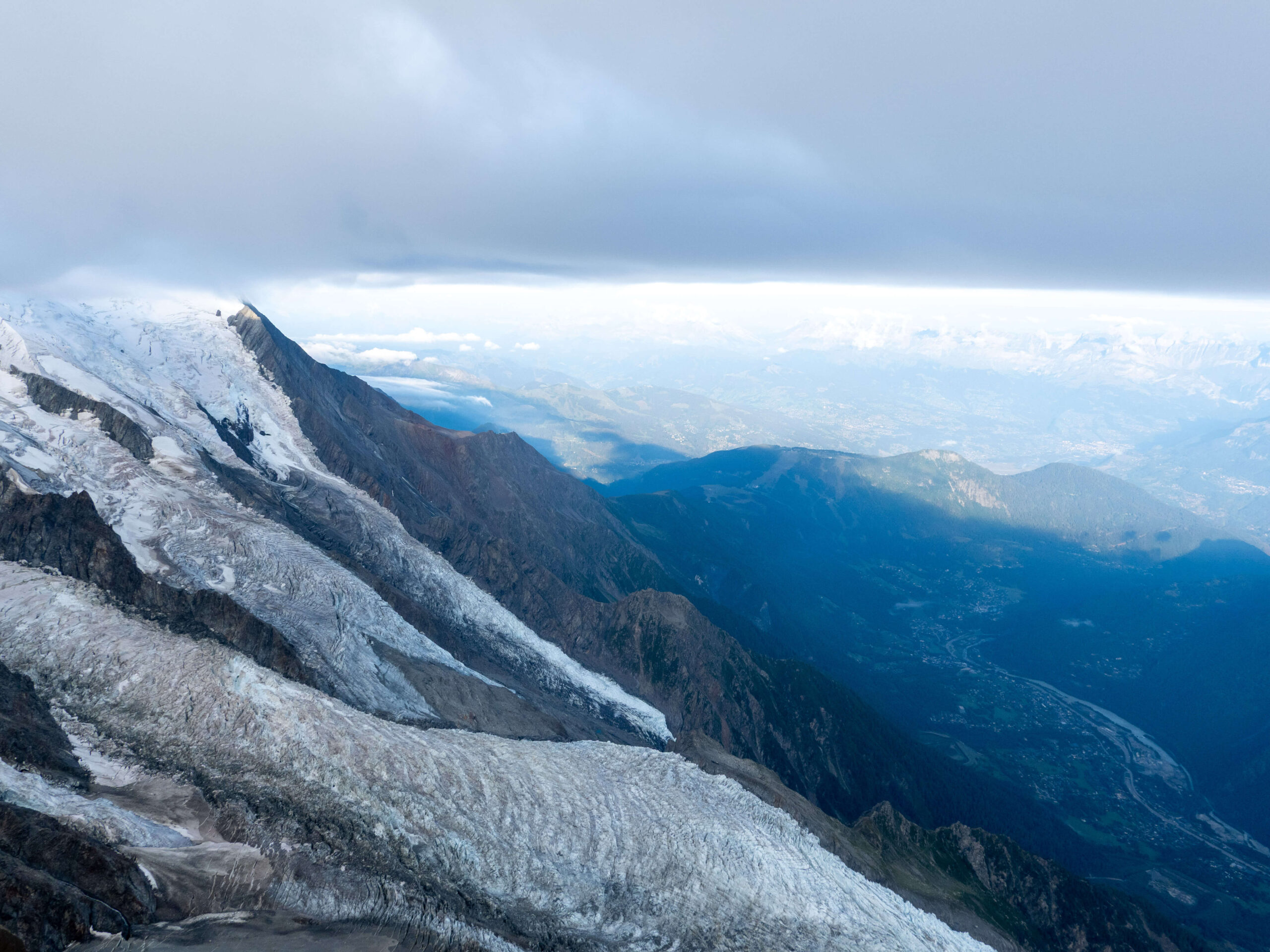
At the top, you’ll find a series of panoramic terraces and walkways with astonishing views across the Mont Blanc Massif, including close-up looks at Mont Blanc itself, the Bossons Glacier, and a maze of surrounding summits. There are also exhibits and a cafe at the top.
My experience visiting the Aiguille du Midi
I visited in late August and aimed for one of the first cable cars of the day. I left my apartment around 6:15 am, walking through Chamonix while it was still completely quiet, hoping to beat the crowds.
Taking the cable car from Chamonix
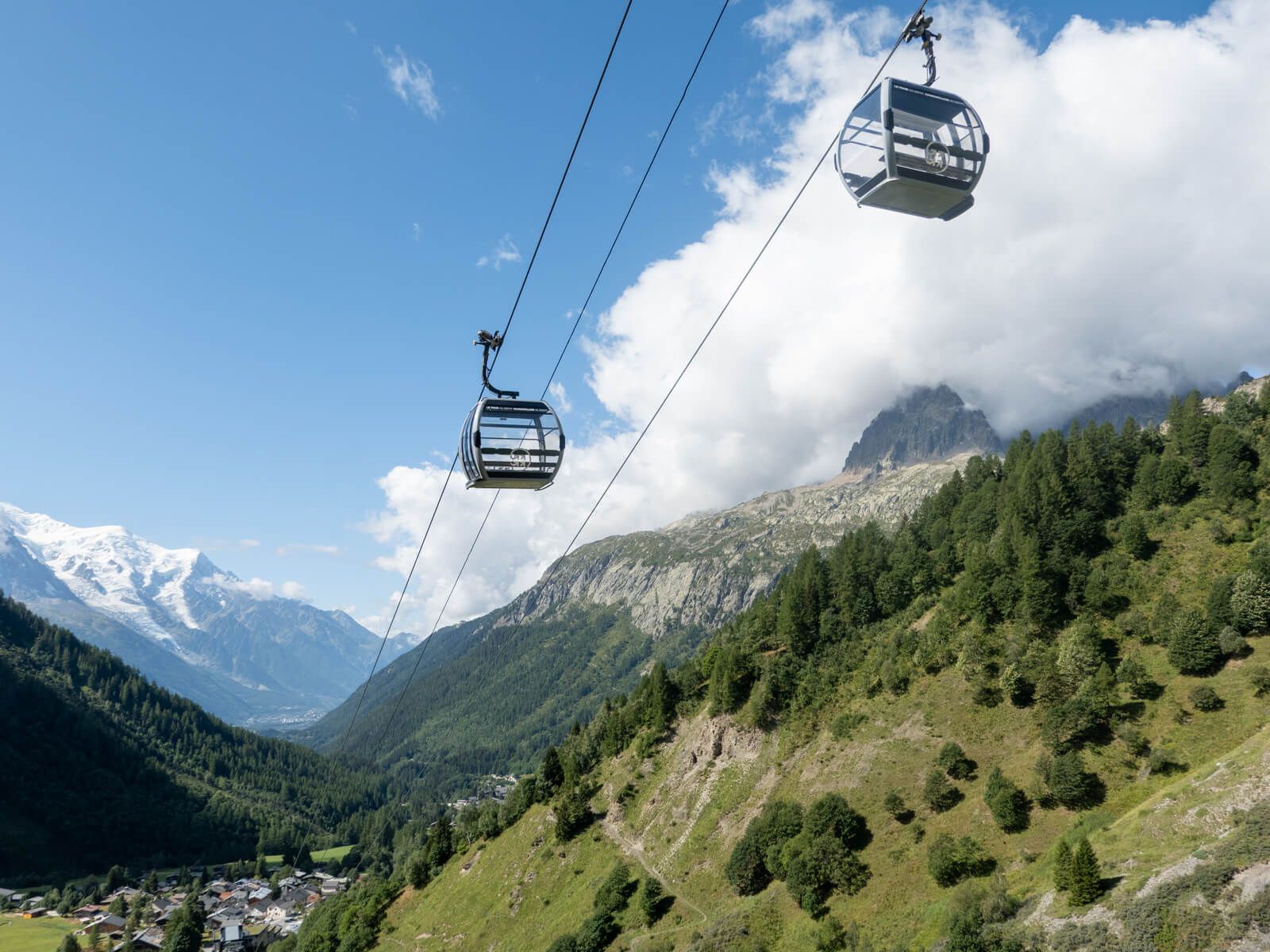
The journey up to Aiguille du Midi involves two cable cars.
Once you arrive at the Aiguille du Midi lift station in Chamonix, you’ll see a number above the entrance. You can only enter once your number has been called. You’ll be allotted this number when you reserve your time slot.
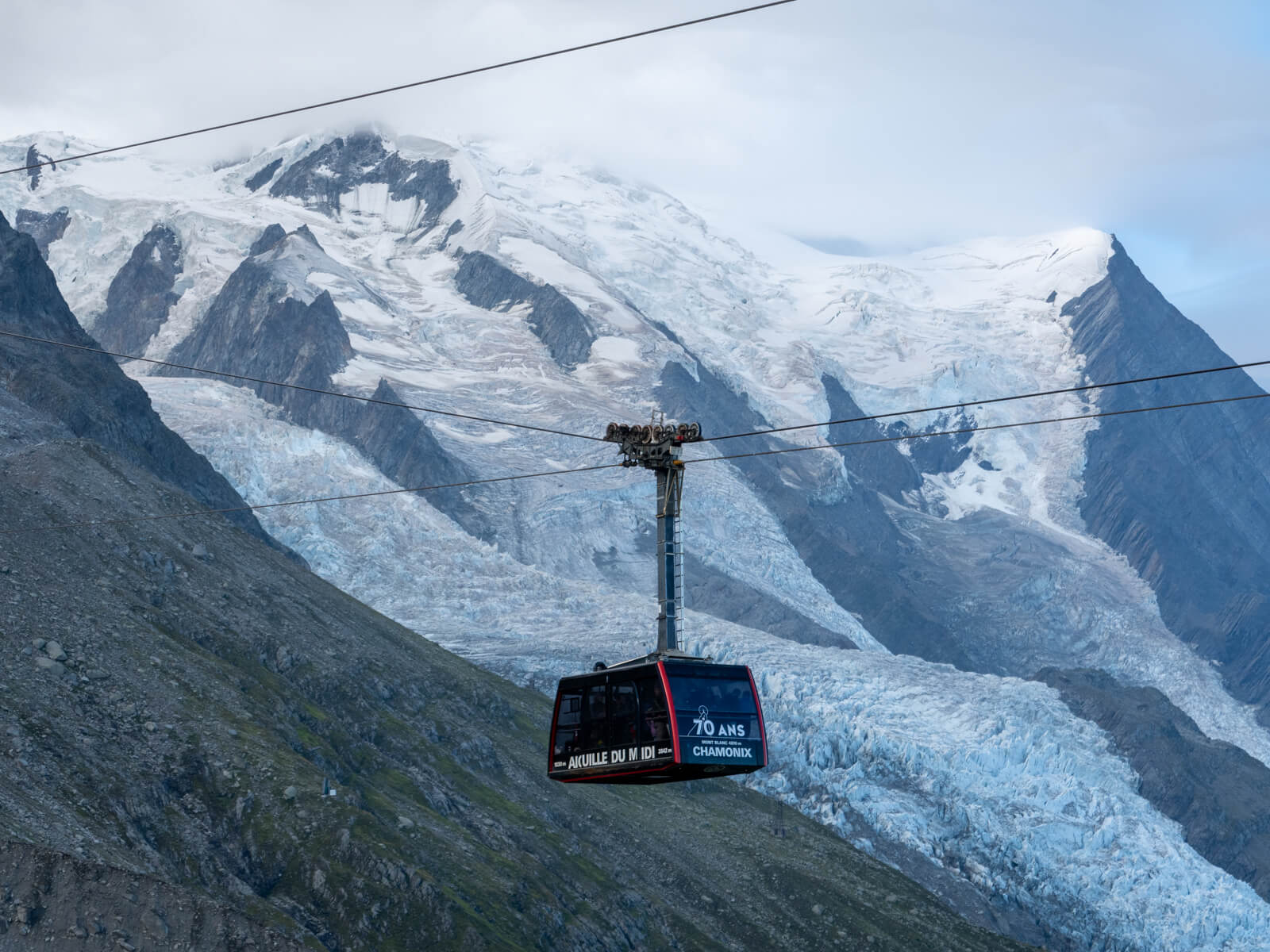
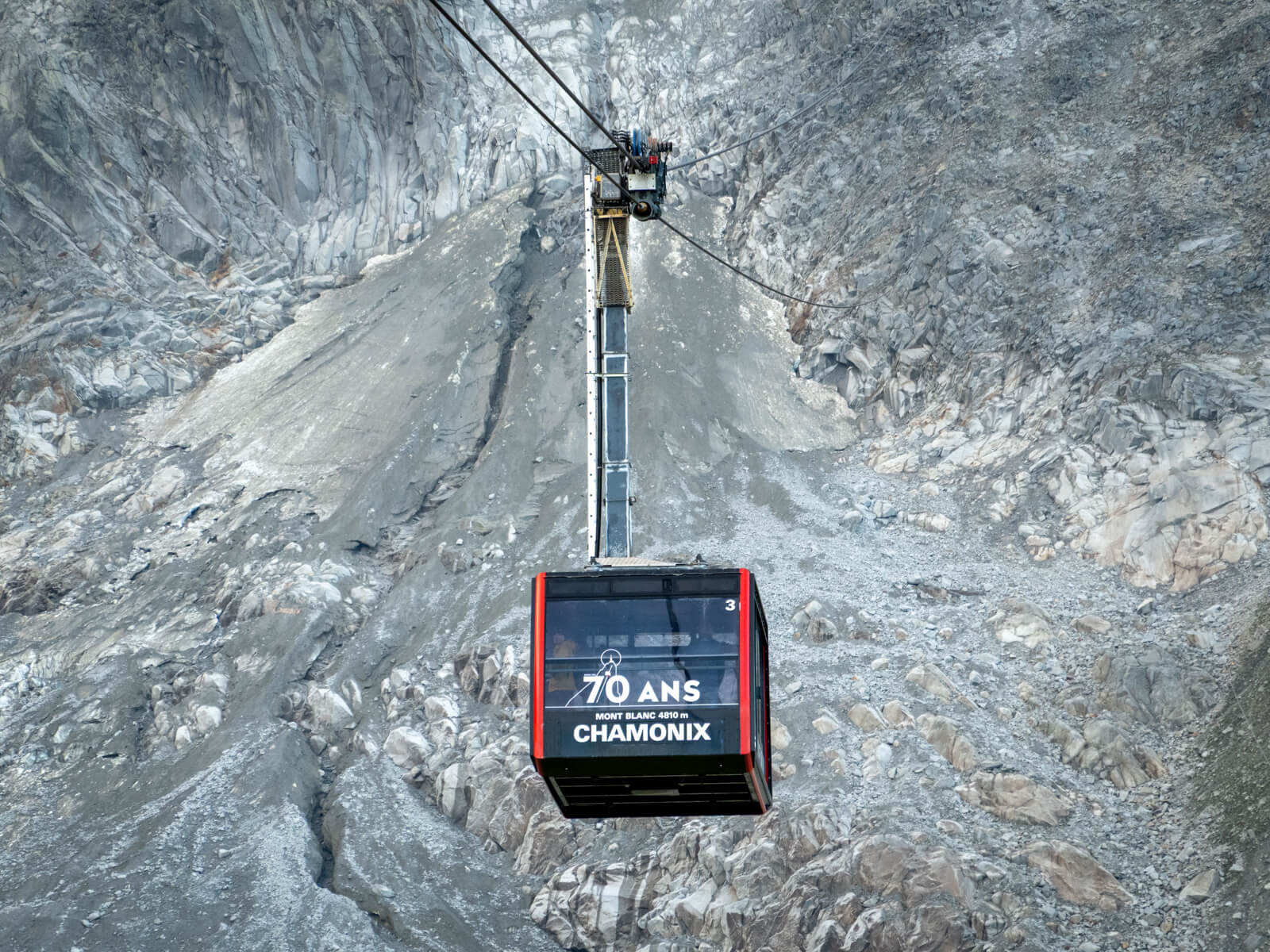
The first cable car takes you from Chamonix to Plan de l’Aiguille, a mid-station at 2,317 metres. From here, you transfer to a second cable car up to the Aiguille du Midi summit.
The cabins themselves were already quite full, even this early in the morning, and I can only imagine how busy it gets later on. If you’re not great with enclosed spaces or heights, this is probably the part you’ll enjoy the least. I’m quite claustrophobic, and I won’t pretend I loved it. That said, most people were in wonder — I heard lots of oohs and aahs — as the scenery is undeniably impressive.
Arriving at the summit (3,842m)
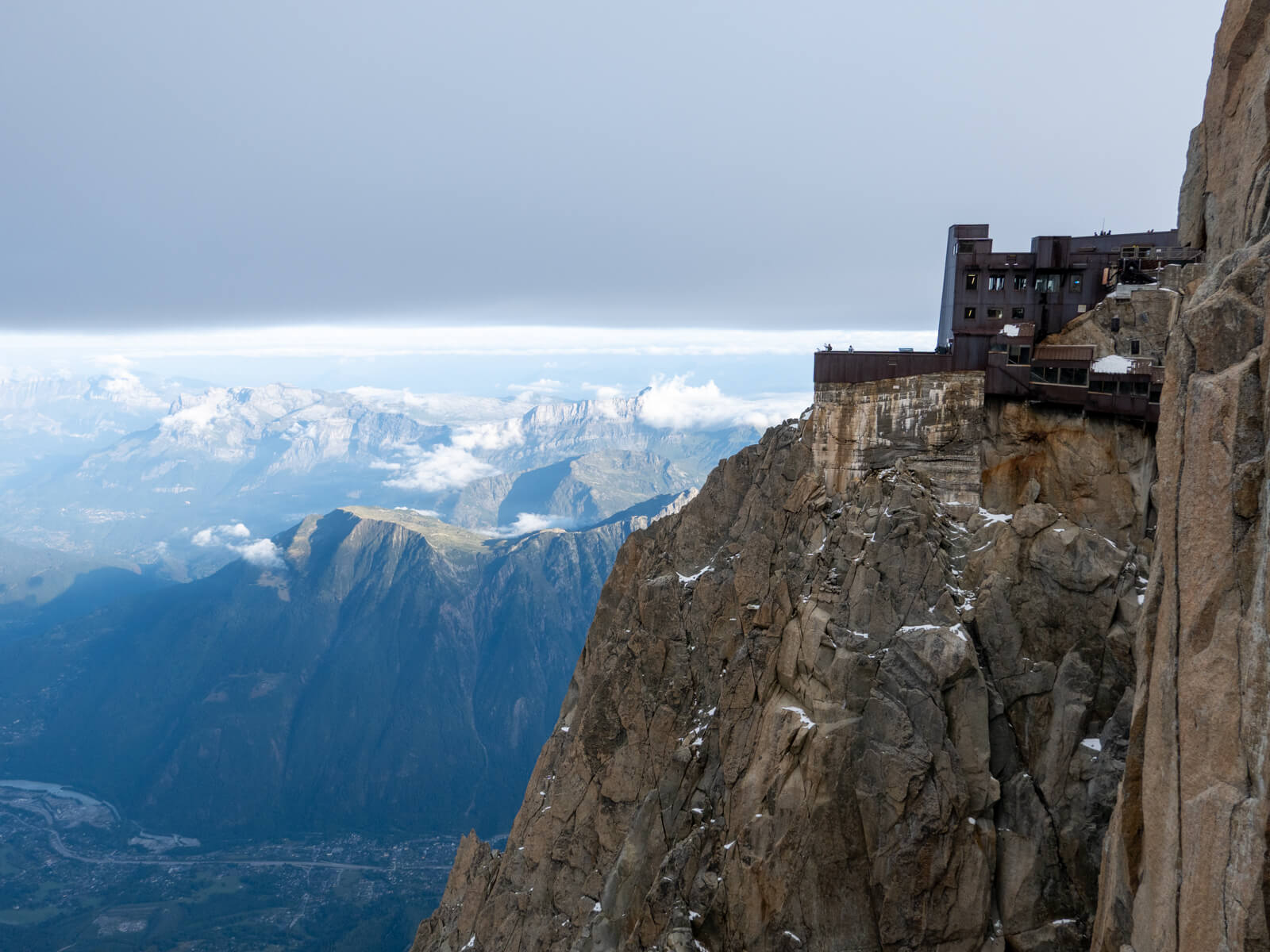
Stepping out at the top feels completely different to anything lower down in the valley.
The air is thinner, the temperature drops immediately, and everything just feels higher. It sounds obvious, but it really feels like you’ve entered a different environment altogether.
The summit itself is spread across multiple levels and terraces, all connected by tunnels, lifts, and walkways. It’s not just one viewpoint, which I hadn’t realised beforehand, so you end up moving around quite a bit rather than just standing in one place. There are exhibits to check out, a cafe, and other things to see at the top.
The journey back down
On the way down from Aiguille du Midi to Plan de l’Aiguille, I struggled to equalise the pressure in one of my ears. It became increasingly uncomfortable as we descended, and by the time we reached the mid-station, my ear still wouldn’t pop.
I spent the next five minutes deliberately yawning over and over to try to relieve the pressure, which eventually worked. Unpleasant, but thankfully short-lived.
It’s worth being aware of if you’re prone to ear pressure problems, as the cable car loses a considerable amount of altitude in just a few minutes. If this happens to you, don’t continue descending to Chamonix — let your ear equalise before continuing on the second cable car.
Things to do at the Aiguille du Midi
There’s more to do at the summit than just looking at Mont Blanc:
1) The viewing decks
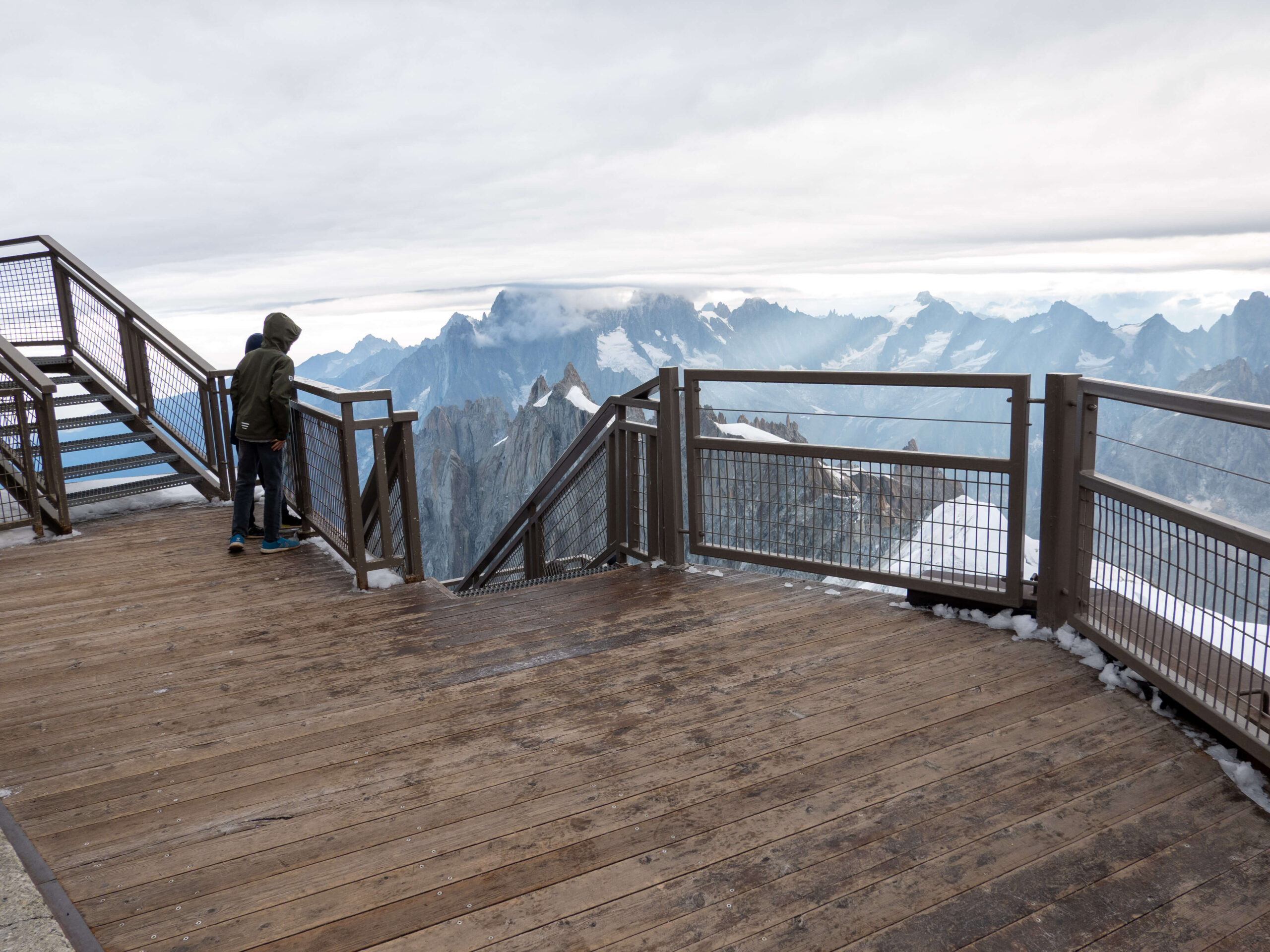
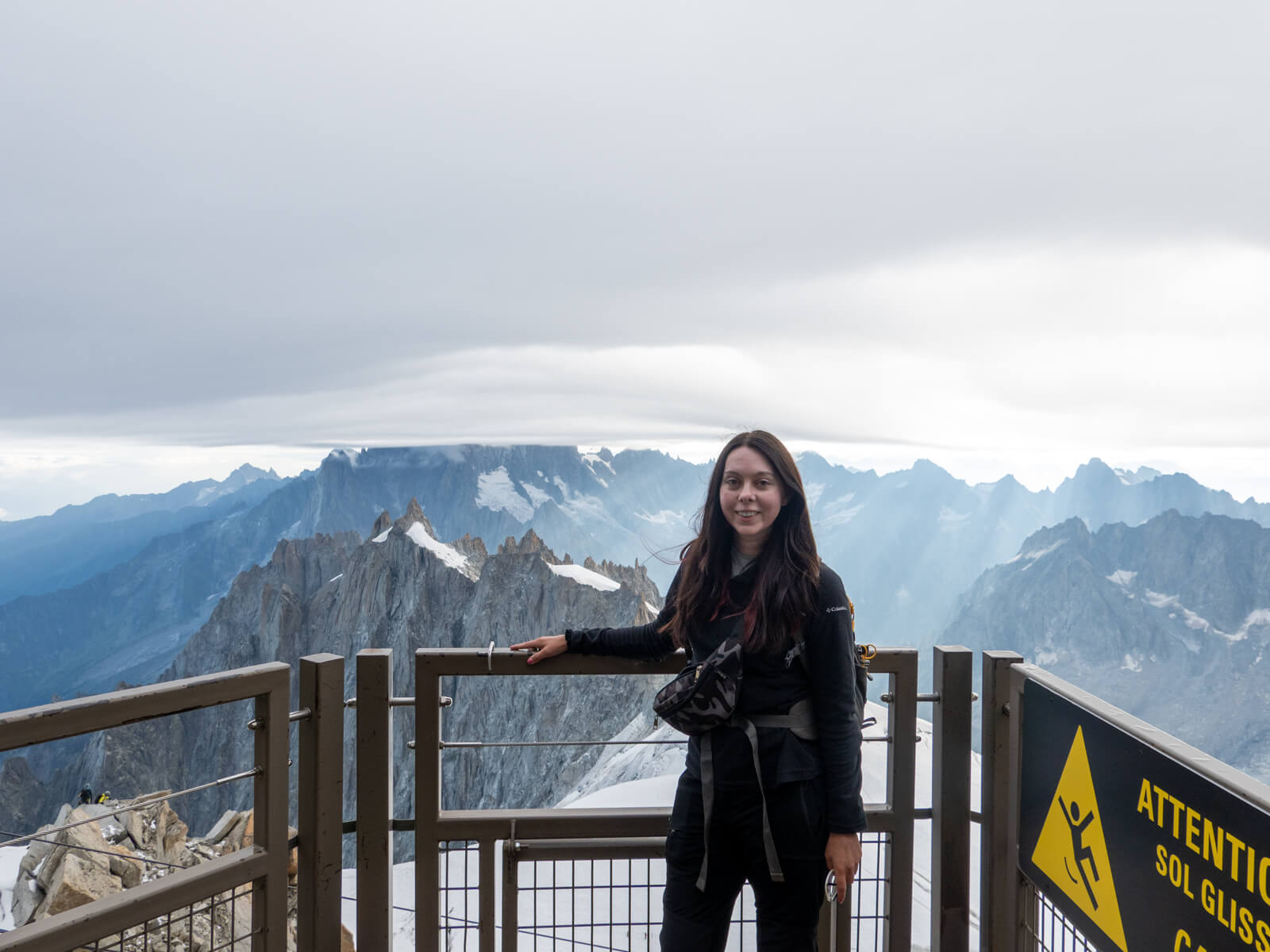
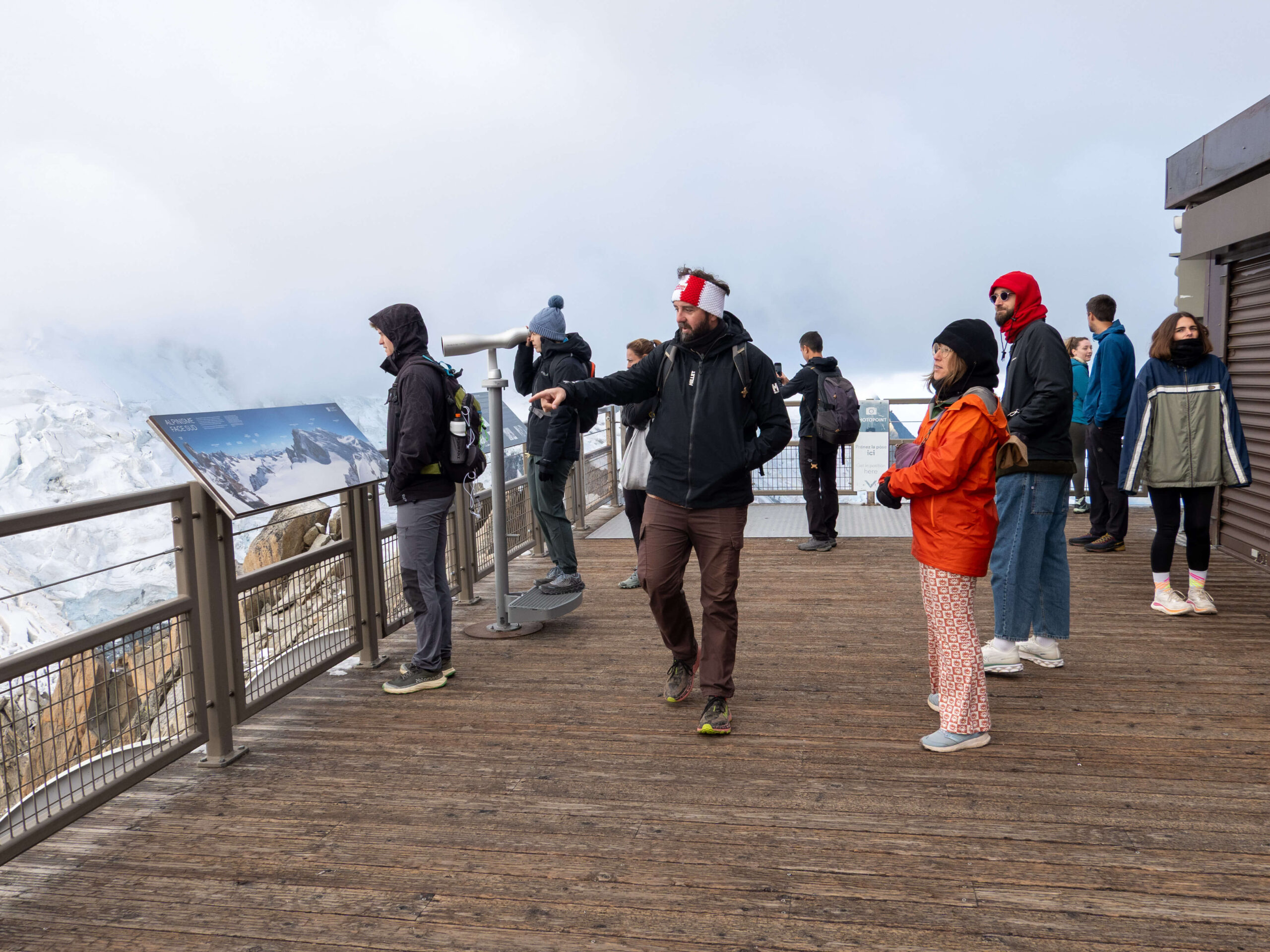
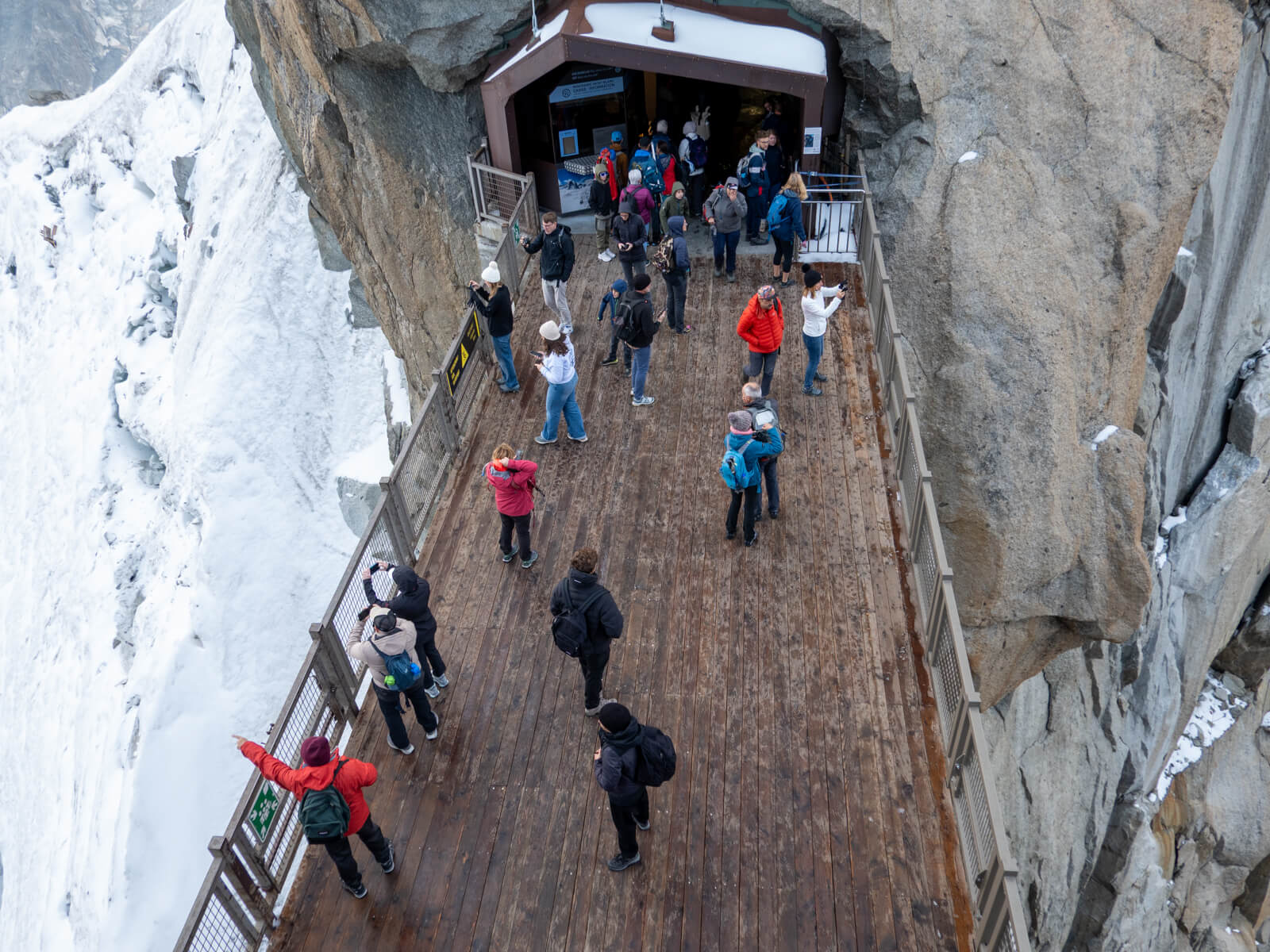
For me, the viewing terraces were easily the highlight of visiting the Aiguille du Midi. There are several observation decks positioned around the summit, offering different perspectives of Mont Blanc and the surrounding mountains.
The main terraces have wonderful views over the high-alpine landscape, while others look back towards Chamonix, more than 2,800 metres below.
The views change considerably depending on which side of the mountain you’re standing on, and some of my favourite views were away from the busiest terraces.
2) Step Into The Void
Step Into the Void is one of Aiguille du Midi’s most recognisable attractions. It’s a glass box extending from the summit, with transparent walls and a glass floor suspended above a drop of more than 1,000 metres.
You put on protective footwear, step into the box, and admire the view and take photos.
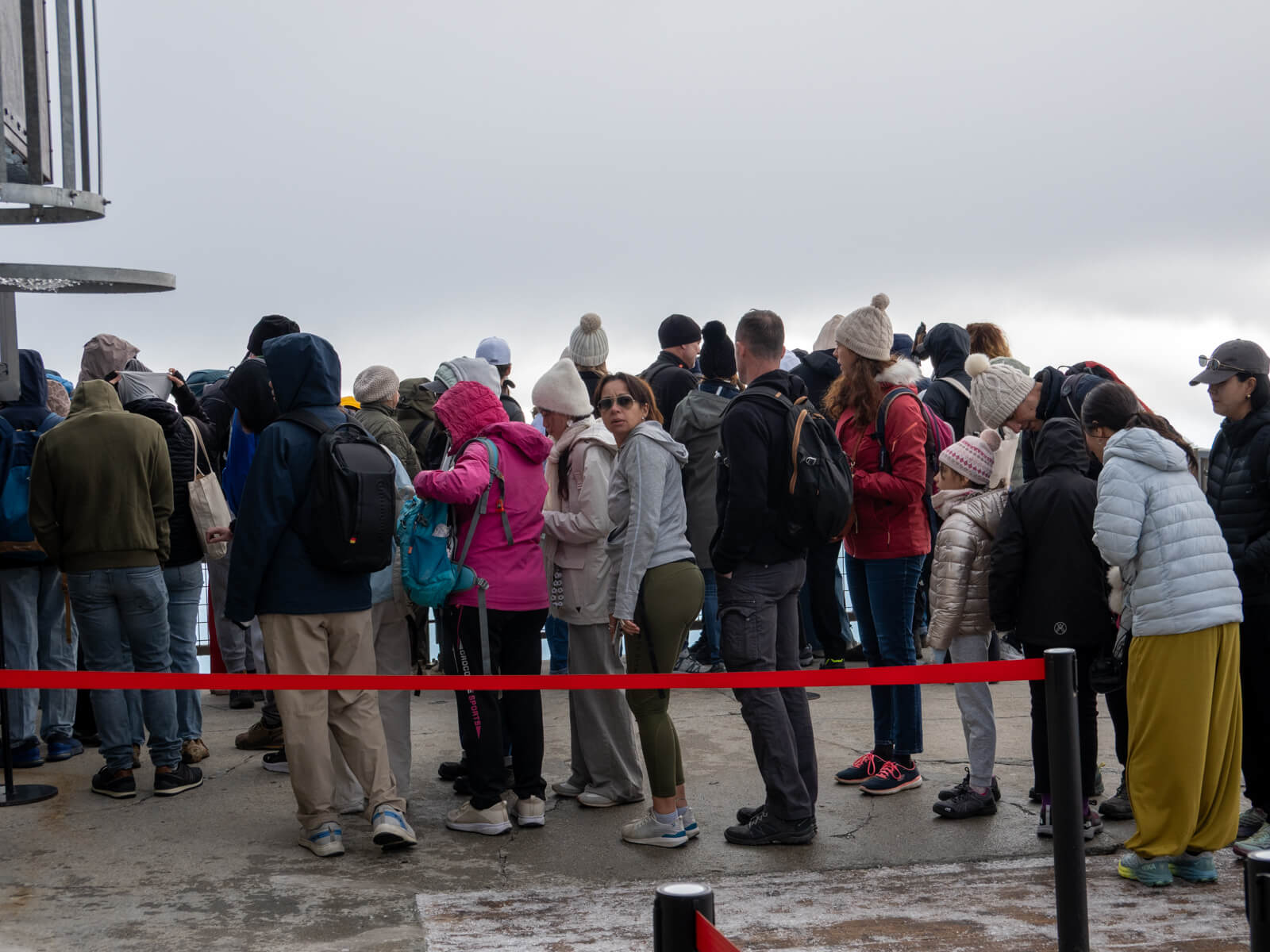
I will say, though, that Step Into the Void gets really busy. I saw the queue and decided not to do it personally. If it’s something you want to do, I’d recommend getting there as early as possible.
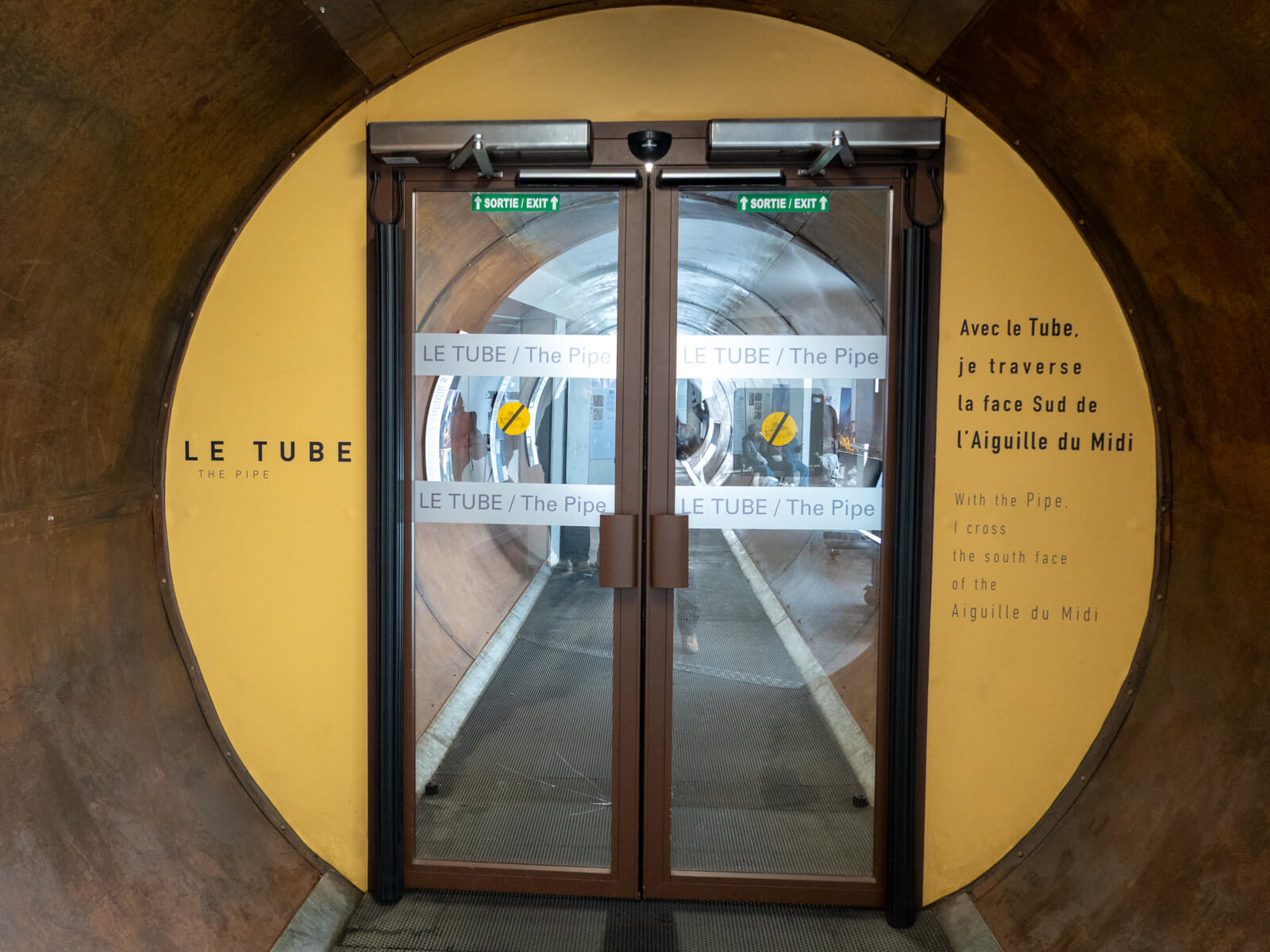
3) Walk through Le Tube
Le Tube is a covered, tubular walkway built around part of the mountain, connecting sections of the summit complex. It’s an unusual piece of engineering, with windows looking out towards the surrounding peaks.
It’s quick to walk through, and there’s usually a bit of a flow of people moving along it, so you won’t spend loads of time here. That said, it’s still worth doing while you’re there, even if it’s more of a “pass-through” than a highlight.
4) Visit the exhibitions
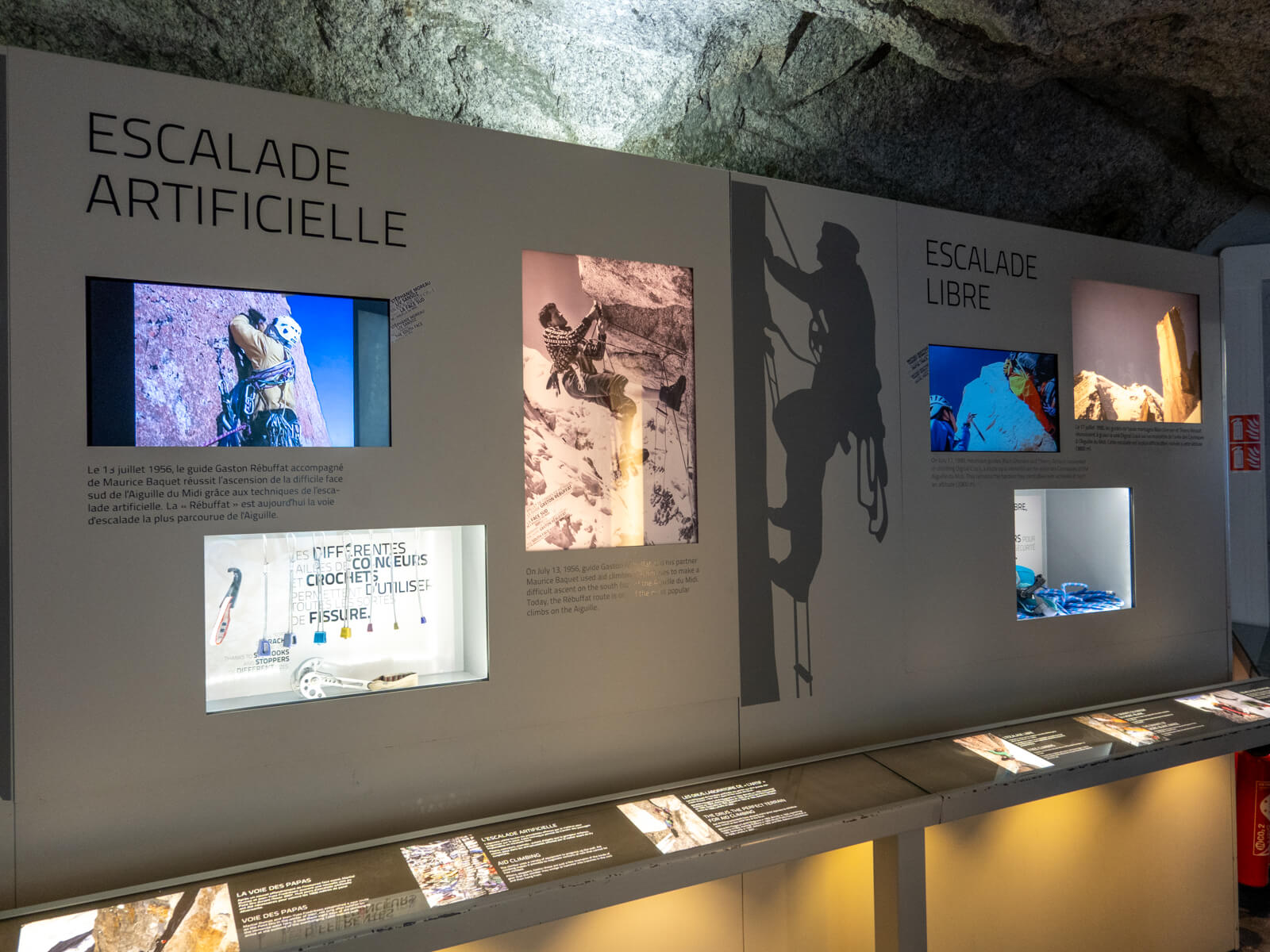
Inside the summit complex, you’ll find exhibits covering the history of mountaineering in the Mont Blanc massif, as well as things like altitude sickness.
They’re worth a look, particularly if you’re interested in climbing. They also provide somewhere to warm up a bit!
5) Eat at the Aiguille du Midi Summit Cafe
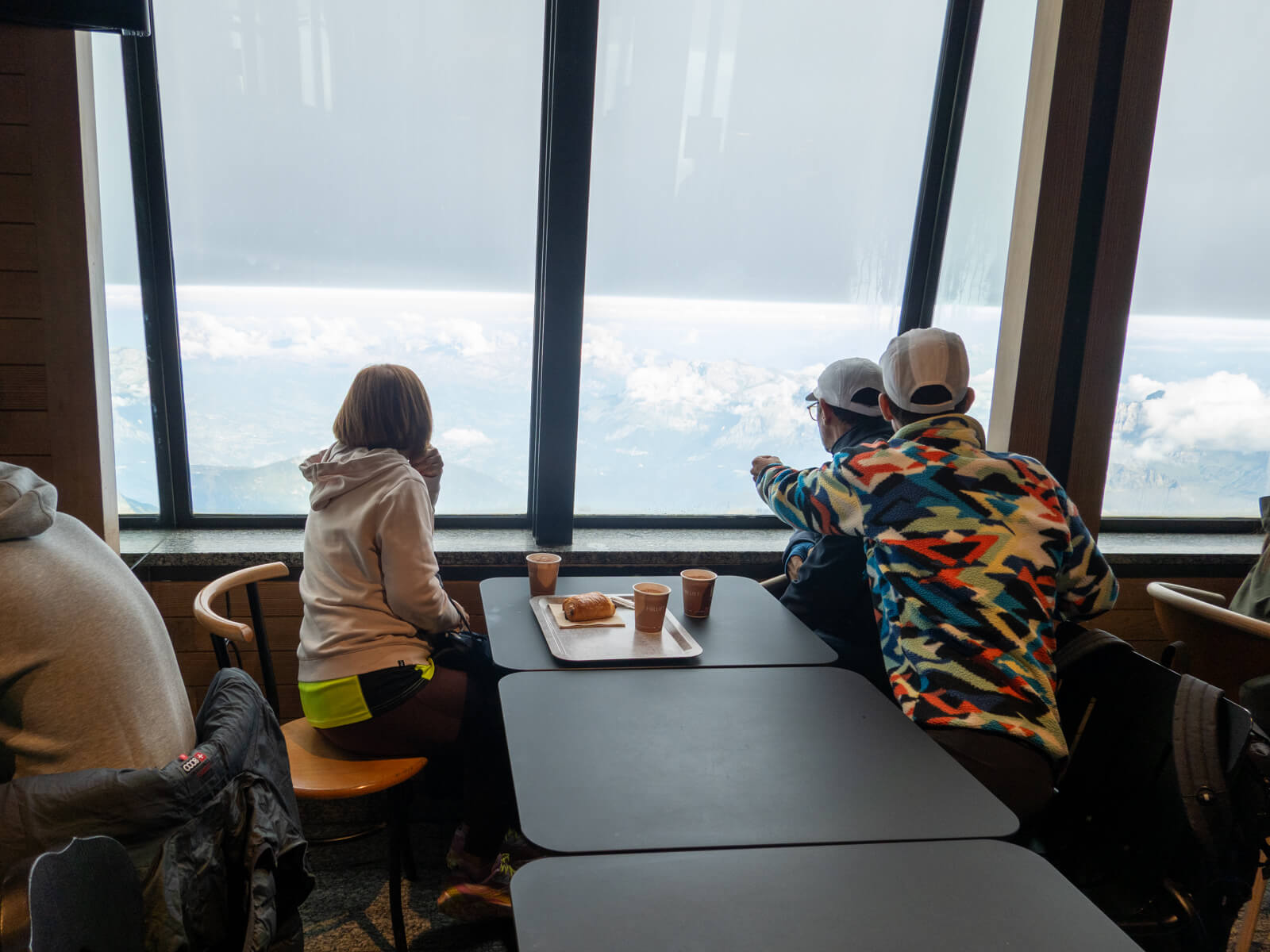
It’s very cold at the summit, and the altitude was making me feel a little tired, so I retreated to the cafe to sit and warm up with a hot drink before taking the cable car down.
Prices are, unsurprisingly, on the higher side, but not outrageous considering where you are. I had a hot chocolate and a croissant, which helped massively with the fatigue.
6) Panoramic Mont Blanc Cableway (Optional)
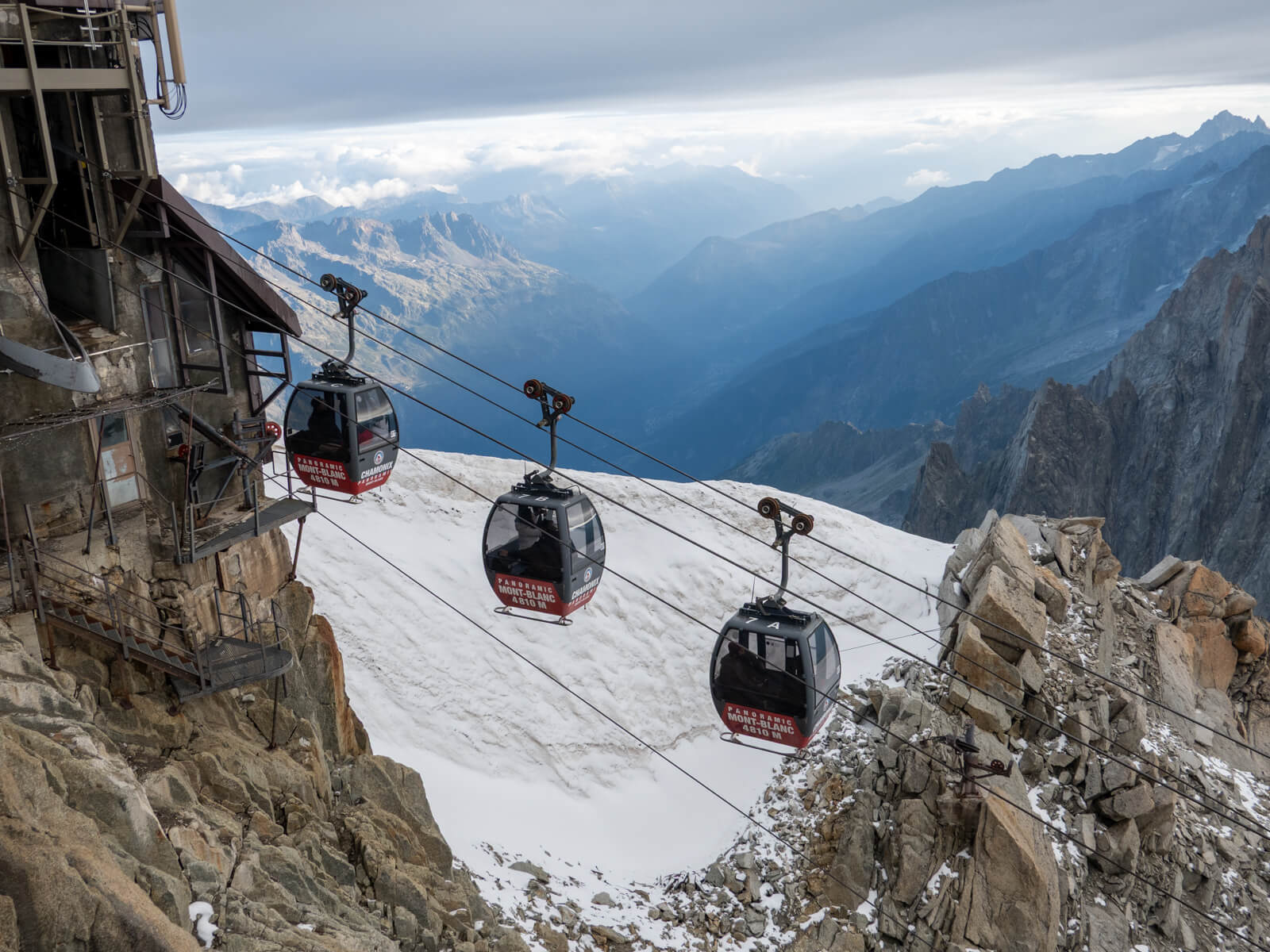
You can take the Panoramic Mont Blanc cable car from Aiguille du Midi to Pointe Helbronner, on the Italian side of the Mont Blanc massif.
The journey takes about 30 minutes, travelling above glaciers and between some of the highest peaks in the Alps.
This is an additional cost (€42.50 on top of your main ticket, in 2026), and so I chose not to do it. By the time I’d explored all the terraces and walkways, I felt like I’d already seen the views that I came for.
Plan your visit to Aiguille du Midi
Opening times
Opening hours vary throughout the year, but in summer (June to September), the first cable cars typically start running early, usually just after 6 am, with the last descent in the late afternoon.
Exact times change depending on the month, so I’d check the official website closer to your visit.
Tickets and prices
In 2026, a return ticket to Aiguille du Midi costs:
- Adult: €60.20–€83
- Children aged 5–14: €51.20–€70.60
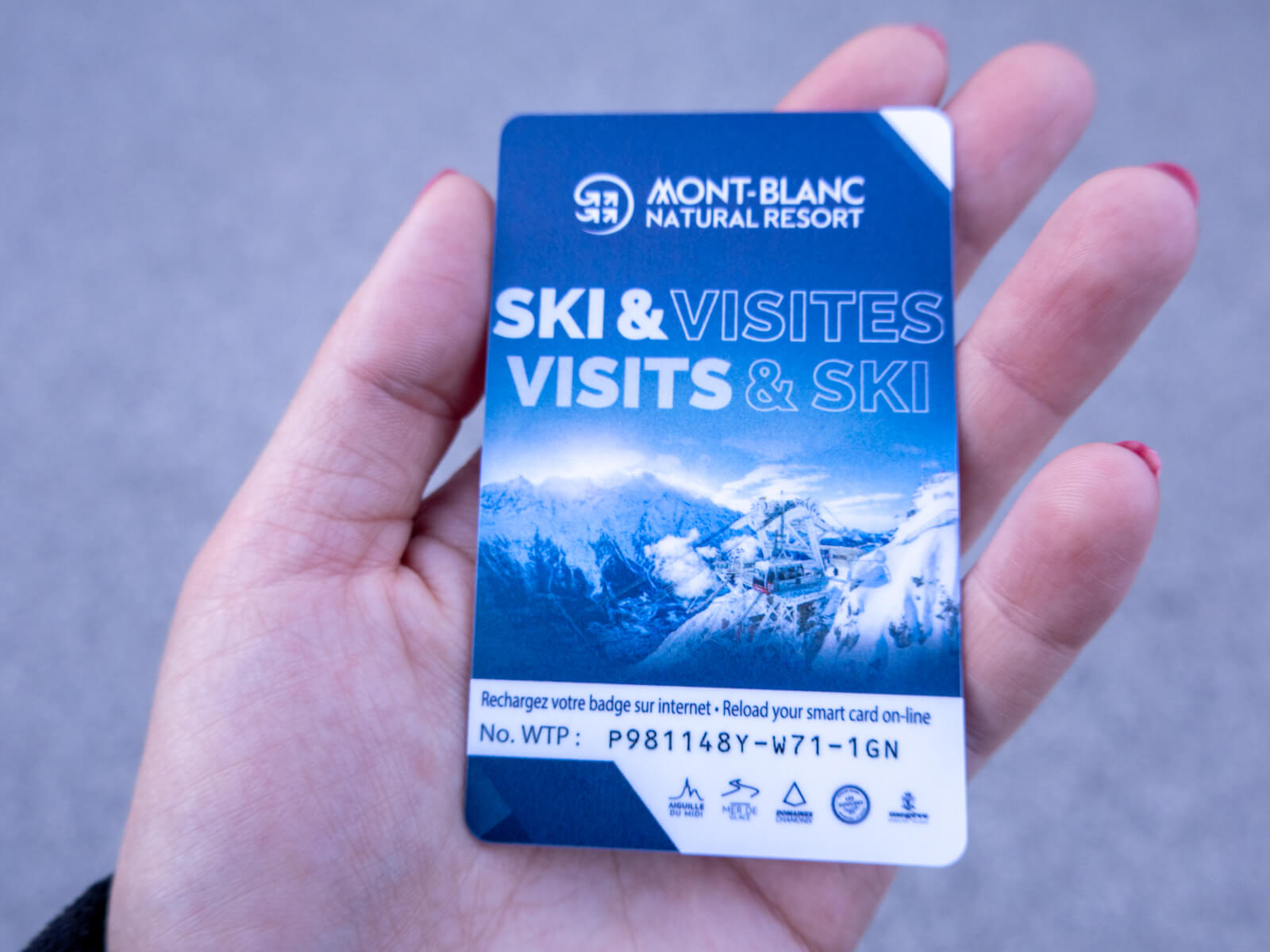
- Multipass holders: Included
You can check the latest prices on the Aiguille du Midi official website.
If you’re planning to do multiple lifts or activities in the area, the Mont Blanc Multipass can work out much better value, as it includes Aiguille du Midi along with several other cable cars in the valley. It also includes buses and attractions like Mer de Glace.
Even if you have the Multipass, you’ll still need to reserve a time slot for Aiguille du Midi. You can’t just turn up and get straight on. Tickets and time slots can be booked online in advance.
Best time to visit
Early morning is the best time to visit Aiguille du Midi.
I caught one of the earliest cable cars in late August, and although there were already plenty of people around, the summit didn’t feel overwhelmingly crowded. But by the time I was heading back down, the crowds had noticeably grown.
Mountain visibility also tends to be better earlier in the day, before the afternoon clouds roll in.
I’d aim for an early slot on a day when the summit forecast looks good.
As for the time of year, June to September are the best months to visit. It can be very cold outside the summer months, and the cable car has shorter operating hours.
How far in advance to book
In peak summer, this is important. Time slots can fill up several days in advance, especially for early morning departures, so I’d book your slot as soon as you can.
If you’re using the Mont Blanc Multipass, you can usually adjust your reservation (as long as your original date hasn’t passed), which is useful if the weather changes.
Check the weather before booking
Mountain weather operates in layers, which means that conditions at 3,842 metres can be completely different from what you see in the Chamonix valley.
You might have rain in Chamonix, but clear skies at Aiguille du Midi, or the opposite, where the valley is sunny but the top is completely clouded in. Before your visit, check the summit webcam and summit forecast. I’d recommend checking both the night before and again on the morning of your booking.
If you’ve bought the Mont Blanc Multipass, you usually have some flexibility to move your time slot, as long as your original date hasn’t passed. That can make a huge difference if the weather isn’t playing ball.
What to expect at the summit
Temperature and what to pack
It’s cold. You can expect temperatures of -5°C to 5°C (23°F to 41°F), even in the middle of summer.
When I visited in late August, I was walking on the valley floor in a t-shirt, but needed a fleece and a jacket on the Aiguille du Midi. The cold air was like a slap in the face when I stepped out of the cable car at the top.
At a minimum, I’d bring:
- A warm layer (fleece or light jacket)
- Hat and gloves
- Something windproof
- Sunglasses (the glare from the snow and ice can be intense)
- SPF (you burn faster at high altitudes)
Altitude and how you might feel
At 3,842 metres, you’re high enough to feel the effects of altitude, even if you’re generally fit and active.
Effects of altitude can include:
- Headaches
- Lightheadedness
- Nausea
- Fatigue
- Shortness of breath
- Loss of appetite
- Increased heart rate
I didn’t feel unwell, but I definitely noticed I was feeling less than optimal after an hour or so at the summit. Walking up stairs felt more effort than usual, and I felt slightly fatigued overall.
Most people are fine, but if you experience severe dizziness or worsening symptoms, please don’t ignore them. You should descend immediately on the next gondola, and the staff will be happy to help you with this.
Staying hydrated helps a lot (which I learned after getting altitude sickness in Kyrgyzstan), so I mixed some electrolytes in with my water.
How long you need at the top
Most people spend around 2–3 hours at the top. I personally spent 2 hours, which gave me enough time to explore the different viewing decks and exhibits, walk through Le Tube, and sit and have a croissant and a drink at the cafe.
Combine Aiguille du Midi with the Grand Balcon Nord hike
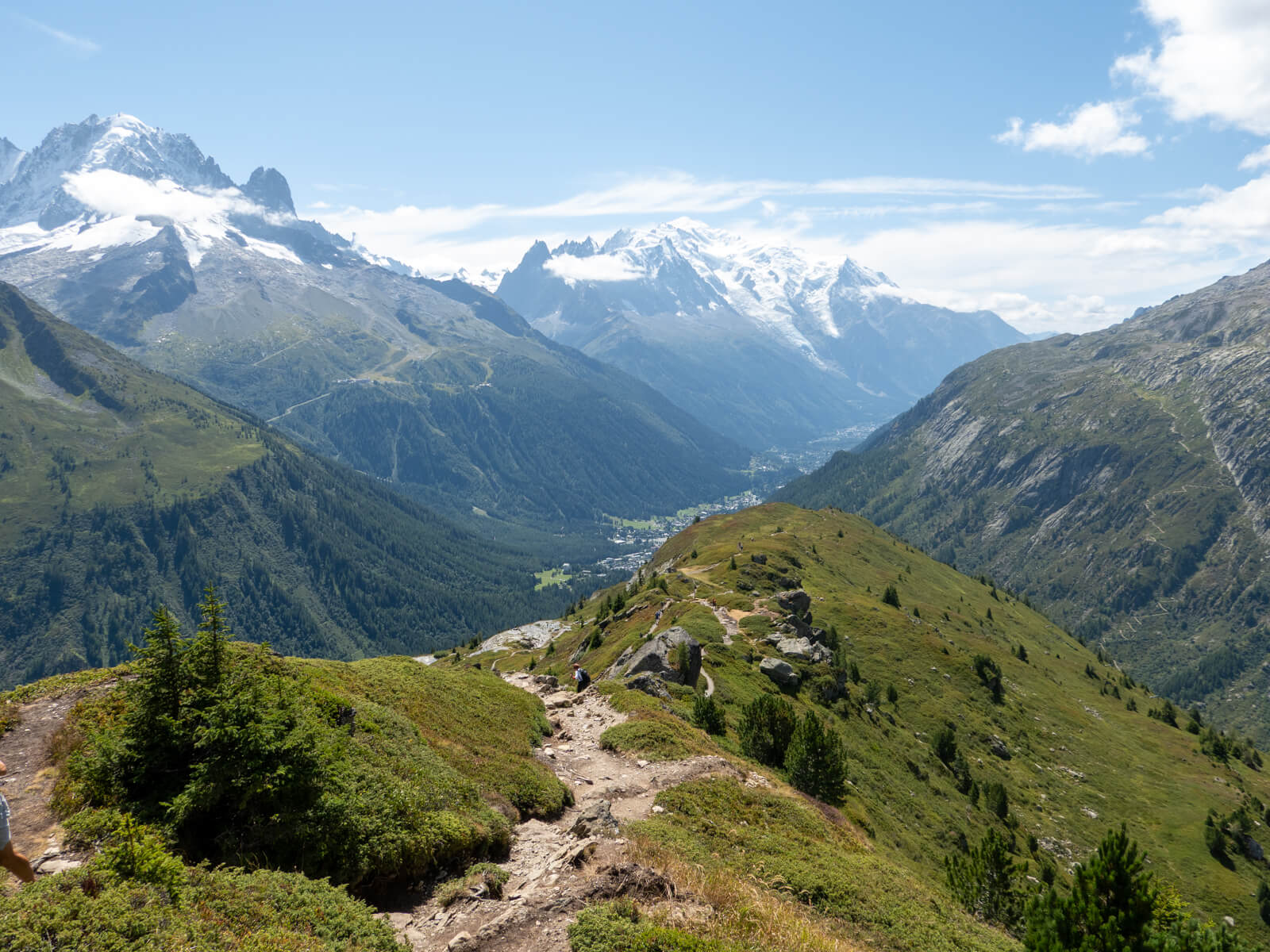
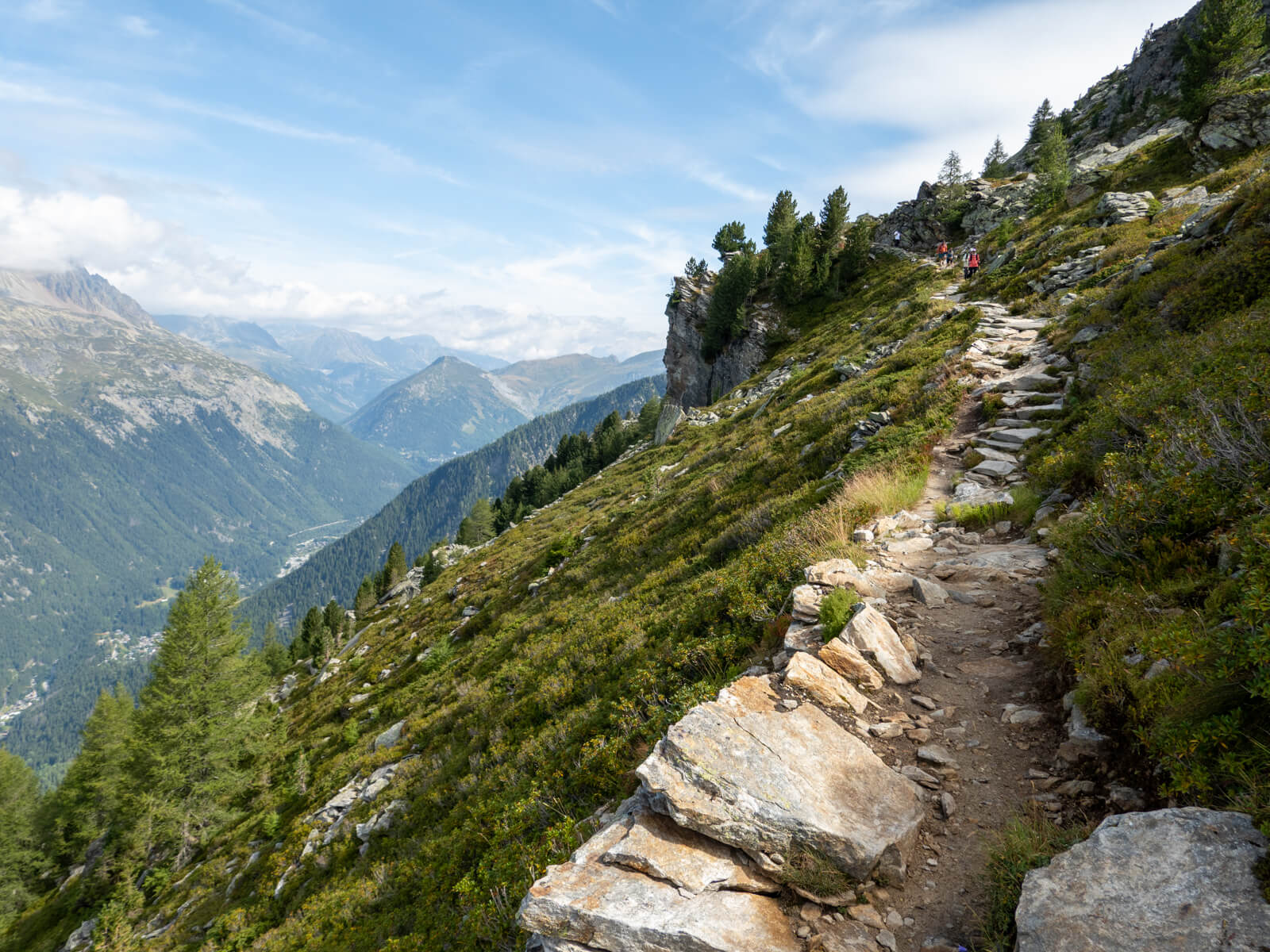
On the way down from the Aiguille du Midi, I chose to get off at the mid-station (Plan de l’Aiguille) and hike along the Grand Balcon Nord (6.9 km) rather than heading straight back to Chamonix.
You absolutely don’t have to do this. Most people just stay on the cable car and go straight back down to Chamonix.
But if you’re a keen hiker, I’d really recommend it. It’s a fantastic trail with great views over the valley, the mountains, and the Mer de Glace. Combining the Aiguille du Midi with the Grand Balcon Nord was a really enjoyable day out for me.
I’ve written a full guide to the Grand Balcon Nord separately, so check that out if it sounds like your cup of tea.
Is Aiguille du Midi Worth It?
In my opinion, yes.
I wasn’t convinced by it at first. I was in Chamonix primarily for hiking, and I assumed that the views I’d get on the trails would be enough. Spending €80 on what is essentially a cable car and viewpoint felt like a bit of a rip-off.
But given that I had the Mont Blanc Multipass, going up to Aiguille du Midi was no extra cost for me. So I decided to go for it, and I was so glad I did!
The biggest difference is the altitude. Even on the Tour du Mont Blanc, I only reached around 2,800 metres, which already felt high. But at 3,842 metres, you’re in a completely different environment, and the views are phenomenal.
That said, it does get busy. The cable car felt quite claustrophobic, and if you’re anything like me and don’t love enclosed spaces or heights, it can be uncomfortable. I’m glad I went super early in the day. If you go later, you’ll also be sharing the summit with a lot of other people, which I feel would take away from the wonder of it all.
But overall, I’m really glad I did it. The views and the experience at the top easily made up for the crowds. Crowds are often an unfortunate side effect of nice places.
If the weather is clear, go for it. €80 might seem like a lot, but it really is worth the cost.
About the Author and This Blog
I’m Lauren Pears, a travel writer and the creator behind The Planet Edit. I’ve been blogging for over 10 years, and have written for publications such as Lonely Planet, World Nomads, and Southeast Asia Backpacker.
The Planet Edit is a reader-supported outdoor travel blog. If you book or buy something through an affiliate link, I may earn a small commission at no extra cost to you. If this guide helped you plan a trip and you’d like to support the blog, you can also buy me a coffee. Thank you for supporting independent travel writing!