
An Elephant Jeep Safari in Minneriya National Park

Sri Lanka may be a small island, but it has one of the densest elephant populations in the world. Combine that with its stunning landscapes, and it’s no surprise that the country is a top destination for wildlife safaris. Among its many national parks, Minneriya stands out as one of the best places to see elephants in their natural habitat.
I visited Minneriya in March as part of a two-week cycling tour across Sri Lanka. After spending the morning pedalling through Polonnaruwa, I traded my bike for a safari jeep, ready to spot some elephants in the wild. In this guide, I’ll share my first-hand experience, what you can expect on a Minneriya jeep safari, and some tips to help you plan your time in the park.
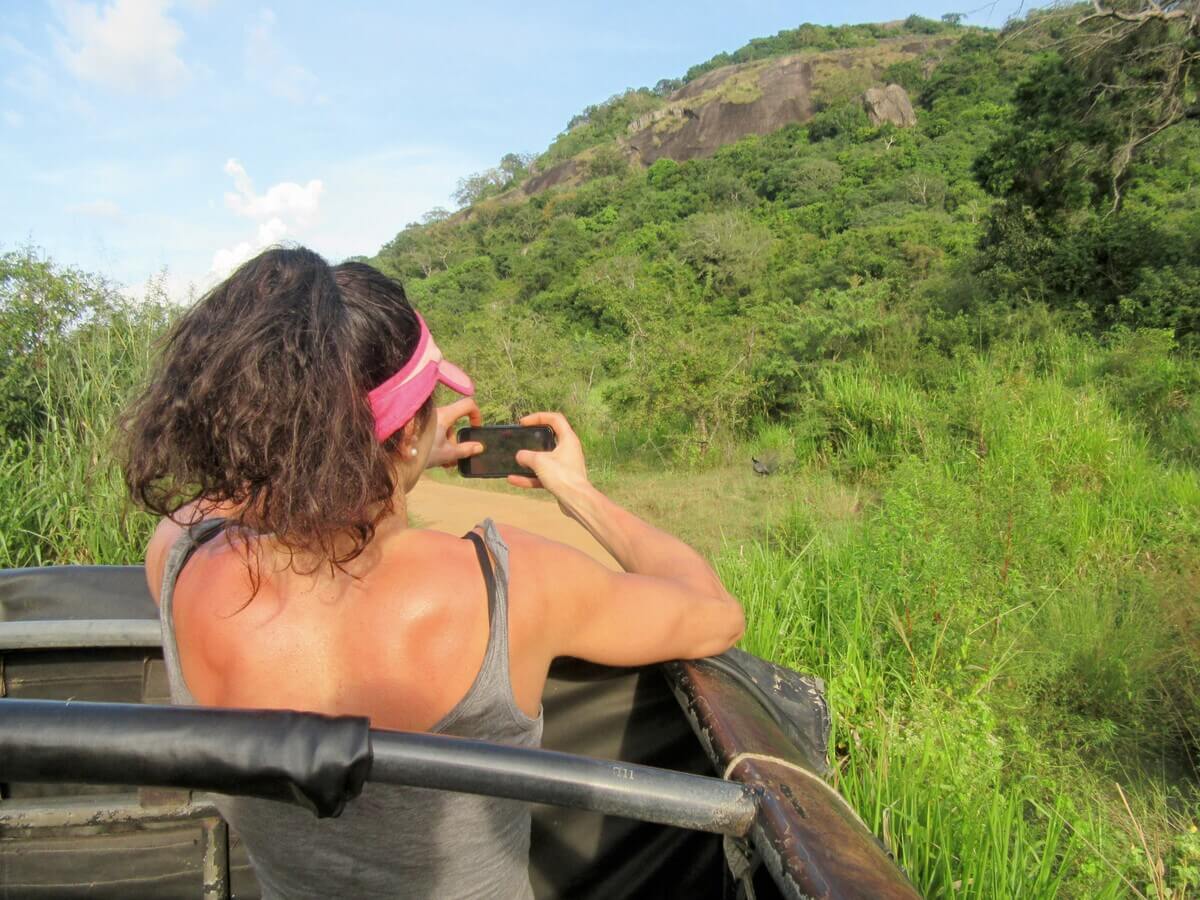
What animals can you see in Minneriya National Park?
Elephants: Minneriya is most famous for its large population of Asian elephants. They are the stars of the show, particularly during ‘The Gathering’ — an annual spectacle where up to 300 elephants congregate by the Minneriya reservoir. You’re almost guaranteed to see elephants on a Minneriya safari.
Mammals: Beyond elephants, Minneriya is home to 23 other species of mammal, including spotted deer, wild buffalo, macaques and langurs. Leopards also reside in the park, although sightings are very rare. If you’re particularly keen to see a leopard, you’ll have a better chance at Yala National Park.
Birdlife: The park is home to 170 species of birds, including the Sri Lanka junglefowl, hanging parrot, Indian pitta, peafowl, black-headed Ibis, storks, egrets, hornbills, and more.
Reptiles: 25 recorded reptile species reside in the park, including the striking red-lipped lizard, monitor lizards and mugger crocodiles. Keep your eyes peeled for the mugger crocs lurking in the Minneriya reservoir and other waterways.
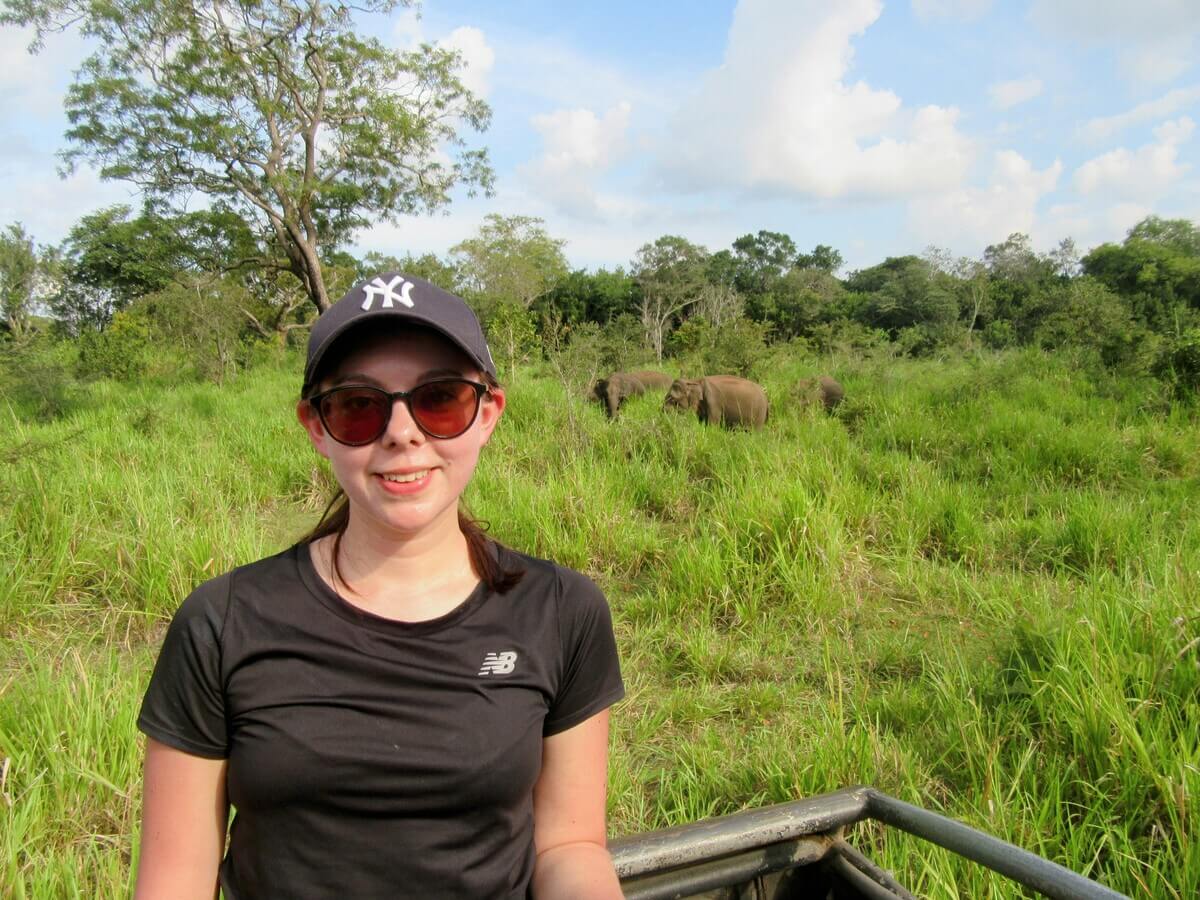
What is “The Gathering”?
Every year, a remarkable spectacle unfolds during Sri Lanka’s dry season (July to September). As water supplies dwindle, hundreds of elephants undertake a pilgrimage to the Minneriya reservoir, a man-made tank that provides a reliable source of water each year. This congregation is the largest gathering of Asian elephants in the world.
During The Gathering, it’s possible to see up to 300 Asian elephants congregated at the Minneriya reservoir. Not only does the reservoir serve as a vital watering hole, but as the water levels in the tank diminish, new, verdant shoots of grass are uncovered, providing a scrumptious feast far superior to the surrounding scrublands.
It is for this reason that Minneriya National Park is one of the best places to see Asian elephants in the world.

What’s the landscape like?
Minneriya National Park covers 8,890 hectares of Sri Lankan wilderness, its terrain a mix of evergreen forests and scrub areas. I really did love just how green Minneriya was, as it provided a beautiful setting to see elephants in the wild.
I did find that animals could sometimes be obscured by the park’s trees and long grasses. This isn’t so bad for spotting elephants as they’re quite tall, but it did make me wonder how many other smaller creatures were hidden out of sight. In comparison, Yala National Park is much more open, making it easier to see wildlife.
Don’t get me wrong: this didn’t take away from my Minneriya safari experience, it’s just something to keep in mind.

Conservation efforts in Minneriya
Minneriya National Park has implemented strict rules to reduce human impact. Visitors are required to observe these rules, which include restrictions on littering, feeding the wildlife, and noise levels. This helps to keep the park in its natural state, minimising disturbance to the wildlife.
One of the park’s primary conservation efforts is centred around its most famous residents — the Asian elephants. The park is recognised as a crucial habitat, providing the elephants with a safe haven where they can live and breed without threats from poaching or habitat destruction.
Alongside their work with elephants, park authorities are also deeply invested in the conservation of the many other species that call Minneriya home. From the purple-faced langur to the Sri Lankan leopard, a range of programmes are underway to ensure these creatures continue to thrive.
Plant conservation is another key focus. The park’s diverse ecosystems, from its dry mixed evergreen forests to its wetlands, are being closely monitored and maintained. This not only ensures the survival of the many endemic plant species, but also contributes to the overall health of the park’s ecosystems.

When is the best time to visit?
As The Gathering takes place during Sri Lanka’s dry season (July to September), this is arguably the best time to visit Minneriya National Park. You’re guaranteed to see loads of elephants during this time.
On the other hand, the park experiences its wet season from November to April. While elephant sightings are fewer, it’s a great time to enjoy the park’s lush greenery and vibrant birdlife. That being said, I visited Minneriya in March and still saw tons of elephants.
Safaris in Minneriya run on a half-day or full-day basis. Half-day safaris will give you 3 – 4 hours in the park, whereas a full-day safari will be 10 – 12 hours.
Half-day safaris run from either 6 am or 2 pm — the choice is yours on whether you want to beat the heat and get in early, or prefer to sleep in and go on safari in the afternoon.
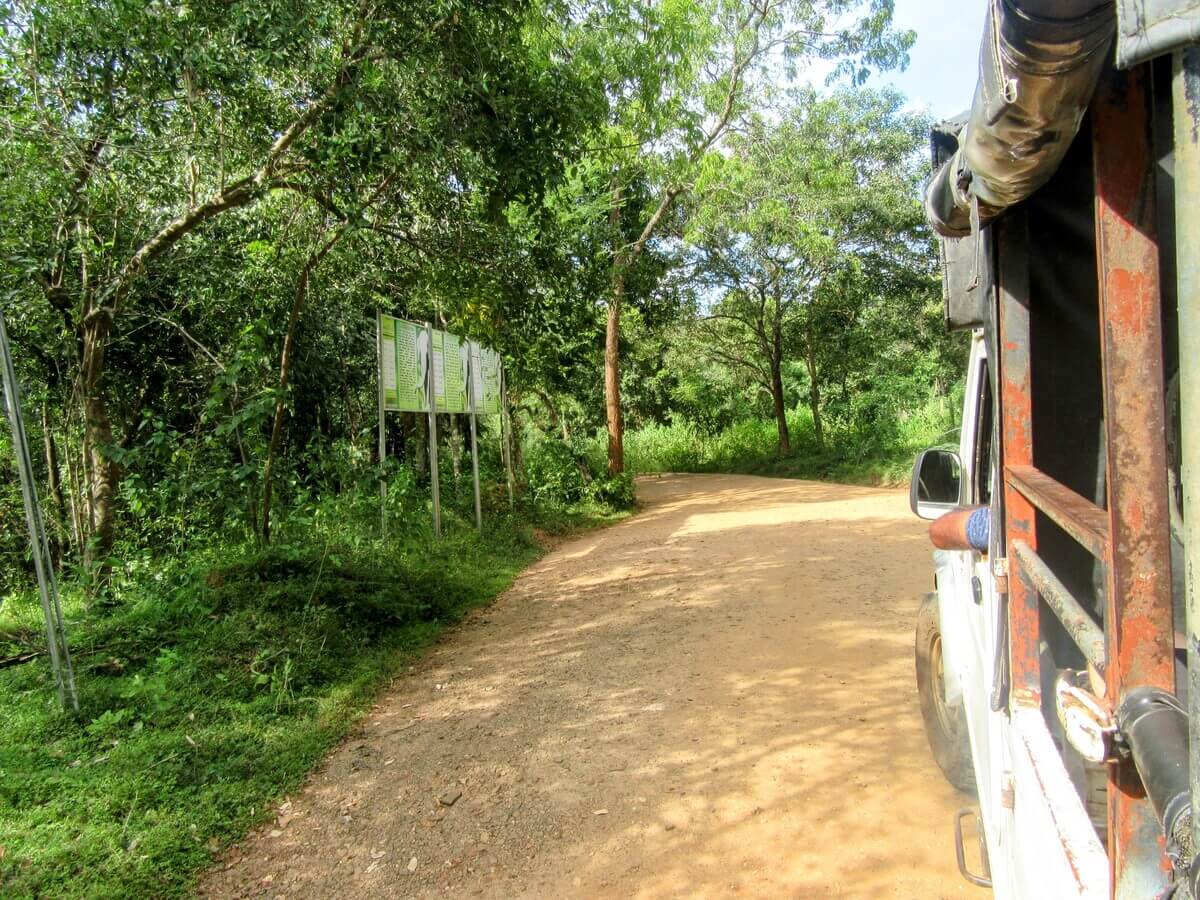
How to arrange a Minneriya Safari
The nearest towns to Minneriya are Habarana, Polonnaruwa and Sigiriya, with Habarana being the closest. From Habarana, it’s just a 15-minute drive from the park entrance, and there are plenty of safari operators there to choose from. Most accommodations can help you arrange your Minneriya safari.
For a beautiful place to stay in Habarana that complements your safari experience, I suggest either Cinnamon Lodge or Priyavimana Resort.
Although further away, Polonnaruwa and Sigiriya are also good options for places to stay nearby. Most operators will happily pick you up from Polonnaruwa or Sigiriya.
Whether you book your safari through your accommodation or directly with an operator, the operator will usually pick you up from your accommodation and take you back afterwards. Most jeeps have the capacity to take 6 people.
Here are a few suggestions for operators to look into:
- Minneriya Wild Safari
- Minneriya Safari Tours
- Minneriya Wild Tours
- This safari on Viator has great reviews
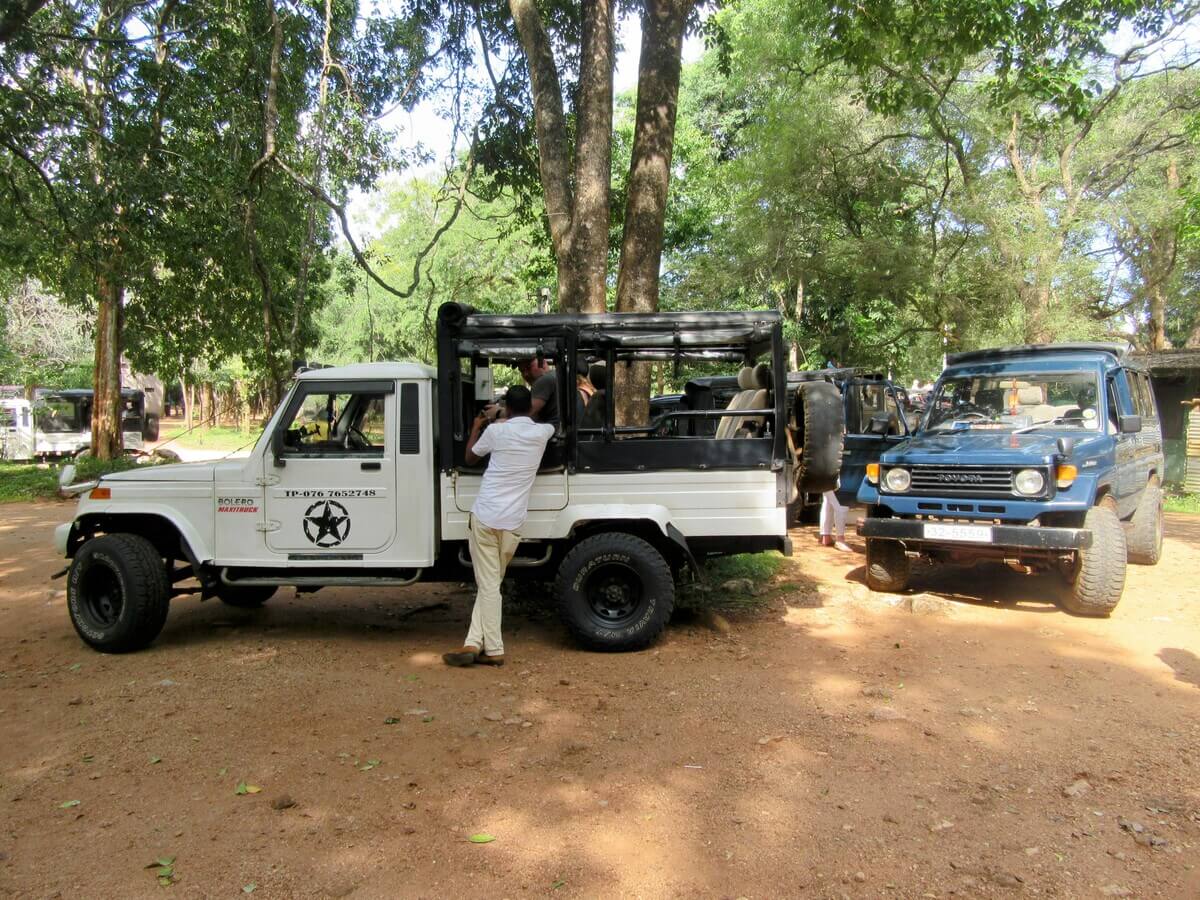
Note: There are two other national parks that border Minneriya: Kaudulla and Hurulu. Elephants do not care for park borders, and freely wander back and forth between the three parks. If for some reason you specifically want to visit Minneriya, then you’ll need to be clear about this, otherwise, you’ll be taken to one of the other two parks if this is where the elephants are.
How much does a Minneriya Safari cost?
Entrance fees for Minneriya are only about $15 per person, but it’s the cost of the jeep hire that can really start to add up. Tourists are not permitted into the park without an authorised jeep and driver.
I personally paid $60 for a half-day group safari. I feel that the time we had in the park was enough: we saw loads of elephants, as well as plenty of birdlife.
The cost of a Minneriya safari will vary depending on the length of your tour and whether you opt to go private or not. Here’s a general breakdown:
| Type of Safari | Average Cost |
|---|---|
| Half-day group safari | $30 – $60 per person |
| Full-day group safari | $95 – $125 per person |
| Half-day private safari | $125 – $190 per person |
| Full-day private safari | $250 – $380 per person |
My experience on safari in Minneriya National Park
I was in Sri Lanka on a two-week cycle tour of the country, and had spent the morning pedalling around Polonnaruwa, an ancient city with monuments, temples and relics from the kingdom’s heyday. After lunch, our support vehicle drove us to Minneriya National Park, where we hopped into open-top jeeps to begin our safari.
I was travelling in Sri Lanka in March, which is outside of peak elephant season. I was worried that we might not see many elephants because of this, but we saw plenty, including some babies! In fact, we saw our first elephants within minutes of entering the park — a group of four females and a baby. We observed them for a while, and then a bull elephant showed up, too.
Towards the end of our safari, we were taken to a Watch Tower, where we had sweeping, expansive views of the whole park. I couldn’t see any wildlife from this distance, but the view was nice, and I appreciated getting out of the jeep to stretch my legs.
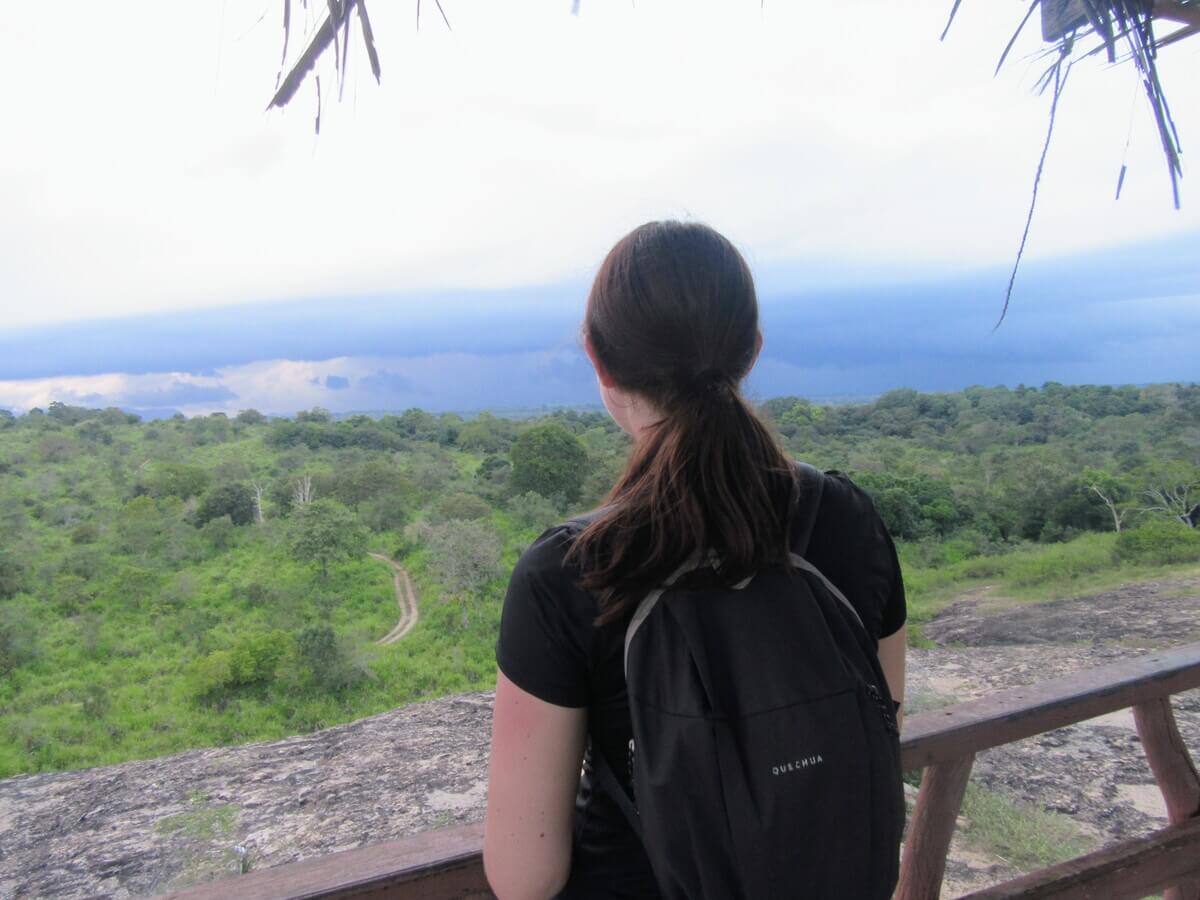
I thought Minneriya was very green, which was both a blessing and a curse. It provided some beautiful, lush scenery to view wildlife in, but the dense foliage obscured our view of the animals a little bit. This is not really a complaint, however, as it’s lovely to know the animals have plenty of natural cover and a habitat that feels untouched and wild. It also made the moments when we did spot animals feel more earned.
There were moments when the park felt a little crowded. Jeeps tended to congregate in the same areas, especially when a herd of elephants was nearby. While the drivers were careful not to get too close, there were times when it felt like we were part of a caravan, with multiple vehicles jostling for the best view. It didn’t ruin the experience, but if you’re looking for a completely serene safari, it’s something to be aware of.
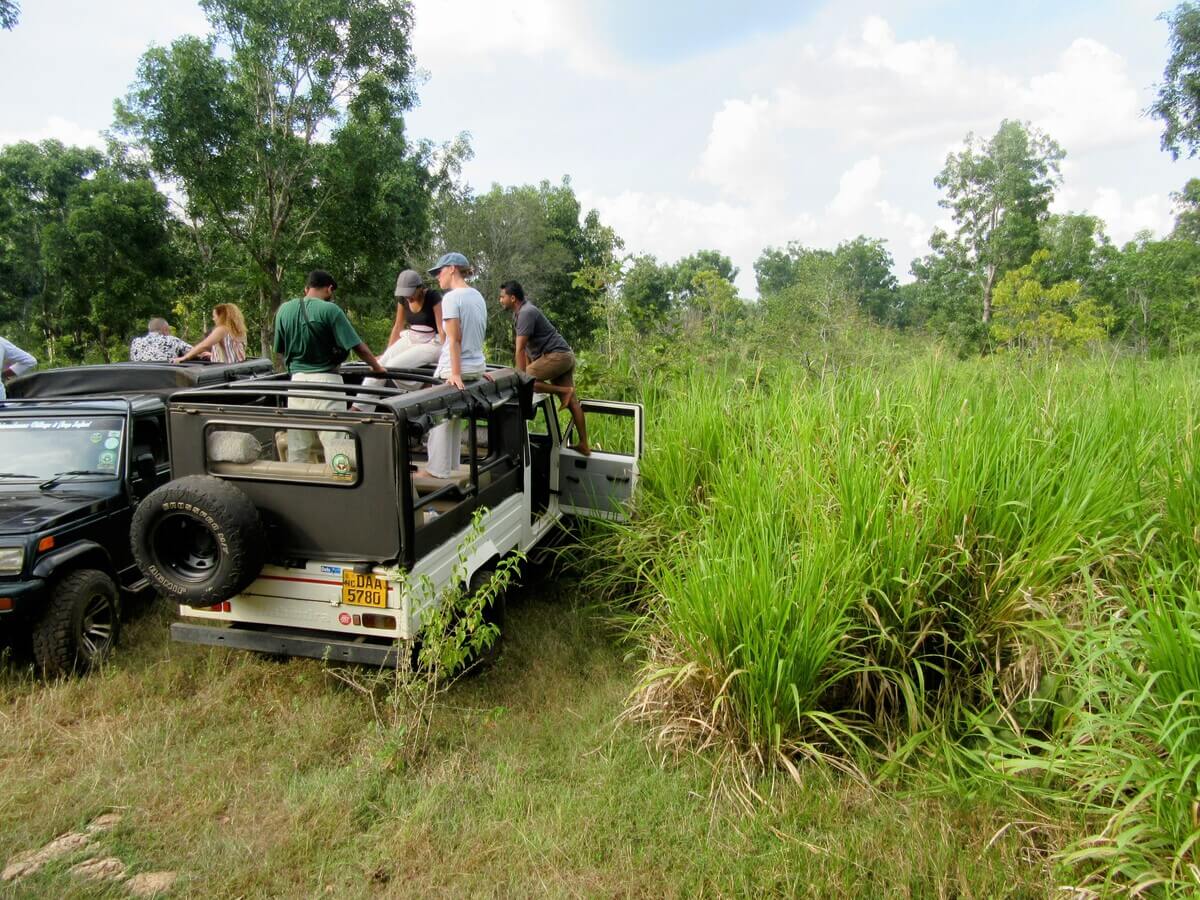
Beyond the elephants, Minneriya had plenty of other wildlife to see. Langur monkeys swung through the trees, peacocks strutted across the open grasslands, and we spotted a crocodile half-submerged in the reservoir.
All in all, I loved my Minneriya safari. We saw plenty of elephants, langurs, peacocks, and deer. I also appreciated that our guide was knowledgeable and respectful, ensuring we kept a safe but close distance without disturbing the animals.
Keep planning your Sri Lanka trip 🐘🌿
- My ultimate two week Sri Lanka itinerary
- Where to see wildlife in Sri Lanka
- Yala safari guide
- Minneriya vs Yala comparison guide
- Cycling in Anuradhapura
- How to spend 2 days in Kandy
Thank you for reading! If you found this post useful, I’d be grateful if you would consider using the affiliate links below when planning your travels. I’ll make a small commission at no extra cost to you. This will help me to keep this blog running. Thanks for your support — Lauren.
Accommodation – Booking.com
Flights – Booking.com
Travel insurance – World Nomads
Excursions & tours – Viator
Outdoor gear – Decathlon
eSIMs – Airalo
Alternatively, you could buy me a coffee to say thanks!


About The Author
Lauren Pears is a freelance travel writer and blogger who writes about active adventure travel. She’s been blogging for almost 10 years, and has written for publications such as Lonely Planet, World Nomads, and Southeast Asia Backpacker.


