EuroVelo 6 Guide: Explore Europe’s Rivers by Bicycle

I’ve just completed a 3-month bicycle tour across Europe. I started in London and used EuroVelo 6 for the majority of the way to make my way to Istanbul. I loved my time on the route and want to encourage every cyclist to experience it. It truly was a wonderful and life-changing experience. Hopefully, this EuroVelo 6 guide will provide a good overview of what to expect.
EuroVelo 6 is one of the most popular cycle routes in Europe. It’s little wonder why — the route boasts medieval castles, colourful villages, famous rivers, and capital cities, as well as a flat topography and excellent infrastructure. The route will take you to Vienna, Bratislava and Budapest; it’ll wind you through national parks; and you’ll witness the wonderful scenery along the Loire, Rhine and Danube rivers.
Starting at the Atlantic Coast and ending at the Black Sea, EuroVelo 6 will take you 4,448km across the entire European continent.
EuroVelo 6 at a glance
Length: 4,448km / 2,764 miles
Start and end points: Nantes, France – Constanta, Romania
Countries: France, Switzerland, Germany, Austria, Slovakia, Hungary, Croatia, Serbia, Bulgaria and Romania.
GPX File: I imagine some of you are just here for a GPX file. If so, you can get it here.
Why Europe by bike?
It seems that bicycle touring is undergoing a boom at the moment. There are many possible reasons for this, but above all, travelling by bike allows for a kind of freedom and independence that’s hard to find in other types of travel. Many first-time bike tourers, like myself, select Europe as their first adventure. It’s a great continent to cycle across: bike paths are decent, amenities are great, and distances between cities and towns are much smaller than in other parts of the world. Oh, and let’s not forget that Europe is incredibly diverse with beautiful scenery and fascinating cultures.
Why choose EuroVelo 6?
Sights and scenery: The route will take you through some of Europe’s greatest cities and historical sites, as well as treat you to a variety of beautiful riverside views and picturesque towns.
Flat topography: Most of EuroVelo 6 is very flat, making it ideal for beginners or those looking for a leisurely cycling holiday. The hilliest section is from Schaffhausen to Tuttlingen, where the route heads into the Upper Danube Nature Park. This is a really gorgeous section, though, so hopefully the inclines will feel worth it. The route through Serbia is a little mountainous in places, too.
Easy to navigate: EuroVelo 6 is very easy to navigate, given that you’ll be able to use both signposts and rivers as your guides. Signposting is excellent in Western Europe, in particular. That being said, there are a few sections where signposting could be better, so I recommend downloading an app like Komoot to use as a GPS.
Excellent infrastructure: Europe is, for the most part, very well set up for cyclists. Bike paths are well-maintained (usually), accommodation is easy to find, and bike shops are plentiful. Motorists are also used to seeing cyclists on the route, so they will give you space and respect.


Infrastructure and amenities
France is extremely well set up for cyclists. It has plenty of bike shops, bike-friendly accommodation, and excellent roads for cycling. A quick glance at a map will show you just how many small roads (D roads) there are, which usually have little traffic on them. The roads in France are very bike-friendly, and motorists will give you space and respect. A lot of France’s EuroVelo 6 actually follows canal towpaths, where there is zero motorised traffic.
You should be aware that many shops in France, including supermarkets and restaurants, close at midday for 2-3 hours. My father needed a bike repair shop after completely bursting a tyre, and we had to wait 2 hours for one to open. It also means you’ll likely need to purchase lunch and enough water in the morning.
Germany, Austria and Switzerland are also extremely well set up for cyclists. Switzerland is particularly pricey, though; they use Swiss Franc rather than Euro. Because you’ll be following the Rhine River on the border of Switzerland and Germany, I recommend heading into Germany for better value accommodation and groceries. There is no border control, so it’s a matter of just crossing the river via a bridge.

You’ll notice changes in the cycling conditions quite quickly once you leave Austria behind and head into Eastern Europe. The roads aren’t always as well-maintained, so potholes and other problems are common. The signposting is also not as great, so be sure your GPS and maps are up to date.
Accommodation options and frequency of supermarkets also decline as you head East, but they’re still abundant enough that you won’t run into serious problems. You’ll just need to plan ahead a little more; use Google Maps to find campsites in advance, for example, as distances between them can be large.
Hungary has some uninspiring sections along its route, where you’ll find yourself pedalling along monotonous farmland for kilometres on end. The surface of its bike paths were also some of the worst I found in Europe — dirt roads with a sand-like substance, where your bike would skid if you weren’t careful, were common. Despite this, Hungary does have some very beautiful stretches which make it worthwhile.


I found Croatia’s roads to be excellent for cycling. Most of my time in Croatia consisted of riding along flat, smooth roads with relatively little traffic. The roads usually had beautiful scenery, too. There were a couple of stretches where the road surface wasn’t so pristine, namely near the Duna-Drava Nemzeti Park on the border of Hungary, but it was still perfectly rideable.
Serbia was a surprise to me. It turned out to be one of my favourite countries on the whole route, tied with Austria. The roads in Eastern Serbia, in particular, were mostly smooth and well-maintained. In Western Serbia, dirt paths were common, but these were scenic and still rideable. The roads coming out of Backa Palanka, Novi Sad, and Belgrade were busy and a little hairy to cycle on.
Signposting was good throughout the country — Serbia’s EV6 signs were actually quite fun, with funny notes or anecdotes. Cycling isn’t overly popular in Serbia, so the country isn’t particularly well set up for bike tourists — for example, bike shops aren’t common. Nonetheless, there are plenty of small shops and restaurants to find food and drink throughout the day.
Be advised that from Golubac and through Serbia’s Djerdap National Park, you’ll encounter tunnels carved through the mountain pass. These tunnels are dark, and some are quite long, so be sure you’re prepared with a headlamp and good tail lights.
I wasn’t sure exactly what to expect from the road conditions in Bulgaria, having heard that traffic on Bulgarian roads can be crazy. I only followed EuroVelo 6 in Bulgaria for a couple of days — before heading southeast towards Turkey — but I found little traffic, beautiful scenery and fairly well-maintained roads.
I didn’t personally follow EuroVelo 6 in Romania, but a fellow cyclist did. She had this to say: “From Bazias to Drobeta Turnu-Severin there is a spectacular natural landscape with the Danube flowing through the Banat Mountains. From Drobeta Turnu-Severin onwards, the Danube flows along a large plain where the cycling will be relaxed and peaceful.
Accommodation is quite sparse, so you will need to really plan ahead. Not all guesthouses can be found online, so booking.com will not always be overly helpful. Almost every village or town will have a small shop for groceries, but the choice will be limited. The route in Romania is mostly along through roads, but they generally have light traffic, so they aren’t as dangerous as I originally expected. Romanian roads have a variety of traffic, including horse-drawn carts, so I think the average driver is used to all sorts.”
Accommodation along EuroVelo 6
There is a huge variety of accommodation choices along EuroVelo 6, suitable for all budgets and styles. I personally camped most nights, but there are also lots of hotels, guesthouses, and pensions along the route for those who prefer a little more luxury. I found it useful to pin accommodation options along the route on Google Maps, so I always knew how far I was from somewhere to sleep.
Unless you are planning a short trip, it’s not practical to plan accommodation in advance. Weather, equipment, your body and other factors can all influence the distance you cover each day. I also found that I’d often find a nice town or attraction and want to spend some time there. It’s best to remain as flexible as possible.
Camping
Campsites in Western Europe are abundant, with campsites in almost every town, so you shouldn’t struggle to find one at the end of the day. Two-star campsites will likely be the best for you, as they have washrooms and showers, but without the frills, making them great value for money.
Camping options aren’t as abundant as you head further East, but I still always found a campground to spend the night in Hungary, Croatia and Serbia. Serbia’s camping options were unbelievable value for money, often coming with kitchenettes, complimentary food and drinks from the hosts, and other great facilities.
Bulgaria posed some challenges — I ended up having to stay in hotels due to the lack of campgrounds, and this problem persists in Romania.
These are some of my favourite campsites I stayed at along the EuroVelo 6:
- Regensburg Canoe Club in Regensburg, Germany
- Camping Passau in Passau, Germany
- Wachau-Camping Rossatz in Dürnstein, Austria
- CityCamping in Györ, Hungary
- Camping Suza Baranje in Suza, Croatia
- Camping Asin in Dobra, Serbia
- Base Camp for Adventurers in Negotin, Serbia

Wild camping
Wild camping is a great way to save money and enjoy nature — I met many bike tourists along EuroVelo 6 who wild camped often. Wild camping shouldn’t be a problem on the Eastern part of the route (Hungary onwards). Most farmers and villagers will happily let you camp on their land if you ask, and it’s also easy enough to find a quiet, secluded spot by the river.
However, wild camping is prohibited in Western Europe. Many cyclists do it anyway and don’t get caught. Despite the fact that it’s technically prohibited, most countries do have a relatively relaxed attitude to wild campers, and may or may not ask you to move on if you’re caught. Just make sure to be discreet: find a secluded spot, wait until dusk to set up camp and be gone by early morning.
Hotels
You’ll find hotels, guesthouses and pensions along all of EuroVelo 6. Many are aware that they’re on a popular bike route and so have good amenities for cyclists, such as bicycle parking. Hotels in Germany and Austria would often have signs outside to let cyclists know their bikes are welcome: “Radfahrer Willkommen.” Booking.com has the biggest selection of hotels if you prefer to book a day in advance, which I recommend you do if you’re cycling in the summer months.
Warm Showers
If you’re not familiar, Warm Showers is a free worldwide hospitality exchange for touring cyclists. It’s a fantastic community where cyclists offer to host other cyclists for a night. You’ll be given a place to sleep and a shower, but it’s likely you’ll also be given food and a beer! Warm Showers hosts are most abundant in Western Europe — particularly France — but there are a few in Eastern Europe, too.
Navigation
As already mentioned, EuroVelo 6 is very well signposted in Western Europe. Signs are displayed at every junction and are often also placed every few kilometres to confirm that you are still on the right path. I also found that if I did look lost, locals would sometimes notice my loaded bike, say “EuroVelo?” and point me in the right direction.

As you reach Eastern Europe, you’ll find that the signposting is not always so good. Particularly in Hungary and Bulgaria, the signs were sometimes ambiguous or non-existent.
I highly recommend downloading a navigation app like Komoot onto your phone so that you’re always able to find the trail easily. You can also pick up detailed paper maps from local tourism offices along many parts of the route.
You can also download a GPX track for free here. I loaded this map onto Komoot.
If you do manage to get lost, you can simply find the river — EuroVelo 6 is called “The Rivers Route” for a reason. If you follow the river, it’s likely that you’ll eventually find your way back onto the bike path.
I personally found that finding my way out of cities and large towns posed the biggest navigational challenges. I distinctly remember finding the correct route out of Basel took about 2 hours, and many cyclists I met said they had real problems getting out of Vienna.
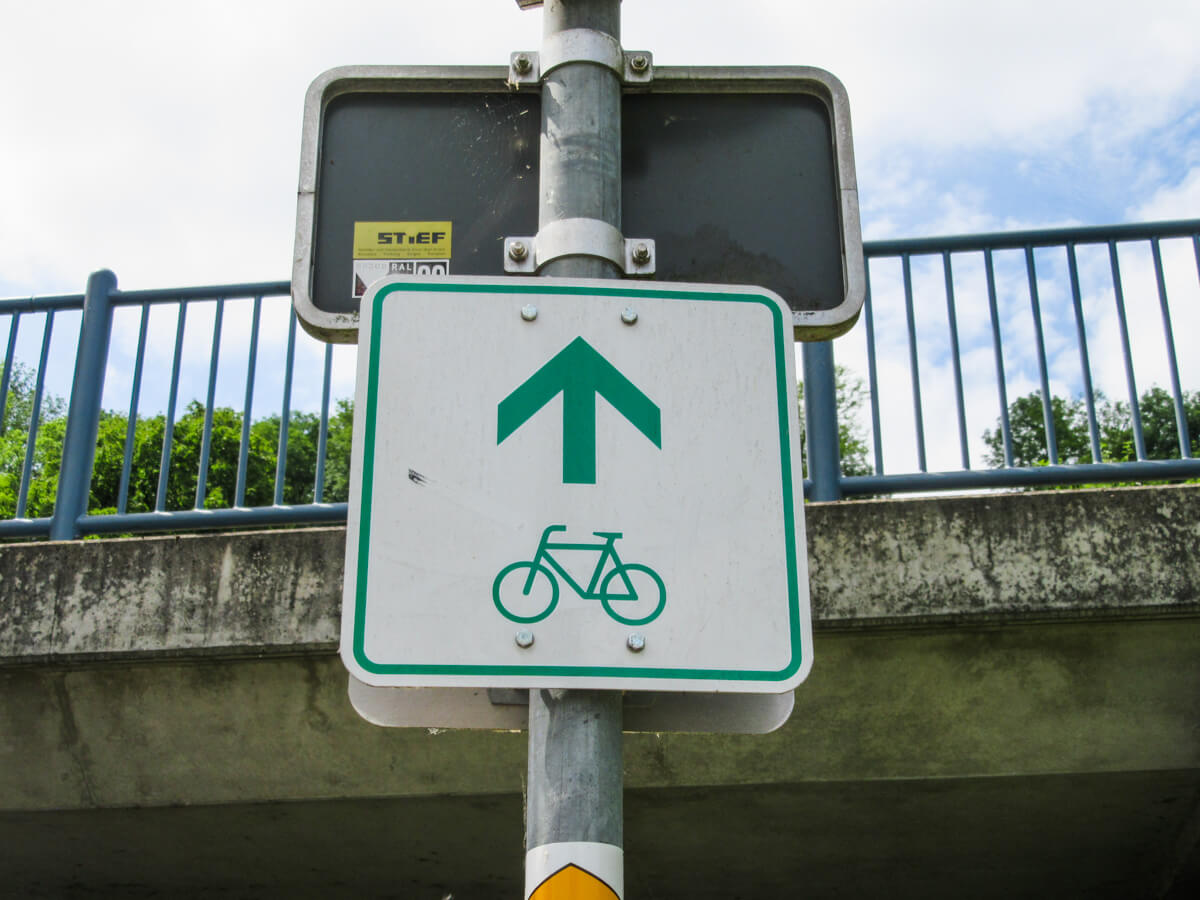
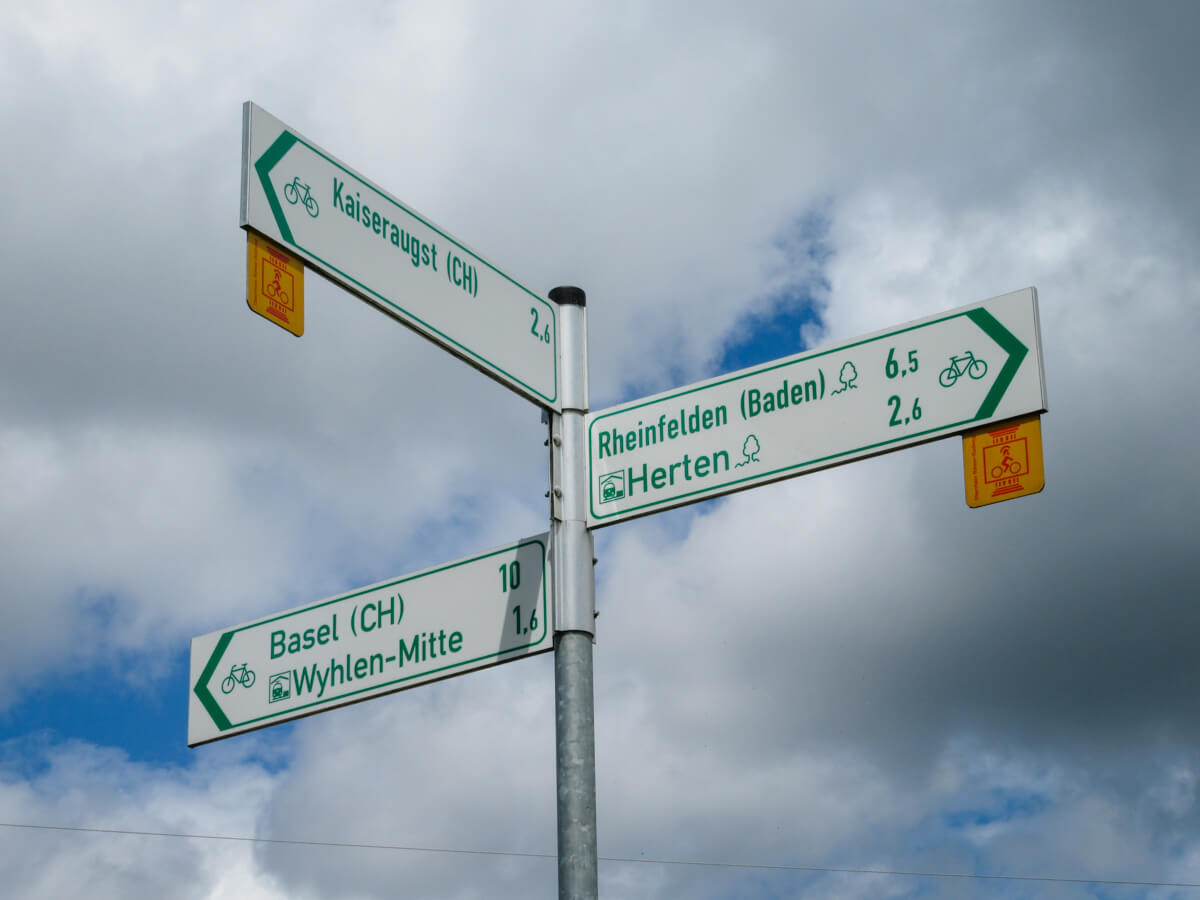
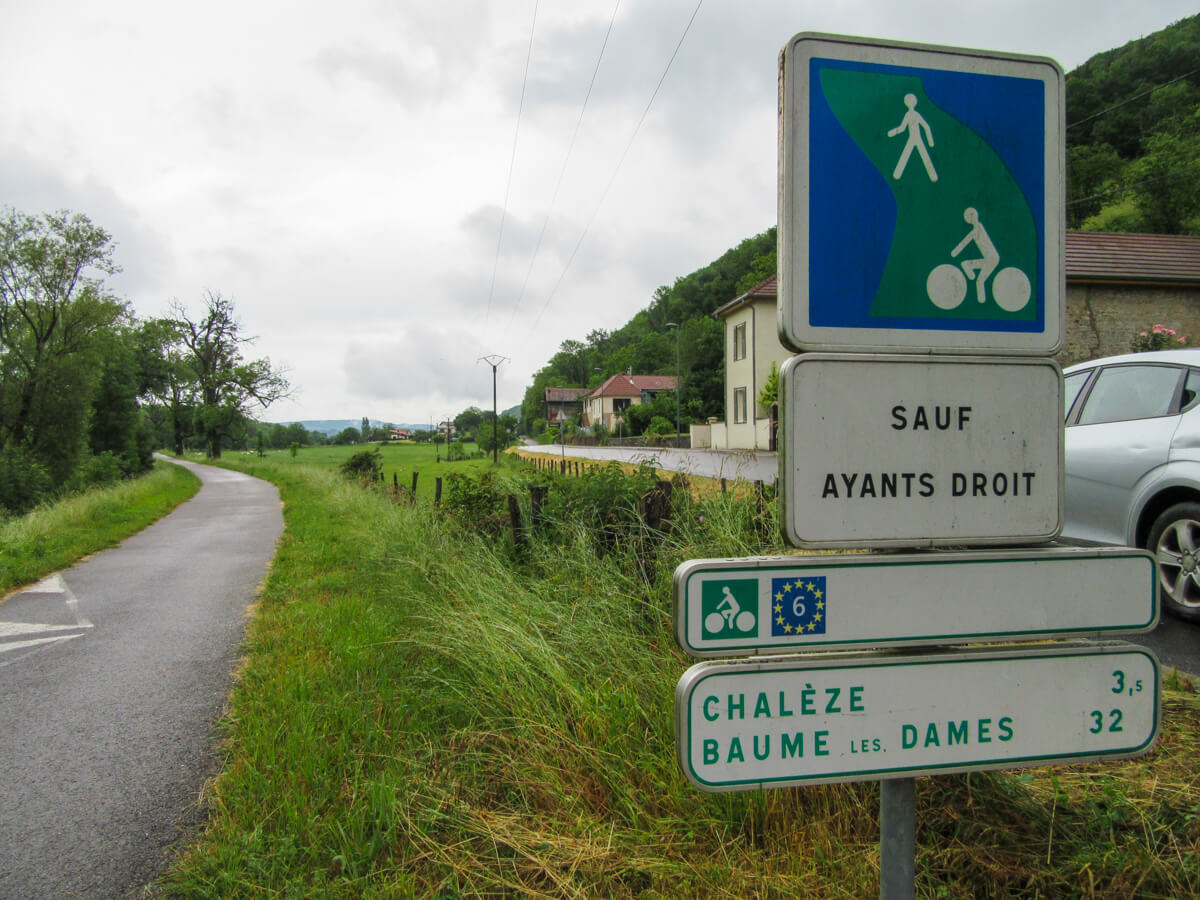
The EuroVelo signs look a little different in each country, so make sure you know what you’re looking for. Upon arrival in Switzerland, I kept losing the EuroVelo signs, but it turns out they just look a little different from what I was used to seeing in France. The EuroVelo logo isn’t on all the signs, like they were in France, so you just have to follow the bike path symbols.

Climate and best time to go
The peak tourist season for most of Europe is July and August, as this is when children are on their summer break from school. As such, prices tend to go up and bike paths tend to get busier. However, July and August do bring warm weather, and you’re less likely to experience rain.
I cycled across Europe from late May to late August, and found that the weather was usually pleasant. The bike paths were not busy, except for along the canals in France and also the section between Passau and Vienna.
Campsites did usually have a fair few bike tourists, though, which I loved. I met some interesting people who enriched my experience. I read online that accommodation options get booked up in the summer and turn cyclists away, but this never happened to me. However, I was in Eastern Europe by the time the school summer holidays started, so the more touristic West may have posed these problems.
To sum, the route is most comfortably rideable from May to September. Cycling in winter, with cold weather and short days, is not ideal.
Budget for bicycle touring across Europe
Your daily touring costs will vary massively depending on your touring style:
€5-10 per day: If you choose to wild camp, cook your own meals and skip paid attractions, you could potentially tour on a mere €5-10 per day.
€15 per day: This budget would get you a basic campground and groceries every day, but not much else.
€30 per day: This budget will get you a campground and groceries every day, and will also allow for some sightseeing and the occasional meal out.
€100 per day: You could easily burn through over €100 a day if you choose to eat out, stay in hotels every night and do a lot of sightseeing.
Most tourers’ daily budget falls somewhere in the €15-30 range.
Personally, I spent roughly €30 per day cycling the EuroVelo 6. This amounted to just short of €3,000 during my 3 months on the route. I stayed at campsites, cooked my own meals, did some sightseeing, and treated myself to the occasional meal out. I also ensured I had enough money kept aside to cover bike repairs if needed.
It’s worth noting that I spent more during the first half of my trip because Western Europe is more expensive than Eastern Europe. In Eastern Europe, you can expect to pay €5-10 less per day than in Western Europe.
If you’re unlucky, you may also run into large one-off costs. For example, you may need to pay for bike repairs or have to replace lost or broken equipment. A cyclist I met had to buy a new tent after a child fell onto it at a campsite and ripped a hole in it…
I would bring more money than you think you need, to ensure you’re covered if things go a little pear-shaped!

What to pack for cycling across Europe
Bike gear
- A bicycle
- Panniers – I used BTWIN panniers
- Bike repair kit (allen keys, inner tubes, oil, etc)
- Tyre pump
- Bike lock
- Helmet
Clothes
- 2x cycling shorts
- 4x cycling tops
- 5x underwear
- 5x socks
- 1-2 non-cycling outfits
- 1 jumper/fleece
- Trainers/cycling shoes
- Comfy shoes for evenings
- Raincoat
Toiletries
- Soap and shampoo
- Toothbrush and toothpaste
- Deodorant
- Sunscreen
- Wet wipes
- Razor
- Chapstick
- Hairbrush and hair ties
- Quick-drying, light-weight towel
Camping equipment (unless opting to stay in hotels/guesthouses)
- A tent
- A sleeping bag
- A sleeping mat – I loved this Forclaz mat as it was lightweight and easy to inflate, deflate and transport.
- Gas cylinder
- Portable stove – I love my MSR PocketRocket
- Matches/lighter
- Cutlery
Other/miscellaneous
- Passport
- Wallet and money
- Flashlight
- A camera
- Plug adapters
- Battery pack(s)
- Mini first aid kit

Which bike should I bring?
I’ll start off by saying that you don’t need a hardcore/performance bike. A reasonably sturdy bike that has the ability to carry your load, is comfortable, and has decent tyres will be fine. You really don’t need to spend lots of money if you don’t want to — EuroVelo 6 isn’t going to test your bike too much. I’d recommend a hybrid or touring bike, or even a road bike fitted with rack mounts and larger tyres could work.
My bike was a fortunate find from a charity shop and was already equipped with everything I needed. It had fitments so I could attach front and rear racks, and had recently been fitted with new wheels. I also liked that it was a bit bashed up, so it was less likely to be a target for theft! It’s a hybrid from Trek.
Here are some great options for bikes. All of them are ready for touring, with technology to maximise comfort and reduce vibrations over long distances, plus they all come with rack mounts and the ability to carry a load:
- Trek 520 Disc – a renowned touring classic, though expensive
- Fuji Touring – versatile and ideal for long-distance touring
- Cube Touring – also versatile and ideal for long-distance touring
- Giant ToughRoad SLR 2 – great value for price hybrid option
- Cannondale Quick CX 4 – sturdy yet agile hybrid option
- Cannondale Quick Disc 3 – a great hybrid option for women
I have a whole blog post on choosing a touring bike, which you may find useful.

Travel insurance for cycling across Europe
I actually found it harder than I expected to find a decent policy that covered long-distance bicycle touring. In the end, I settled for my trusty World Nomads, whom I use for most touring and general long-term trips.
You can read World Nomads’ policy on cycling-related travel here, but here are the basics:
- Cycle touring is covered, but the tour must be on one continent only – no cover is available for intercontinental cycle touring. This is fine if you are doing EuroVelo 6 / staying in Europe only!
- You’ll need to tick ‘cycling – independent cycle touring’ when buying your policy.
I have a whole post on choosing cycle touring insurance, including 8 good providers to pick from.
More EuroVelo 6 reading 🚲
- My complete guide to cycle touring in Europe
- London to Istanbul by bike
- Passau to Vienna by Bike
- Vienna to Budapest by Bike
- Cycling in Serbia
- Rating the cities I stopped at along EV6
I hope you found this EuroVelo 6 guide useful. As this was my first big bike tour, I researched lots online and couldn’t find the answer to everything I wanted, so hopefully, I’ve managed to cover everything you might want to know.
If you have additional questions, please drop them in the comments below, and I will do my best to answer them 🙂
Thank you for reading! If you found this post useful, I’d be grateful if you would consider using the affiliate links below when planning your travels. I’ll make a small commission at no extra cost to you. This will help me to keep this blog running. Thanks for your support — Lauren.
Accommodation – Booking.com
Flights – Booking.com
Travel insurance – World Nomads
Excursions & tours – Viator
Outdoor gear – Decathlon
eSIMs – Airalo
Alternatively, you could buy me a coffee to say thanks!


About The Author
Lauren Pears is a freelance travel writer and blogger who writes about active adventure travel. She’s been blogging for almost 10 years, and has written for publications such as Lonely Planet, World Nomads, and Southeast Asia Backpacker.


Absolutely loved your blog – you write very well and really helpful information. We are planning some trip this year with bits of euro 6 and will definitely use some of your tips .
Just wanted to ask about security- when you had a few days off in places did you leave your bike and stuff in campsites ? Or were you staying in guesthouses.. also as you traveled alone how was it going into supermarkets and leaving you bike and bags outside? Did you take a small ‘cafe lock’ ?
Thanks so much
Ali
Hi Ali! Thanks so much for the kind words, I’m glad you found it helpful. In terms of security, I locked my bike to fences, trees, railings, posts, etc, whenever I left it anywhere. It always felt pretty secure leaving my bike locked up in campsites, less so outside supermarkets and such, but you sort of just have to have faith in people at times. I had zero issues with theft – anyone could have easily unclipped my panniers and run off with them while I was in a supermarket, but luckily no one did! In hindsight, it would have been wiser to lock my panniers to my bike when left unattended, but this seemed like aggro at the time. I would keep my panniers in my tent during days off, and would always carry my valuables on me in a little rucksack.
Hope this helps, and hope you enjoy your trip!
Great trip – thinking about doing similar. Is the .gpx you have posted recorded from what you did, or is it a download from Eurovelo site?
Hi Barry, the GPX is from a random user’s RideWithGPS route. My GPX track was a little crazy from where I detoured into cities, etc.
Why did you choose to not ride EuroVelo 6 in Romania? I am planning a solo, camping, late-April 2026 departure from the west. Thank you for your report.
Hi Peter! I didn’t ride through Romania because I was heading to Turkey, so I started heading south from Bulgaria. Good luck with your ride, you’ll have a fantastic time 🙂
Hello Lauren!
I’m planning to ride this route in summer 2026. I rode across the US 4 years ago and can’t wait to ride across Europe. Thanks for posting this account and information. It’s been very helpful.
Thanks Robert, glad it was helpful! Enjoy your ride this summer 🙂
Hi Lauren,
I enjoyed reading your description of the Eurovelo 6 bike route.
I’m from Canada and I’ve cycled at least seven independent silo
multi-day bike tours in Europe, mainly France. I do not camp.
Can you tell me why you prefer the Eurovelo 6 route in Germany, Austria and Serbia versus the Eurovelo 6 route in France? I prefer cycling through trees forests along bike paths versus cycling past vineyards and farms.
Richard
Hi Richard! I think I just preferred the scenery in these places, although France had some beautiful sections too 🙂
I’m in London, would love to buy you a real coffee and natter about your EV6, which I’m doing in May 24.
Hi Lauren, quick question: which section of EV6 would you recommend to someone who only has two weeks to spend? Thanks!
Hey William, I would say Passau to Budapest 🙂
Hi Lauren pears , thanks for your valuable reply it will be definitely help us on our ride
These days I am in london , I wish I could have ride with you & listen your experience from you Can we join you for ride someday we live on hermitage lane near Heath
Thank
Vishav Dhiman
I enjoyed 3 weeks dry from Bratislava to Vidin October 2022. Next time I might stay on the Romanian side in the gorges as the south side, Serbia, didn’t get so much sun. The tunnels were ikky because of the weird acoustic making it difficult to judge if the noise of the car that’s just overtaken is masking another car: I juddered and stopped a few times as it was disorientating.
Hi Nik, glad you had a nice time :). You’re right, those tunnels are a little spooky!
Dear Lauren:
Thanks for the clear, summary of your trip. Very nice.
I am wondering about the Loire Valley for cycling. Can a cyclist ride most of the Chateau area on car free bike paths?
Bicycles are the “cars” of the future!
Regards,
Craig
Hi Craig, thanks for reading! The Loire section of the route is made up of cycle paths and quiet roads. You’ll need to cycle on some roads with cars, but they are not major roads. Drivers here are also very used to sharing roads with cyclists. Hope this helps.
Hi Lauren, very impressive journey! How long did you tend to cycle in one go – did you take regular breaks? I’m not used to riding more than an hour or so at a time. Thanks, Kyle
Thanks Kyle! I probably cycle up to about 3 hours at a time before taking a break, excluding short water stops. No need to do the same though, it’s best enjoyed in a way that works for you 🙂
Hi Lauren! Just want to say thanks for this. I’m a solo gal planning my first ever bike trip in Europe, and your article’s really helping to soothe the anxiety.
Did you ever have any bike problems? What were your fav countries to cycle through?
Cheers!
Hi Asia, thanks for reading, I’m glad my article has helped! When are you planning to cycle in Europe?
I didn’t have any bike problems at all, except for one flat tyre. I think I was lucky! There are lots of bike shops on the western part of EV6 that you can go to if you have issues. The infrastructure for cyclists is not as good as you head east though, so bike shops are not so common after Hungary unfortunately.
My favourite countries were Germany, Austria and Serbia 😊
Hi Lauren
My wife and I love your articles!!! We are in the midst of planning our bike trip from Germany to Serbia, via the Danube, and you have provided us with a TON of good information! I have a few questions but I’ll start with this one!
1) How did you return back to the UK at the end of your journey? Bus, train, plane or a combination of all three? We think we have enough time to cycle from Donaueschingen, Germany to Negotin, Serbia, at which point we’d have to get back to Munich for our return flight back home to Canada. Any thoughts?
Thank you Pete, I’m pleased my blog has been helpful to you and your wife 😊 When are you planning to cycle the route?
To answer your question, I flew my bike back to London from Istanbul. I think it would be just about possible to get from Serbia to Germany via a series of trains and buses, but it would be a lengthy and challenging journey. Many train services in Europe (particularly the east) can be difficult about putting bikes on their trains. Will you fly from Belgrade to Munich, and then onto Canada?
Excellent information. Thank you!
Hi Lauren! Solo female traveler here, hoping to wild camp for the majority of it. Did you ever feel unsafe camping at night?
Also, unrelated, how many miles a day were you averaging? Thanks in advance!!
Hello, it’s nice to hear from another solo female traveller! I never felt unsafe camping at night, aside from a slightly dodgy seeming campsite in Linz, Austria. I think wild camping would be pretty safe, but you would need to be discreet in Western Europe as it’s prohibited. I met a fair few cyclists on the route who were wild camping each night, and they didn’t seem to be having any issues with it. I would say I averaged about 45 miles per day on average.
Hola, somos ciclistas colombianos y estamos interesados en hacer la ruta eurovelo 6, su recuento esta muy interesante y bastante completo, sería posible conseguir las etapas una por una, mil gracias
Francisco
Thank you Francisco, I’m glad my article was useful! I don’t have a map of each stage unfortunately, although you can load this map of the whole route onto a navigation app: https://www.bikemap.net/en/o/2938/#6.55/44.088/23.339
Enjoy the ride!
Hey Lauren,
What a great post, thank you so much for taking the time to write it. It sounds like you had a lovely trip and well done on your accomplishment. I was wondering, what percentage of the EuroVelo 6 was paved as opposed to gravel or dirt paths? You mentioned in Western Serbia dirt paths were common. I just would like to know as I am planning to inline skate the EuroVelo 6 rather than cycle it. I would be SO grateful for any information. Thanks
Thanks for the kind words Daniel. Inline skating the route sounds like quite the feat! I can’t really remember the percentage of paved roads unfortunately, but there were a lot of packed gravel and dirt paths. Hungary and Serbia in particular had a lot of dirt paths and there were some sections in Germany which took me on forest tracks. If I had to give a wild guess, I’d say about 60-70% was paved. Good luck with your skating, it sounds amazing!
Thank you so much, that information was really really helpful just in terms of trip planning, I leave in 2 weeks! I’m so excited and my sister is joining (cycling) with me the first four weeks. Also, do you have a guess how much percentage was on roads with cars and how much was on paths separate to cars? Thanks again 😊
Oh wow, you must be excited with just 2 weeks to go! I’m struggling to remember, but I’d guess somewhere between 30/70 and 40/60, with the lower figure being on roads with cars. I wouldn’t take this as gospel though, as I may be remembering more of the good and bad bits. There were definitely more roads with cars in Eastern Europe, whereas it was bike paths galore in the West. There were only a few roads where I felt that the traffic was uncomfortable for a cyclist (notably in a couple of places in Hungary and coming out of Novi Sad in Serbia). The route out of Novi Sad was perhaps the worst part of the entire route in terms of traffic, and I might even recommend jumping on a bus here if possible – I for sure would have if they’d have accepted my bike on board. The vast majority of the on-road bits are comfortable in terms of traffic though, at least for a cyclist. Hope you have an amazing time! 😊
Thank you for the blog, Lauren!
I’m thinking about setting off in 2022 to do a cross Europe trip (specifically the Eurovelo 6). What are your thoughts on leaving in September to do the full length ie. September-November?
Thanks!
Connor
Hi Connor, I have just noticed I never replied to this comment. Sorry about that! I imagine September through November would be okay in terms of weather (may be a bit chilly at times) if you are cycling the route from West to East. However, bear in mind that there will be less daylight hours in October/November so the distance you can cover each day will be less than during the summer. Enjoy!
Love the guide, but I think it’s missing the main part and hope that you will give some advice on this as well.
So…What about the budget? What would you say is the minimum safe budget for this trip?
I’m planning for summer 2022 and would like to know this as well… I wouldn’t want to run out of money on the road
Hi Dixon! Budget varies from tourer to tourer. Will you be wild camping, camping at campgrounds, staying in hotels, couch surfing? I personally spent about €30 per day on average, which included campsite fees, groceries, sightseeing and the occasional meal out.
I think €15 per day would be the bottom end of the scale, and would get you a basic campground and groceries, but not much else. If you’re going to be sightseeing and enjoying some cafes etc, expect to pay double that. You’ll also want to ensure you have enough money to cover bike repairs or gear replacement in case it’s needed.
I set aside €1000 per month of cycling and this saw me through just fine.
Happy cycling!
Hey there.
I’m wondering about your perspective on undergoing this journey amidst COVID and the many different approaches/reactions to it depending on which country you’re in. Curious about your thoughts. I am in school but my soul longs for this kind of adventure.
I’m so glad you had such a fruitful journey.
Hi Michael! Unfortunately, I’m not knowledgeable enough on COVID/border circumstances to answer this. But I would personally wait until we are free to travel again (or at least until it’s easier and less volatile) before touring across multiple countries. I’m sadly going to be sticking to the UK this year 🙁 Hopefully you’ll be able to do something like this soon.
Hey!
I’m planning on doing this trip, and as a first time bike traveler I was wondering, and have some rookie questions… how did you do with the bike? I mean, did you bring with you on the plane to Europe, or you bought it there at the beginning? and let’s say I want to deviate from the path and visit a country/city next to it, do you know if its easy to take the bike with you on the train? and the last one, is there any border control in between countries on the bike path, or we need to step aside from it to pass thru and then come back on track? Thanks in advance, amazing material and very helpful by the way.
Hey Marcello, I was a first time bike traveller when I did this trip too, so rookie questions are welcome here 😊
I am from London so I cycled from my house to the English coast at Dover and then took my bike on the ferry to France. I did fly my bike home from Europe though at the end, and used Pegasus as they let me put my bike on the plane at a very competitive cost.
The train links across Western Europe are pretty good and it’s possible to bring your bike on many of the trains. I think in France, Germany, Austria etc you’ll be able to visit neighbouring countries with your bike without too much trouble. In places like Serbia or Hungary, this may not be so easy.
There were no border controls on my route in Western Europe; I cycled the whole route without needing my passport (aside from the ferry to France) until I reached Croatia, where I did go through a passport control. I cycled up to Turkey and needed to go through border control at Croatia, Serbia, Bulgaria, Greece and Turkey. You’ll just need to join the queue of cars and hand over your passport. I’m not sure where you’re from, but as a UK citizen, they didn’t ask questions and simply stamped me. I was cycling with two people from Thailand, though, and I believe they did have to answer some questions as non-EU citizens, but it was never an issue.
I hope this answers your questions, and I hope you have an amazing time on the route!
Hi Lauren
My wife & I are planning to ride the EV6 commencing late May 2020. We’re in our 70’s but very fit – have ridden Saigon/Bangkok, extensively in Croatia and South Island NZ, both involve significant climbs! In OZ we ride both road bikes & full suspension MTB. My question is bike choice ? We’re credit card cycle/tourist meaning we carry no camping or cooking equipment. Would you suggest a hybrid with front suspension that can be locked out – I notice your ride had fixed front forks. Also any suggestion regarding wheel & tyre choice. Fortunately my wife & I ride the same size bike. Finally any advice re hotel/Airbnb?
Take care and stay safe
Peter.
Hi Peter,
Sorry for the delay in getting back to you! I’ve just updated this post to include some bike recommendations so hopefully that will help you. There are a lot of hotel / bnb choices along the Western part of the route, but you should book ahead for the Eastern part as there isn’t as much choice. Hope that helps and enjoy your ride!
Lauren
Hi Lauren….thank you for your reflections on Eurovelo 6. Glad to hear that many cyclists are traveling this route as finding it hard to get a companion from Austria to the Black Sea and there’ll probably be other cyclists to meet along the route. May be my last big trip of many as the years have added up. Happy trails and roads.
Hey Lauren!
Thank you for your swift response and such a considered answer. It was very help and much appreciated. May I ask one final question please? How and where did you charge your electrical devices? Did you use a solar charger power pack?
Thank you again and take care.
Casey x
Hey Casey!
I bought 2 power packs and alternated charging them every night so one could always charge my phone in my tent. Every campsite except one or two had electrical outlets 😊
Hey Lauren!
Thank you for posting such a beautifully written article. I plan on doing the very same trip this spring.
With this in mind, may I ask were you happy to simply d-lock your bike and leave it outside your tent overnight? Likewise, making use of the campsite facilities were comfortable with leaving your bags unattended inside your tent? And lastly, when supermarket shopping did remove your panniers and haul them around with you?
Apologies for so many questions.
Take care,
Casey x
Hey Casey, thanks for your kind words! I’m glad to hear you’re looking to do this very trip – you’ll have such a good time.
As for bike security, I did always simply lock my bike with a chain, leave my panniers unattended in my tent and left them on my locked up bike when I went to the supermarket.
Particularly when I left my bike outside shops, I always felt worried that someone would take my panniers, or open them to take my laptop from inside! But luckily, I had nothing stolen during my trip.
Unfortunately, I don’t know how to get around the worries of having things stolen. I think you just have to trust that people are inherently good.
Through Serbia, Bulgaria and Turkey, I was cycling with two others and so one of us could wait outside shops with the 3 bikes and we would chain our bikes together at night, as well as to a secure fence or tree to minimise risks. Perhaps you’ll meet people along the way too?
Happy cycling,
Lauren
Dear Lauren,
it’s very interesting to read about your trip all over Europe.
30 years ago, I joined a bike tour of young peolpe, who were fighting for a better nature… the tour went from Norway to Hungary. I joined for the second half of it. 30 years ago we already biked along the river Danube fom Passau till Budapest, and I remember leaving Vienna was very difficult. This summer was such a great experience that I still enjoy going on Bike Tours.
So since four years my family and I are following the Eurovelo 6 to the Atlantic sea. We started at our hometown close to Basel. At since time my daughter was 5 years old! The first week we biked until Besancon. The second year we started in Besancon and biked for another week. The year after we made a break as we went biking in Germany. Last summer we continued und now in 2020 we will finally reach the Atlantic sea!!
We always stay on Campsites. Otherwise we couldn’t afford the tour, but we don’t care.
All the best to you.
Greetings, Kathrin
My wife, 16 year old son and I are thinking to ride a section of the Eurovelo 6 in France this summer. Last year we did the Danube section from Passau to Vienna. We are moderate riders and were doing around 45 – 60 k per day. We would like your suggestions on the best routes in France for such a trip of say 6 – 8 days. We probably would stay in lodgings. Afterward, we will drop off our son in the Czech Republic in Budweis where he is going to school. Then head back to Chisinau, Moldova. Thanks in advance for any suggestions.
Hi Michael! I rode EuroVelo 6 in France from Besancon to the Swiss border so I don’t have much to go on other than that. However, many cyclists I met said the Loire Valley section of the EuroVelo 6 was their favourite so I would advise looking into that 😊
Hi there, wonder if you might give me some advice on the route along the Danube in Serbia from Golubac. You mention there are number of long tunnels. Are these legal to cycle through? I am planning a race and there are strict rules regarding the use of tunnels to avoid penalties.
PS Love your spirit of adventure!
Hi Richard! I’m pretty sure they are legal to cycle through as they are on a major bike route and there are signs to say beware of cyclists.
The Danube in Serbia sounds like a beautiful location for a race! Good luck 😊