Driving Across The Australian Outback in a 4WD

Armed with a camera, a can-do attitude and a love for the desert, Australian photographer Kathleen Swinbourne drove over 7,000km solo across the Australian outback in her 4WD. Proving that the outback isn’t just red dirt and vast nothingness, Kathleen talks about the rainbows of colour in The Painted Desert, the shining surface of The Moon Desert and Kati Thanda-Lake Eyre’s saltwater glimmering in the moonlight.
1) Hi Kathleen, welcome to my blog! Can you introduce yourself?
Hi, I’m a mum, a grandma and a traveller. I’ve always had itchy feet. In my 20s I backpacked around southeast Asia for 18 months on my own and loved it, though when I got back home I vowed that I’d finished with budget travel. I wouldn’t even book a hotel room unless it had a spa! Then I met a bloke who dragged me kicking and screaming into the outback in a swag and I’ve never looked back. I think he created a monster!
2) Tell us all about your latest adventure. You drove over 7,000km through the Australian Outback!
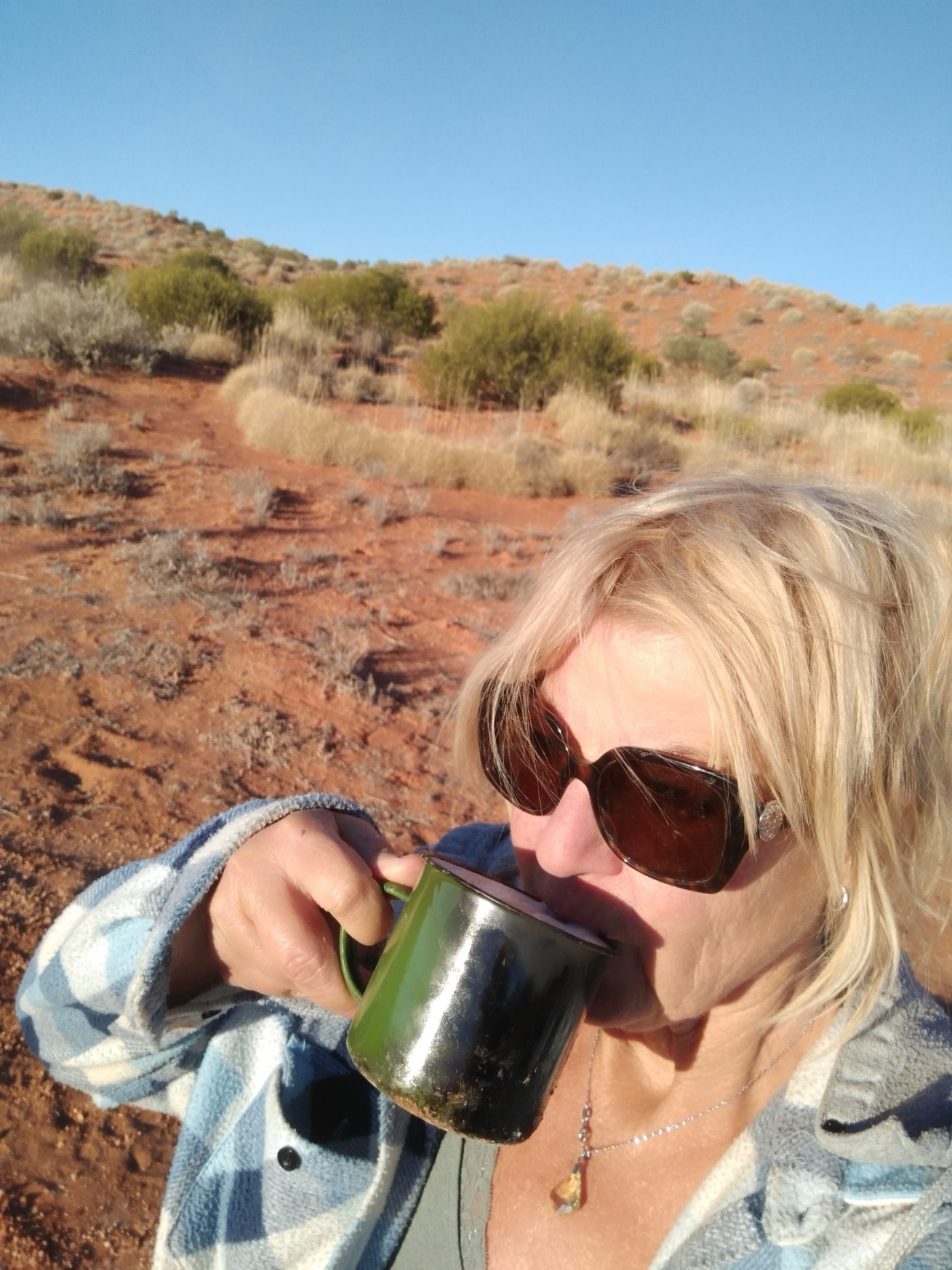
It was an amazing trip. I travelled through the deserts of South Australia including travelling along the Oodnadatta Track, the Birdsville Track, Strzelecki Track, into Kati Thanda-Lake Eyre, and to Coober Pedy and Woomera. I also ventured into the Northern Territory and through parts of outback Queensland. Even though I’ve always thought of myself as a beach person, I now love deserts. They are amazing places, and they’re all so different. They’re not all just endless sand.
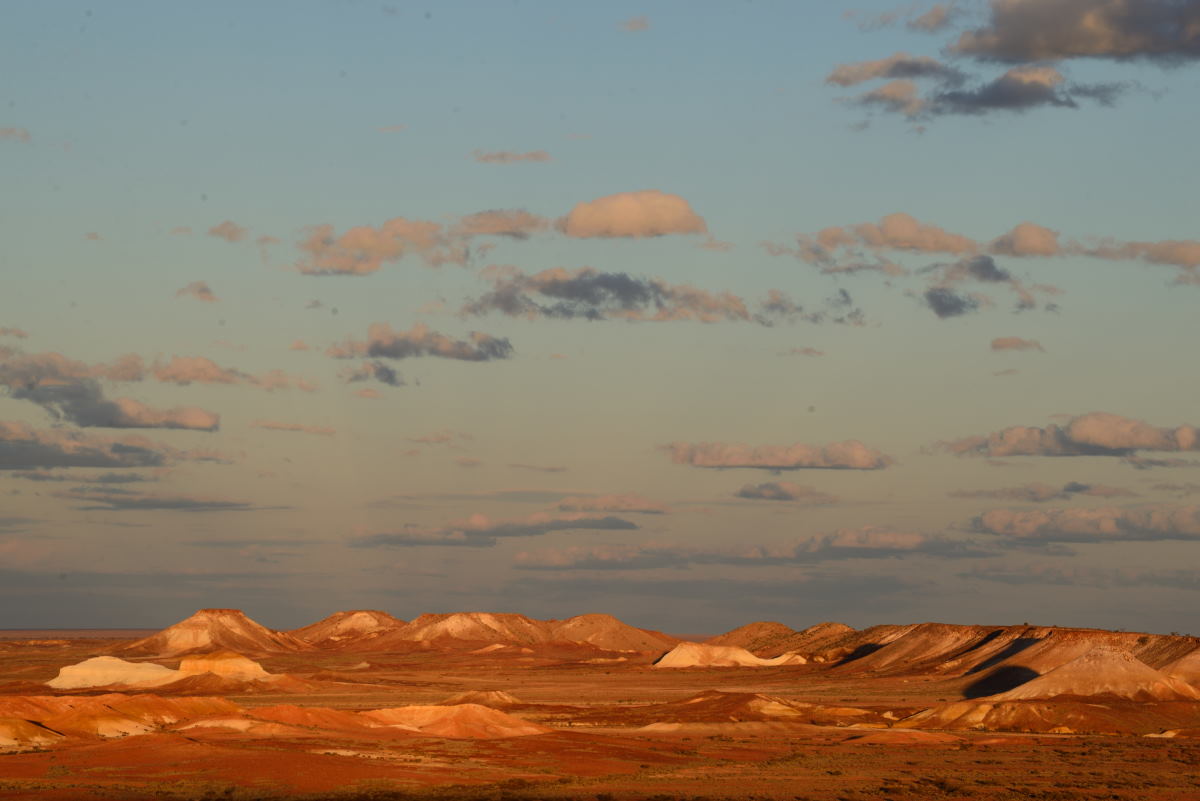
The Painted Desert is just what it sounds like — a rainbow of colour. The Moon Desert is flat and empty like a moonscape until you look more closely and see it’s covered in crystals that look like a field of stars shining in the sun. Even the Simpson Desert, which feels like endless sand dunes for around 500km from Mt Dare on the western side to Birdsville on the east, has an ever-changing landscape. I spent a couple of days just relaxing in the 38°C hot springs at Dalhousie on the western edge of the desert. Sitting in a hot spring watching the sunrise and listening to the birds wake up and greet the day isn’t what you’d expect in a desert, particularly not one as remote as the Simpson.

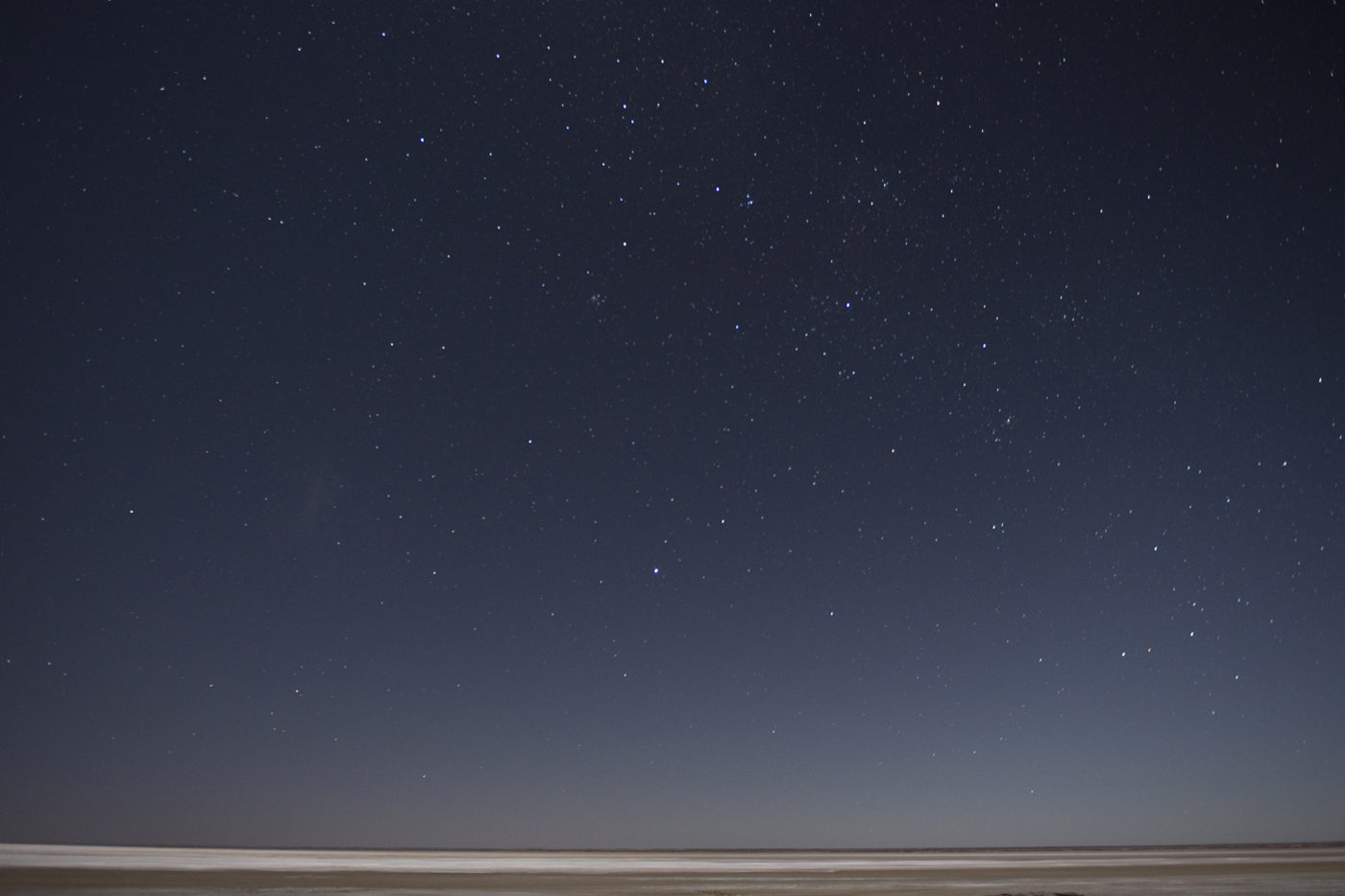
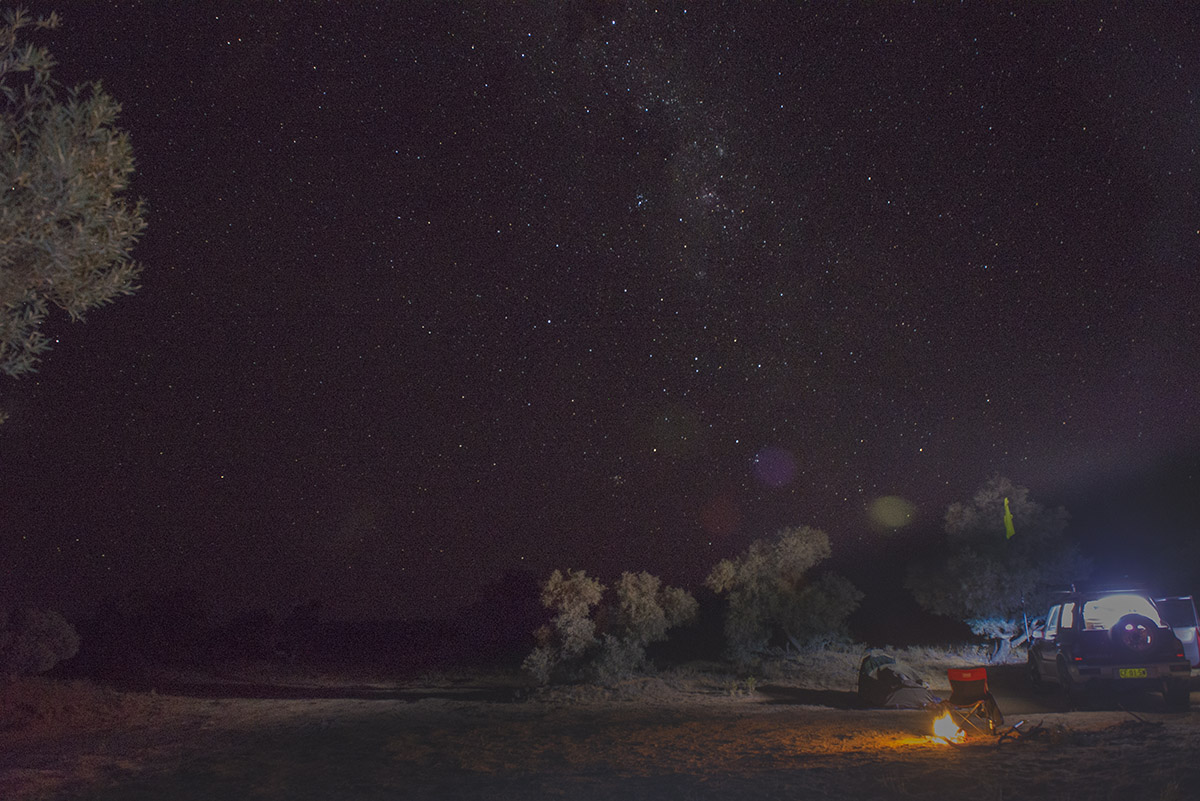
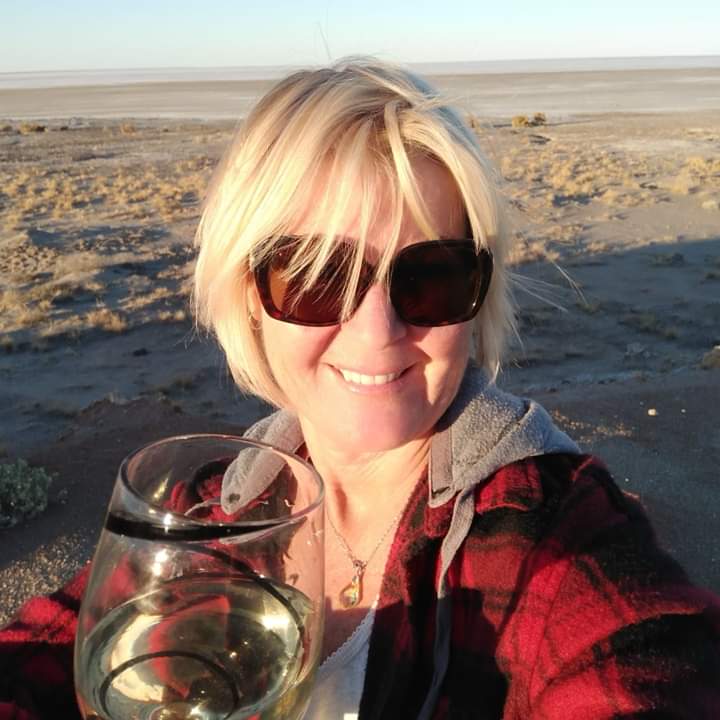
I camped at Kati Thanda-Lake Eyre completely on my own (well, me and a million spiders). That was amazing. There’s only one place to camp at the lake and that’s 60km down a 4WD-only access road. I felt like I was a million miles from anywhere. The salt lake shining in the light of the full moon was almost ethereal. You can understand why it is such a sacred place.
That trip was in 2018, and since then I’ve done a few smaller trips. My sister and I went back to Kati Thanda when it was in flood. We camped beside the lake overnight, then flew over it in a small plane and watched the water coming down and spreading over the lake. Kati Thanda-Lake Eyre is a flood lake, which means it only gets water when the rivers feeding it flood. It has to be a huge amount of water before it reaches the southern lake, which only fills up every 10 years or so. Earlier this year there were big floods in two of the areas which feed into the lake, so a lot of water came through the river system. From the air, you could actually see the water slowly moving and spreading out over the lake’s surface.
I’ve also just got back from a couple of months on Cape York with my partner (Doc), where I drove the Old Tele Track, which is one of Australia’s iconic 4WD tracks. 4WD-ing is such a blokey pursuit that it’s an interesting experience driving a track like that when you’re a woman. At all the creek crossings, people kept saying to Doc, “So you’re letting her drive this one?” Hahaha. As if I need permission.
3) How did you prepare yourself and plan your route?
I start planning the next trip as soon as I get home from the current one. Generally, I start with a place — “I want to go to…” That could be a town, a desert, or a road that I want to drive. Planning for my last trip helped because I’d already been to the Simpson Desert once, so I knew what to expect.
There are three main routes through the Simpson Desert – the direct route through the middle (French Line, WAA Line), the southern desert (Rig Road), or through the Northern Territory section of the desert (Madigan Line). Most people take the direct route via the French Line. This is almost a straight line from Dalhousie Springs to Birdsville. For my first trip, I took the WAA Line, which is just south of, and parallel to, the French Line — but has far fewer people. I was there for 3 days without seeing another soul or even hearing a voice over the UHF. I loved the Simpson so much that I decided I wanted to go back, via a different route this time.
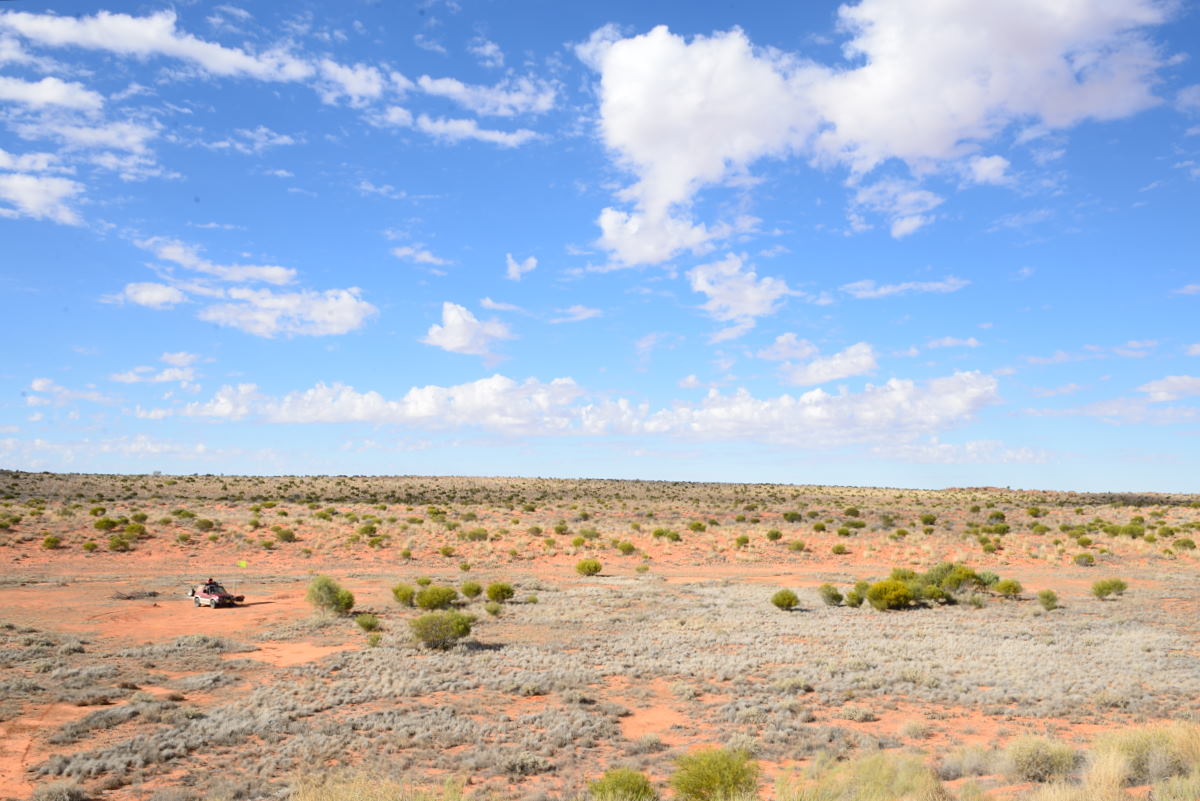
Once I decide the place (the Simpson Desert again but this time via the Rig Road on the southern end of the desert), I then look at a map and see what’s along the way. The shortest route from my home to the western edge of the Simpson is almost 3,000km. Then it’s another 2,000km to drive home again once I get to Birdsville on the other side. There’s a lot to see in that 5,000km. The big questions for me are “What haven’t I seen yet along the way?” and “Where do I want to revisit and see more?” Sometimes a name on the map attracts me. Who wouldn’t want to see something called the Painted Desert? A small bite on a map “mud springs” is how we found the outback’s best-kept secret in 2011. And, of course, there’s the practical “How much time do I have?”
I have a book on desert tracks in Australia, so while looking through that I decided this was going to be a ‘deserts’ trip. I was going to visit as many deserts in South Australia as I could, and the Painted Desert had to be one of those. It did live up to its name. The colours of the rocks and hills were amazing, and ever-changing in different lights.
Preparation always includes a complete check over and full service on the car to make sure it’s ready for the conditions. This time that meant getting the damage I did on the last trip repaired! Over time I’ve learned more about my car so I service it myself, and I also go over everything in detail with my partner, who is a mechanic. That way I know if something might need to be watched during the trip. One of the best pieces of advice I got from Doc was “Check all over your car every day. You might not know what you’re looking at, but you’ll notice when something changes. That’s when you either fix it or get help.”
I make sure I clean all my camping equipment and repair anything before I put it away, but it still needs to be rechecked before I pack again. Electronics and communication equipment, such as the satellite phone, need to be charged and working. Because so much of outback Australia doesn’t have mobile phone coverage, having a sat phone is really important. Especially when you’re travelling on your own. Being able to maintain communications just to let somebody know you’re still alive and ok is essential. I make a communications plan with my partner for those times I won’t have mobile phone service so he always knows when I will call, and when to call out emergency services if I don’t call!
I try to read enough about the places I’m travelling to give me a flavour of where I’m going, but not so much that my expectations become set. I like to keep my plans flexible — I plan a general route rather than a specific itinerary. That way, if I want to stay somewhere longer I can, or I not stop somewhere I was planning to if I don’t like the feel of it, or even make detours.
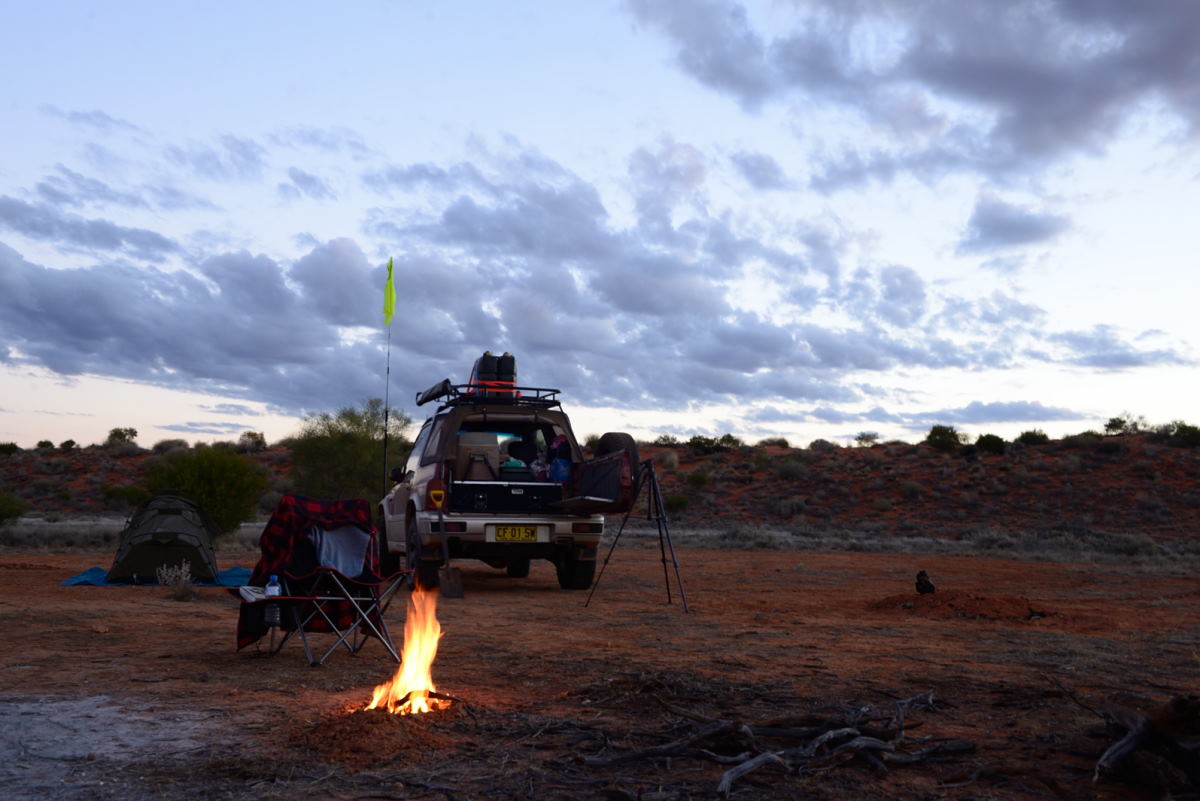
When you’re going solo to somewhere as remote as the Simpson, you have to get yourself prepared to be completely on your own, and that’s a psychological thing. I knew that if something went wrong that I couldn’t fix, it might be a few days or more before somebody else came along to help. It’s one thing being on your own when you’re travelling, it’s completely different being on your own when you can’t get out. Panic is not an option. I always carry enough water and food to last me for at least an extra week on top of the time I have planned. I knew the Simpson would take me about a week, so I made sure I had enough water for 2 weeks. I always carry enough food for a month!
I’m already planning my next trip, which will include the Madigan Line across the northern part of the Simpson Desert. If I’ve got time I will try to get to Western Australia as well, or maybe see a bit more of the Northern Territory. I haven’t got that far in the planning yet.
4) What were the highlights?
The Simpson desert itself is always a highlight. The southern part of the desert is part of the Kati Thanda-Lake Eyre basin and is completely different from further north. There are a lot of salt lakes in the southern part that the track winds around, whereas further north there are more sand dunes. It has a completely different feel to it.
One of the other highlights was an unplanned detour in outback Queensland. This particular night, I decided that I’d drive into the nearest town to camp, but I didn’t get there and set up camp after dark. I decided that rather than cook I’d go to the local pub for dinner. I got talking to a couple of women who were travelling for their work, and they told me about a pub at Yaraka they thought I’d like because it had a special wine fridge. That’s not something you see often in the outback, where wine choices can be quite limited. So I made a 140km detour each way to go and see. It’s a long way just to go to the pub, but that’s the outback for you! It was a fabulous place, and the wine selection was great. Too good in fact. It was a big night! Worth the almost 300km round trip detour.
5) Did you encounter any challenges and how did you overcome them?
My biggest challenge was actually quite a small thing — my inverter stopped working just after the Painted Desert. That meant I couldn’t recharge either my camera or my laptop. Writing about my experiences is one way I think things through, and it helps me to ‘keep my balance’ when I’m on my own. The same for taking photos. Not being able to do either, at times I really felt lost! Fortunately, when I was at the beginning of the Simpson, somebody gave me a notebook so I could at least write (thanks Libby). I’ve still got all my notes and need to turn them into a story, either a book or more stories for my blog. I’ve now bought new cords for each so I can recharge via a USB port or the car’s cigarette lighter if the inverter stops working again, and I now make sure I have a notebook to write in.
A bigger challenge was that halfway across the Simpson I blew a hose, which meant the car was losing water. That’s one thing you don’t want to happen while you’re in the desert! Fortunately, I carry spare hoses so was able to fix that with no problems and just had to keep a close eye on it every day.
6) You’ve done quite a few drives through the Australian Outback. What inspires you about this part of the world?
That red dirt gets into your soul! I think that growing up Australian, you hear a lot of stories about the outback. A lot of Australians think of the outback as the ‘real Australia,’ even though most of us live in cities along the coast.
When I was younger I spent 18 months backpacking around southeast Asia, and travelled to the UK and parts of Europe. I always said when I got older I would do Australia, so here I am. I wish I’d done it earlier. There is just so much to see and do that I could travel non-stop for 3 years and not get to everything. And there’s so much variety. It’s not all red dirt and vast nothingness, though I do love that as well.
Learning about the 60,000 years or more of the country’s history and seeing it first-hand is an amazing experience. We really don’t learn enough of our own history in school here. And of course, so much of the country is only accessible by car, and sometimes only by 4WD, so you have to drive if you want to see it.
7) You’ve also spent a lot of your drives solo. Why do you choose to travel solo and what have you learned from these experiences?
Solo travel to me is complete freedom. Freedom to go and stop when I want. Freedom to pick the route and go to the places I want to go, and to stop when and where I want to stop. Freedom from the daily grind of working and being responsible for anybody other than myself. I think a lot of mothers often feel the need to escape that responsibility!
I also travel solo because I’m not prepared to wait for somebody else to be ready. I’ve learned there is no such thing as the “right time” — that time is now.
My partner (the one who dragged me into the outback in a swag) and I went to Cape York in 2011, and we vowed that we would do a big trip at least every 2 years, if not every year. After 4 years of hearing “I can’t get away from work right now, we’ll go next year,” I bought my own 4WD and went on my own. I’ve met far too many people, women in particular, who have put off travelling and doing their dream trips because of work, kids, partners, and other responsibilities, and then never got there because their partner passed away unexpectedly or they got divorced. I don’t want to get to the point in my life where I look back and say “If only I’d have done it when I could.”
8) What advice do you have for others looking to do a similar trip?
Do it. You don’t have to start with 10,000km through outback Australia. Just start somewhere. And make sure you stop in Eulo in outback Queensland for a mudbath.
Safety and security are big issues for women, but you need to take some risks in your life. Do your research, prepare a plan including a communications plan, and don’t let naysayers stop you. Knowledge, preparation, and communication are key.
Thank you for reading! If you found this post useful, I’d be grateful if you would consider using the affiliate links below when planning your travels. I’ll make a small commission at no extra cost to you. This will help me to keep this blog running. Thanks for your support — Lauren.
Accommodation – Booking.com
Flights – Booking.com
Travel insurance – World Nomads
Excursions & tours – Viator
Outdoor gear – Decathlon
eSIMs – Airalo
Alternatively, you could buy me a coffee to say thanks!


About The Author
Lauren Pears is a freelance travel writer and blogger who writes about active adventure travel. She’s been blogging for almost 10 years, and has written for publications such as Lonely Planet, World Nomads, and Southeast Asia Backpacker.