
A Quick Guide to Visiting The Elephant Seals at San Simeon, California

While driving up Highway 1 on route from Los Angeles to Yosemite, we knew we had to make a pitstop to see the wild elephant seals that hang out on the beach just north of San Simeon.
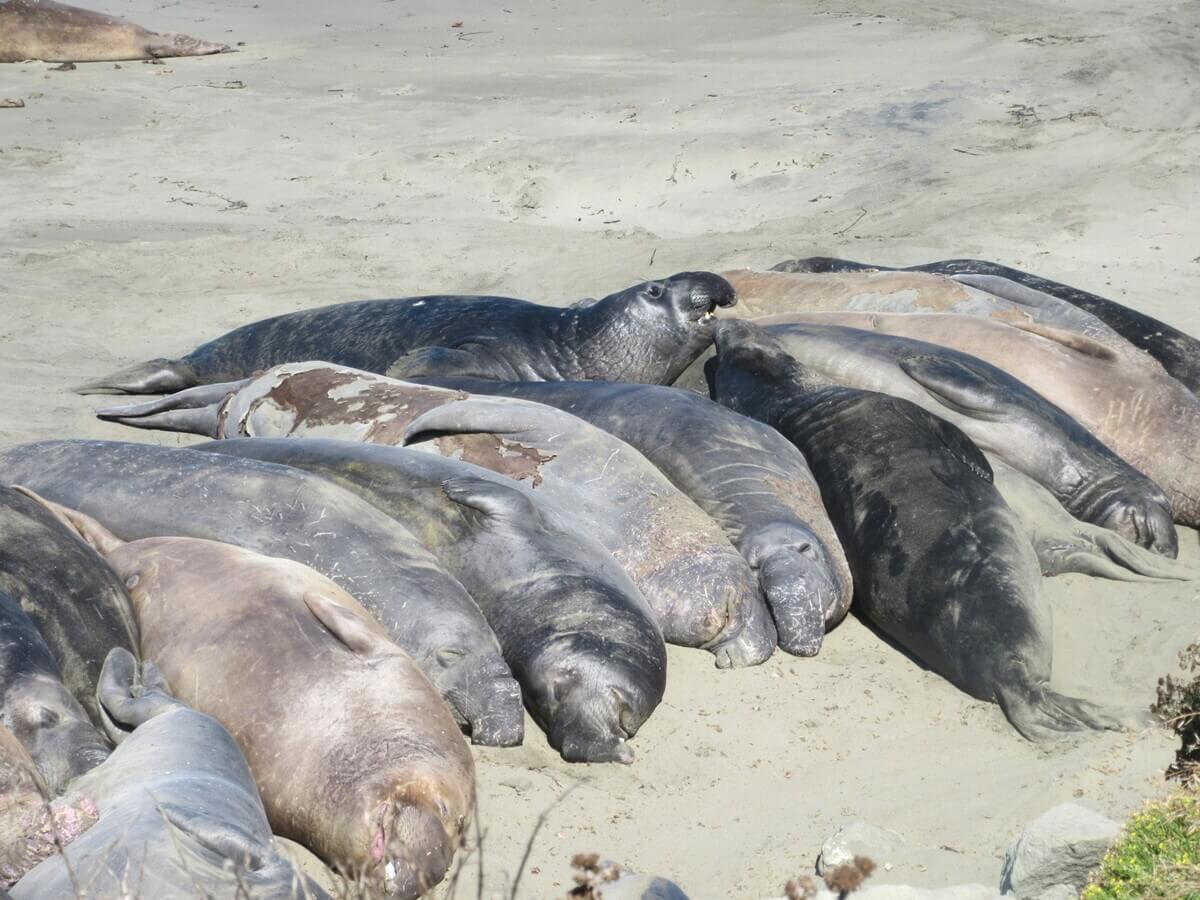
The coastline here is home to one of the largest elephant seal colonies in California. Thousands of northern elephant seals haul themselves onto the beach throughout the year to rest, moult, give birth, and mate. The best part is how easy it is to see them — the Piedras Blancas viewing area sits right above the sand, giving you a front-row seat to all the action without disturbing the seals.
If you’re driving along Highway 1, this is a fun, easy, and totally worthwhile stop. Here’s everything you need to know before you go.
Where to see the San Simeon elephant seals
The elephant seals can be found at Piedras Blancas Elephant Seal Rookery, just a few minutes north of San Simeon on Highway 1. You’ll likely spot the long stretch of beach before you even pull into the car park, often with some seals already visible from the road.
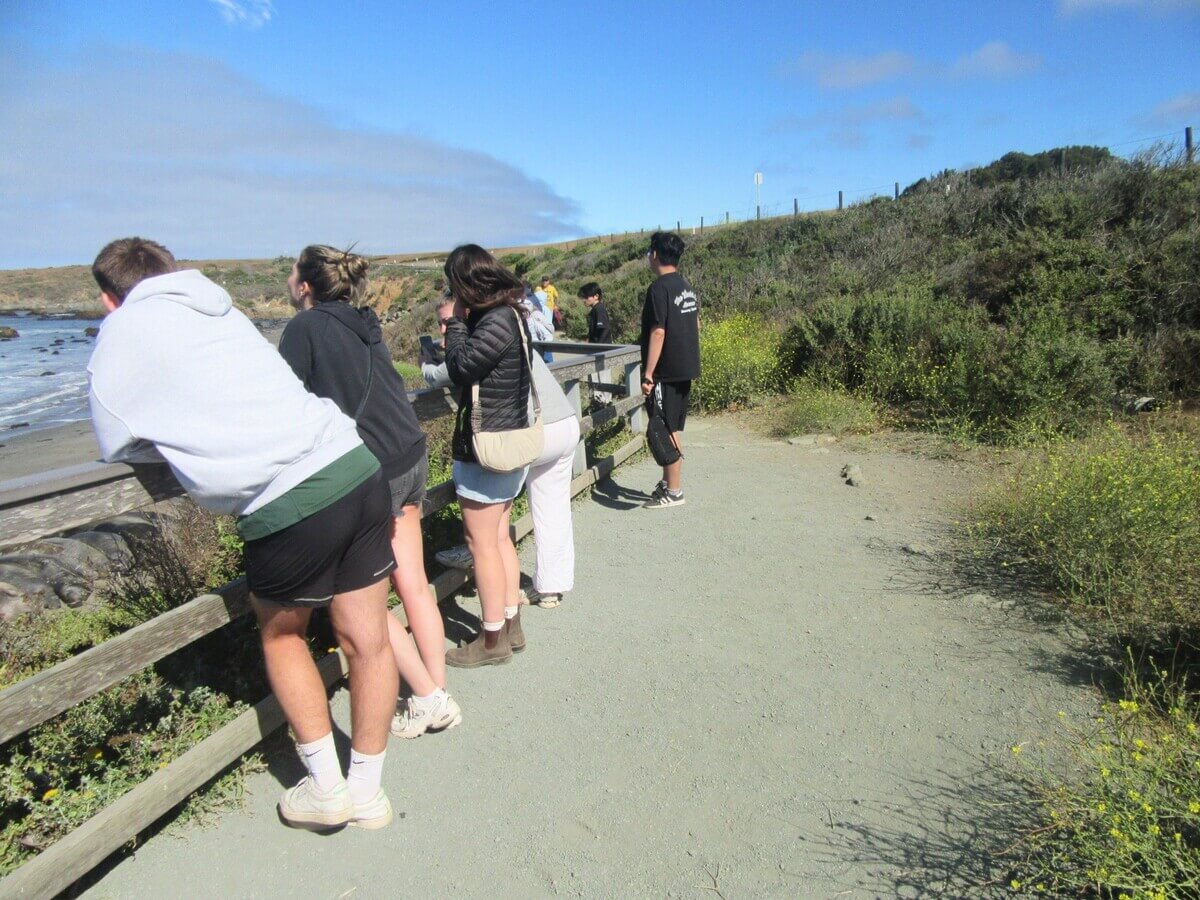
There’s a large, free parking area right beside the viewing platforms. The boardwalk is fully accessible and sits just above the beach, so you get a close-up view without disturbing the animals. No hiking is needed; you simply walk along the wooden path and watch the seals doing their thing.
If you do want to hike along the coast to see the seals, I recommend the Boucher Trail. It’s a pretty 8km coastal trail that’ll take you through the Hearst San Simeon State Park and to the Elephant Seal Vista Point.
Best of all, viewing the seals is free! The site is looked after by Friends of the Elephant Seal, a volunteer organisation that works with the California State Parks department. You’ll often see volunteers on the boardwalk answering questions and keeping visitors at a respectful distance from the seals. The visitor centre is in Cambria, a short drive south of the rookery. They have a small shop and accept donations both in person and online, if you’d like to support the organisation.
Is it worth the visit?
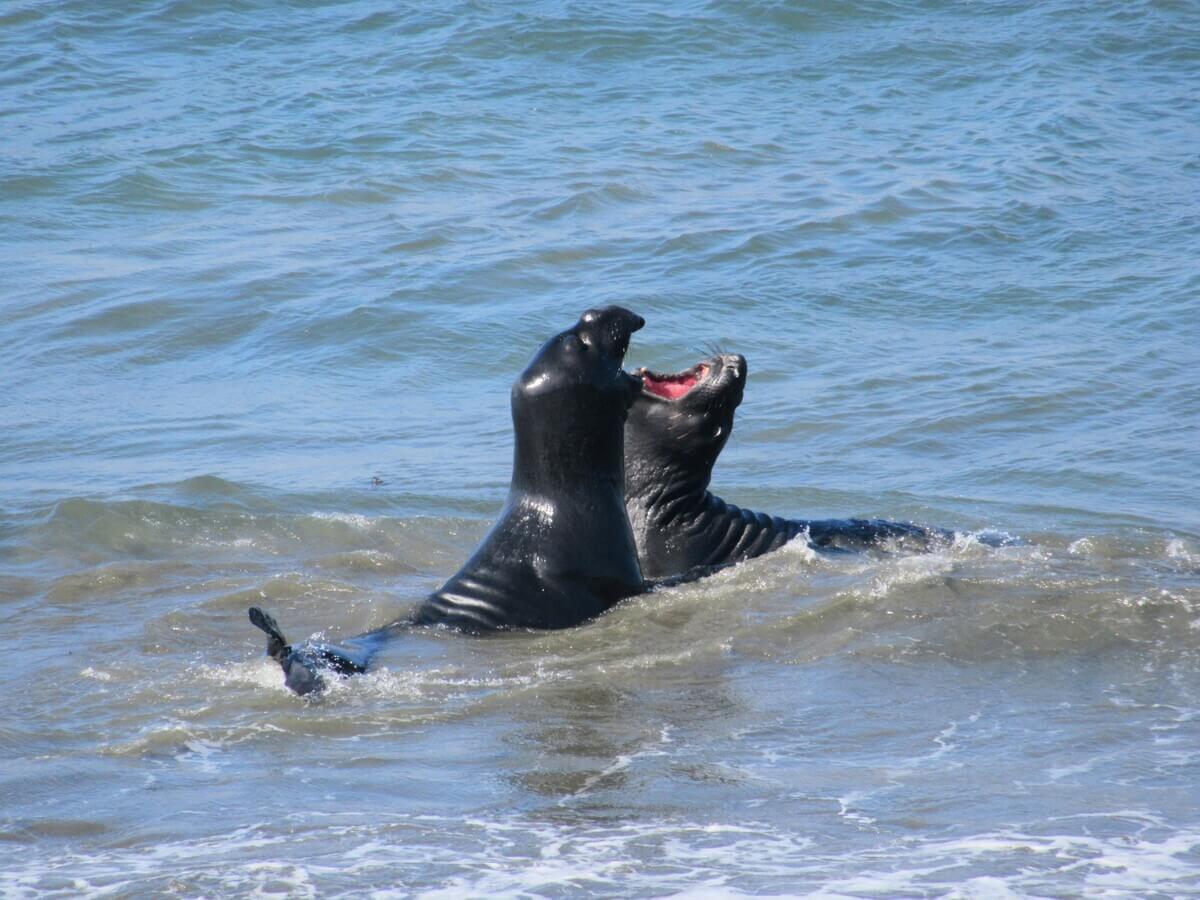
Yes. The San Simeon elephant seal rookery is the perfect stop for breaking up a drive along Highway 1. It costs nothing, takes very little time, and gives you a close look at one of the best wildlife viewings in California. The seals are very entertaining to watch: they are constantly jostling about, flicking sand over themselves, and grunting at each other. We also saw two bulls fighting in the surf, which was amazing to see.
We watched the seals for about twenty minutes before continuing on our way. If you’re driving up Highway 1 already, it is absolutely worth pulling over and spending some time at the viewing area. I probably wouldn’t plan a big detour solely to see the seals, as most people only spend a short while here, but it’s a great stop if you’re nearby.
Best time to see the elephant seals
There are elephant seals at San Simeon throughout the year, although what you see changes with the seasons. Different times of the year offer slightly different experiences.
Late December to February is definitely the most exciting time to visit. This is when the females come ashore to give birth, and so the beach fills with tiny black pups. January is the peak month and gives you the highest chance of seeing the babies. Females will mate again about four weeks after giving birth, so this is also the mating season, when bulls will be most active.
April to August is moulting season. Large groups of seals haul themselves onto the sand to shed their old fur. The beach will be a lot calmer than in winter, but it’s still a great time to visit because you usually see plenty of seals resting on the beach.
September to November is the quietest period. You will still see seals, mostly juveniles, but the rookery feels calmer, and the beach is a little emptier.
If you want peak action, winter is best. If you prefer a more relaxed visit with fewer crowds, spring or summer works well. The most important thing to know is that you never need to time your road trip perfectly. There will always be at least a few seals on the beach. Arrive early or late in the day if you want a quieter visit. Highway 1 can get busy, and the rookery is a popular stop for road trippers and tour groups.
What to expect
The viewing area sits right above the beach, so you get a clear look at the seals as soon as you step onto the boardwalk. The first thing you’ll notice is the noise. Elephant seals are not quiet animals, and are constantly grunting, squawking, and roaring at each other. The second thing you’ll probably notice is the smell. Yeah. They really stink.
The seals are usually spread across the sand in large groups. Some sleep in piles, others shuffle around or toss sand over themselves. During the winter pupping season, you’ll likely see bulls challenging each other or pups curled up against their mothers. Everything happens at a surprisingly close distance.
The boardwalk runs along the length of the beach, so you can wander at your own pace and stop at several viewpoints. There are also information boards along the viewing area that explain the seals’ behaviour, size, and life cycle.
Plan for anywhere from twenty minutes to an hour, depending on how long you want to watch them.
FAQs
Is it free to visit the elephant seals?
Yes. The rookery is completely free to visit. If you want to support the volunteers who protect the site, you can make a donation at the Friends of the Elephant Seal Visitor Center in Cambria or through their website.
What are the opening hours for the rookery?
The parking lot and viewing area are both open 24 hours per day. Although, I wouldn’t recommend going at night because you probably wouldn’t see very much…
Can you see elephant seals all year?
Yes. There are always seals on the beach, although the number and activity level change with the seasons. Winter is the busiest period, while autumn is quieter.
When can I see baby elephant seals?
Elephant seal pups are born between late December and February. January is the best month for seeing newborns.
How long do I need for the visit?
Most people spend between twenty minutes and an hour. The boardwalk is short, but there is plenty of viewing space.
Are dogs allowed?
Dogs are allowed in the parking area if they stay on a lead, but they are not permitted on the viewing platforms. It’s best to leave them in the car for a quick stop.
What is the best time of day to visit?
Morning and late afternoon are usually quieter, as tour buses usually begin to arrive in the late morning.
Is the rookery accessible?
Yes. The main boardwalk is flat and accessible for wheelchairs and pushchairs, etc, with clear views of the beach below.
Is this wildlife experience ethical?
In my opinion, yes. The boardwalk ensures you are kept at a respectful distance from the seals. As long as you don’t make excess noise or try to feed the seals, I believe this is a responsible way to observe these animals.
Thank you for reading! If you found this post useful, I’d be grateful if you would consider using the affiliate links below when planning your travels. I’ll make a small commission at no extra cost to you. This will help me to keep this blog running. Thanks for your support — Lauren.
Accommodation – Booking.com
Flights – Booking.com
Travel insurance – World Nomads
Excursions & tours – Viator
Outdoor gear – Decathlon
eSIMs – Airalo
Alternatively, you could buy me a coffee to say thanks!


About The Author
Lauren Pears is a freelance travel writer and blogger who writes about active adventure travel. She’s been blogging for almost 10 years, and has written for publications such as Lonely Planet, World Nomads, and Southeast Asia Backpacker.