
G Adventures Southern Africa Encompassed Review: My Honest Experience
I joined G Adventures’ Southern Africa Encompassed tour in June 2026, travelling through South Africa, Botswana, and Zimbabwe over 15 days. It was my first safari trip, and I chose an overland tour because it offered the chance to visit several wildlife destinations without having to organise border crossings, campsites, transport, and game drives myself.
Over the course of the trip, we explored the waterways of the Okavango Delta by mokoro, watched elephants beside the Chobe River, tracked rhinos on foot in Matobo National Park, and finished with seeing the Big Five in Kruger.
Overall, I thought it was a fantastic tour, and it was ideal for what I wanted: an adventurous, sociable, and relatively affordable way to experience several of Southern Africa’s major wildlife destinations. That said, it is not a relaxing holiday. There are some extremely long travel days and regular early starts.
In this review, I’ll explain what the itinerary was like, how the camping and overland truck worked, what I thought of the activities, and whether I thought the tour was worth the money.
🦁 Interested in Southern Africa Encompassed? Check upcoming departure dates.
What is G Adventures’ Southern Africa Encompassed tour?
Southern Africa Encompassed is a 15-day group overland tour through South Africa, Botswana, and Zimbabwe. It begins and ends in Johannesburg, covering several of the region’s best-known wildlife destinations along the way, including the Okavango Delta, Chobe National Park, Matobo National Park, and Kruger National Park.
The trip is part safari, part camping trip, and part very long road trip. You travel between destinations in an overland vehicle known as the Lando, camp for most of the journey, and do things like game drives, wildlife walks, and river cruises.
It isn’t a conventional safari where you stay in a lodge and head out for a game drive each morning. Instead, you travel across the region and visit lots of different places.
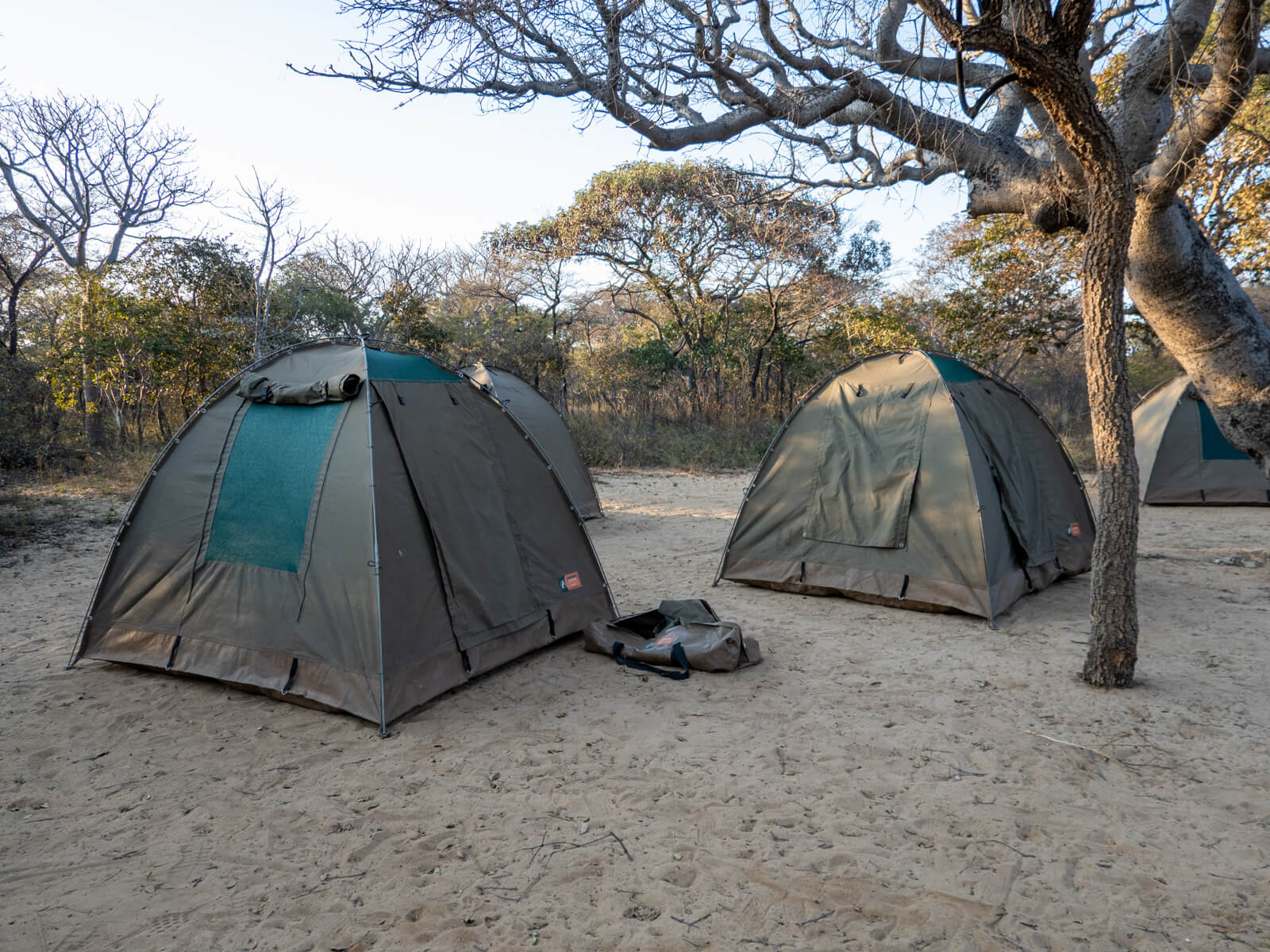
The tour is also a participation camping tour. This means that you’re expected to help with the day-to-day running of camp, rather than arriving to find everything already set up. We put up and packed away our own tents, helped with meals, washed up, and took turns completing other chores.
That may sound quite demanding, but I didn’t find the camping especially difficult. The tents were straightforward to assemble once we’d done it a few times. The duties also didn’t really take too long for the most part.
This tour was also one of the more affordable ways I found to cover that much ground. Booking the transport, campsites, park visits, and activities separately would have involved a lot more planning and a much bigger budget.
The itinerary is fairly fast-paced, but that pace is also what allows you to see so much in two weeks. The variety of what we did and saw was one of the tour’s biggest strengths. So while the long drives did get a little tiresome at times, they are necessary if you want to see lots of stuff.
The route ultimately delivered what I’d booked it for. I saw far more wildlife and visited many more places than I could realistically have arranged independently within the same amount of time.
Where do you visit?
The tour itinerary covers a lot in 15 days. Starting and finishing in Johannesburg, the route travels through Botswana and Zimbabwe before returning to South Africa, with stops including Khama Rhino Sanctuary, the Okavango Delta, Chobe National Park, Victoria Falls, Matobo National Park, and Kruger National Park. Here’s what I thought of each destination.
Khama Rhino Sanctuary
Khama Rhino Sanctuary was our first wildlife stop and a good introduction to both game drives and camping in Africa.
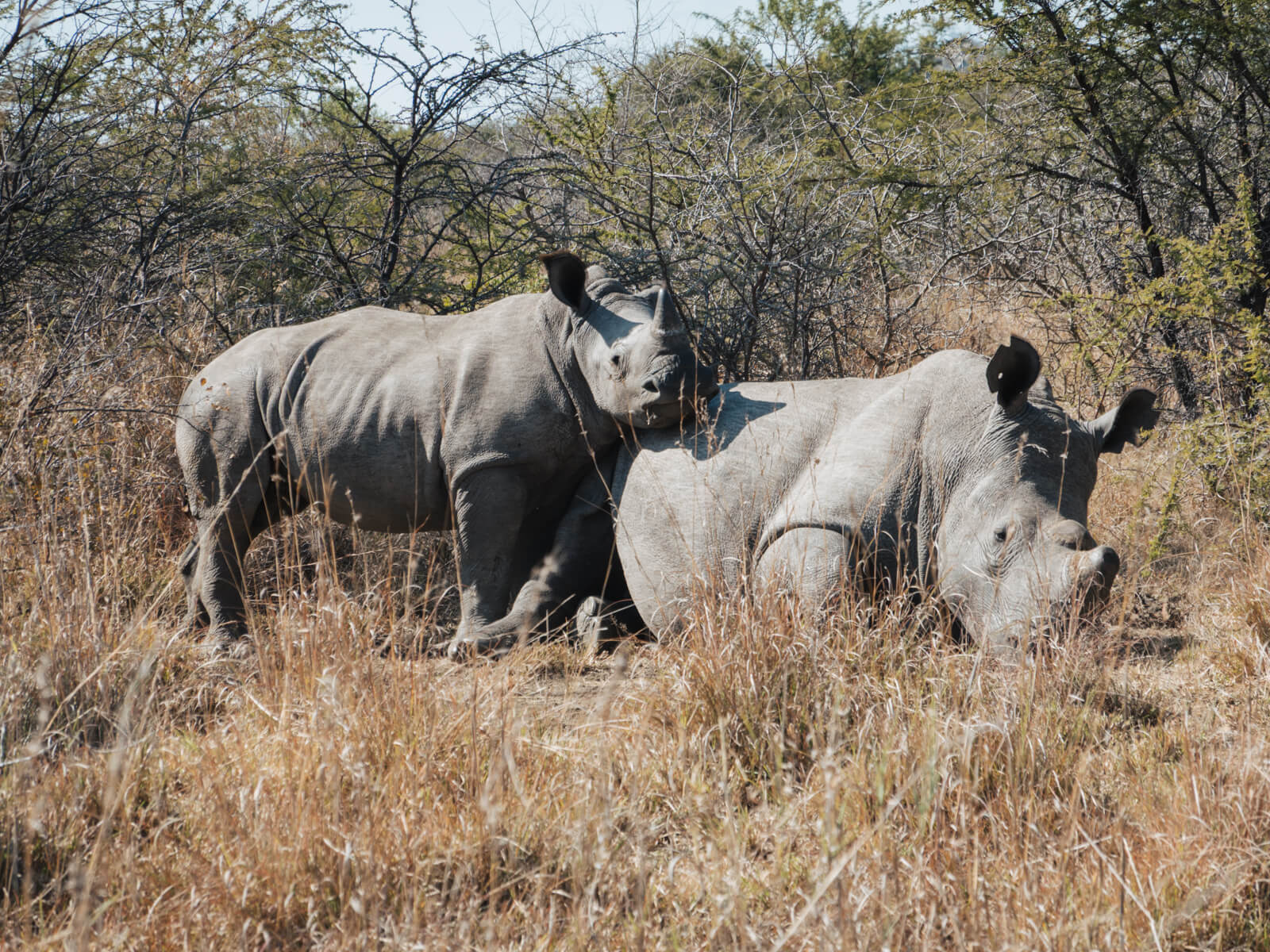
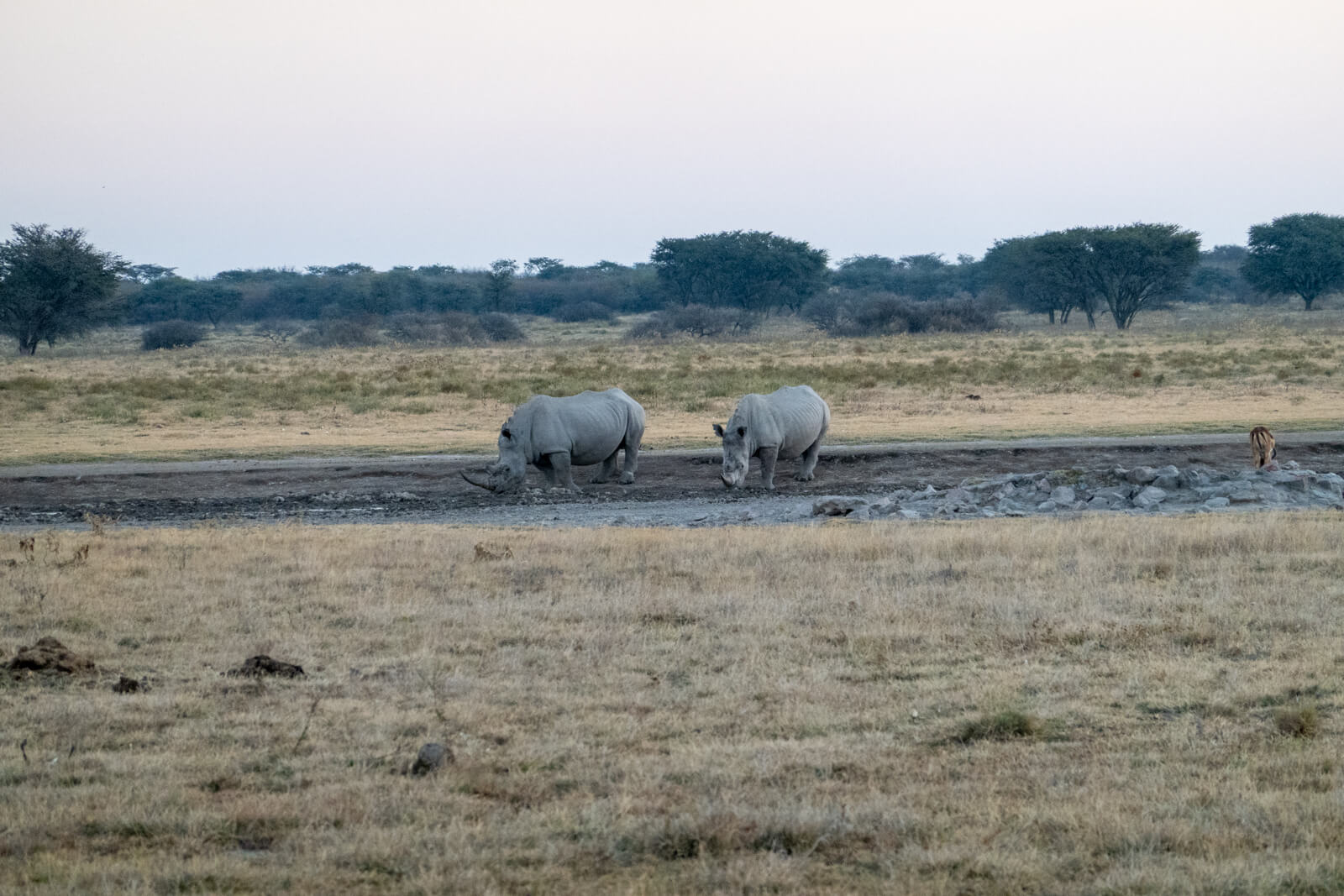
We arrived after travelling north from Johannesburg and joined a late afternoon game drive through the reserve. Compared with the other safari experiences later in the trip, it was probably the weakest game drive we did. There wasn’t much variety of wildlife, and the scenery wasn’t particularly outstanding.
BUT, we saw plenty of rhinos, including a four-month-old baby! Seeing rhinos on our first game drive felt like a good start to the trip.
We also spent the night at the sanctuary campsite, which gave us our first taste of setting up camp and settling into the routine of the tour.
The Okavango Delta
From Khama, we continued north to Maun, the gateway to the Okavango Delta.
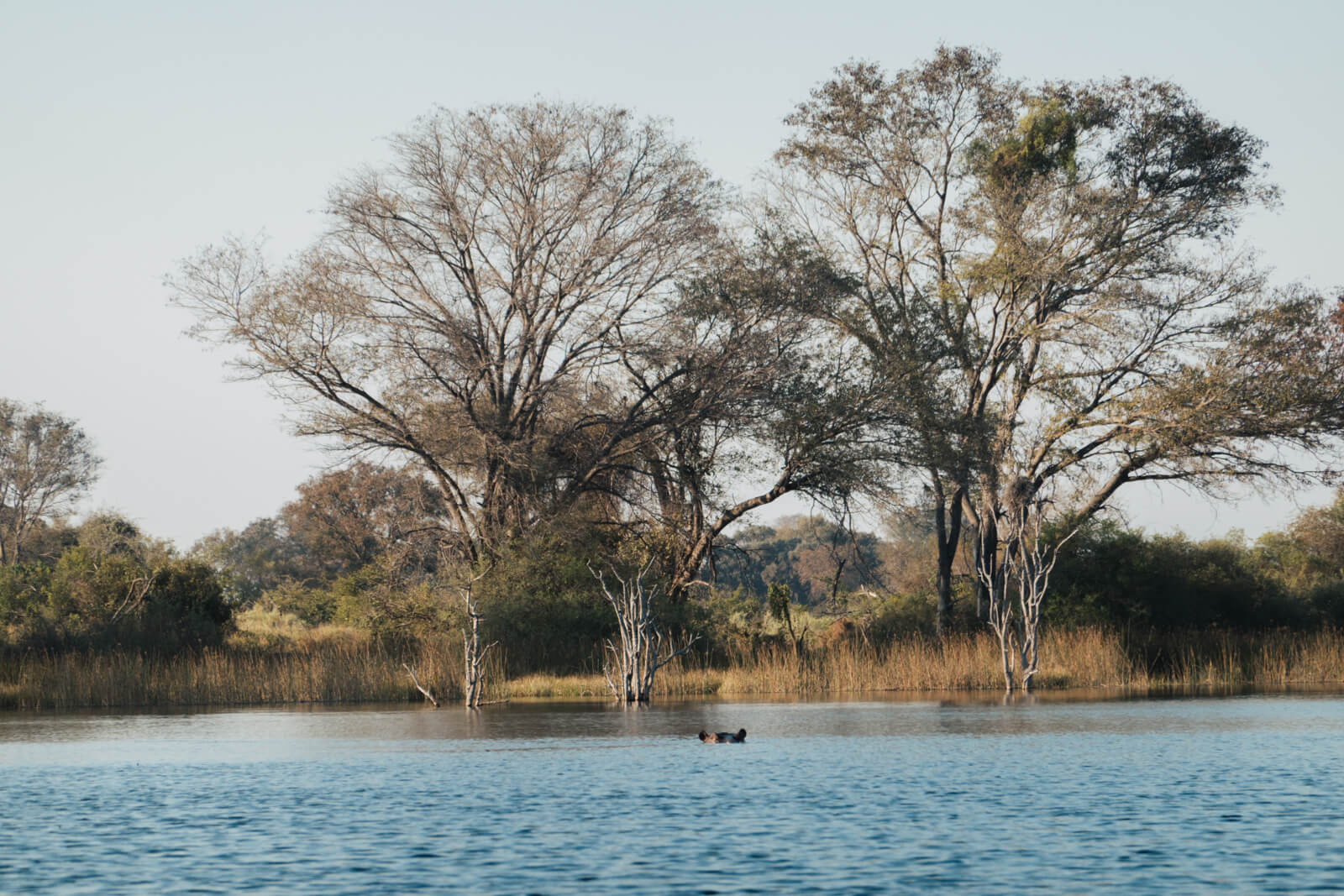
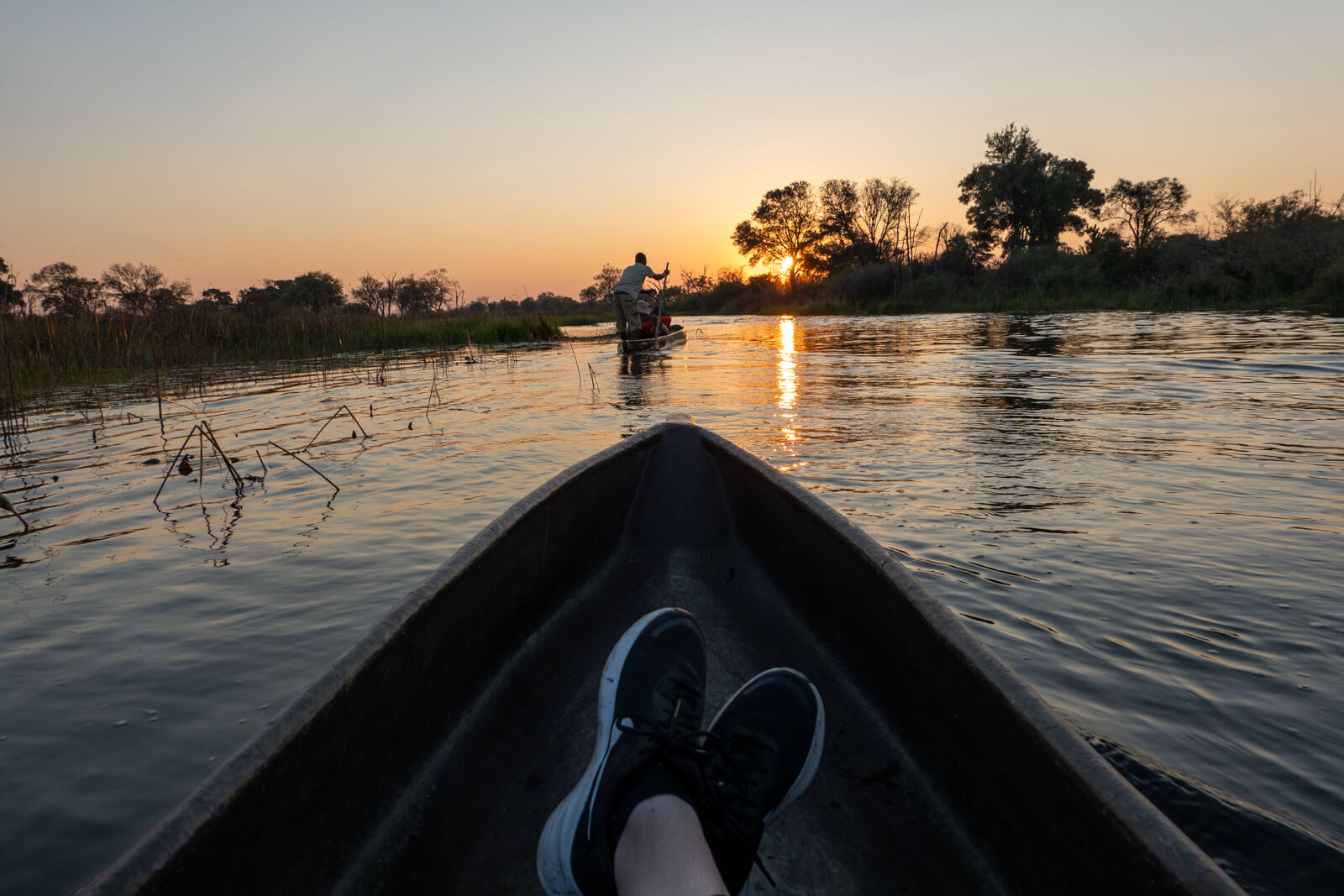
We were taken to a remote bush camp inside the delta, and while here, we explored the waterways by mokoro, a traditional dugout canoe pushed through the water using a long pole. This was a really fun way to view wildlife. We saw things like hippos, elephants, owls, and crocodiles along the way. The best part was when we reached this larger body of water that was filled with hippos! We kept our distance, but it was quite surreal to be that close to hippos.
I really enjoyed the Okavango Delta. It offered less diversity of wildlife than some of the later stops, but seeing animals from a canoe was such a fun and novel way to watch them.
Chobe National Park
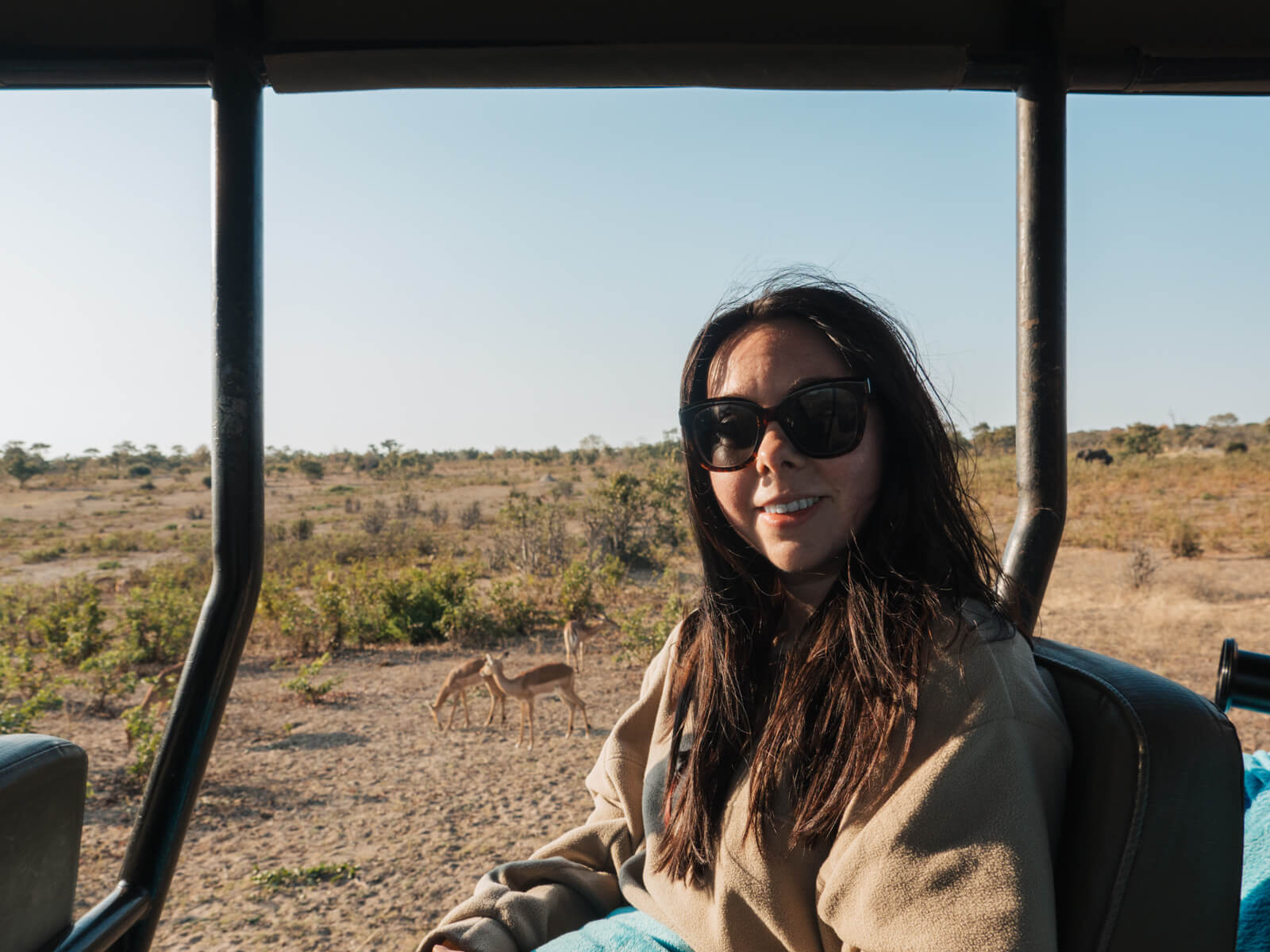
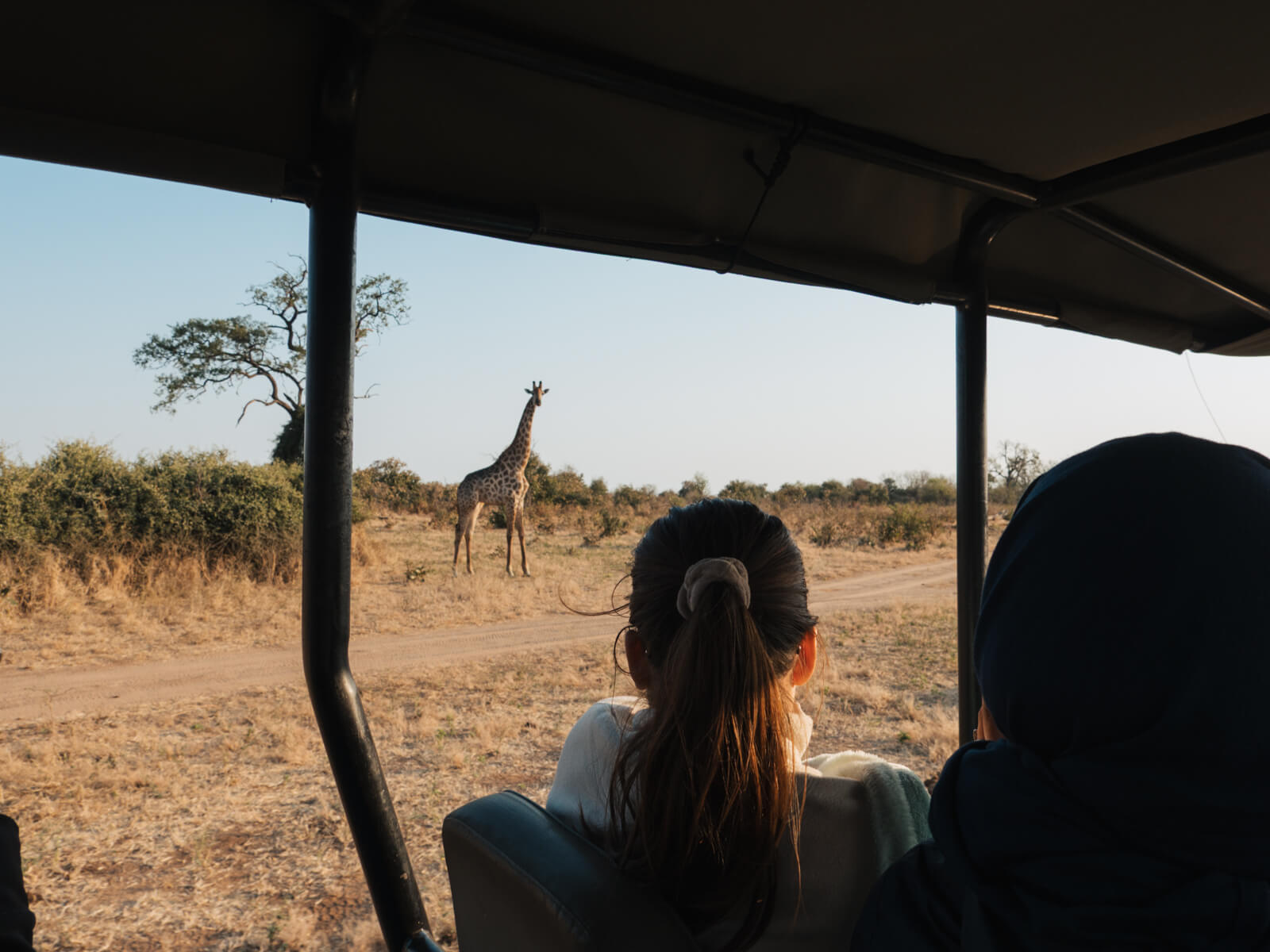
I loved Chobe, and the game drive we did through the national park was incredible.
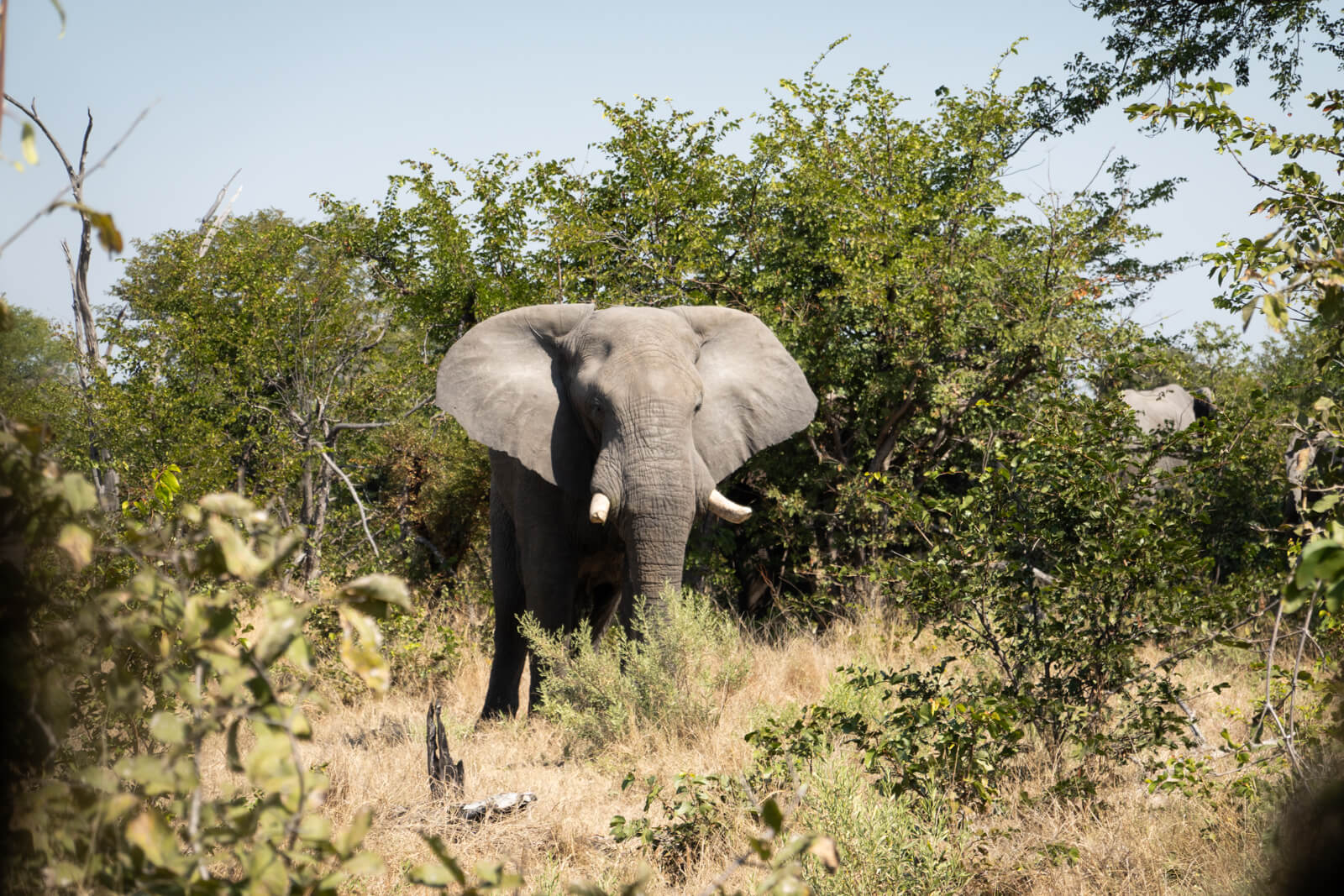
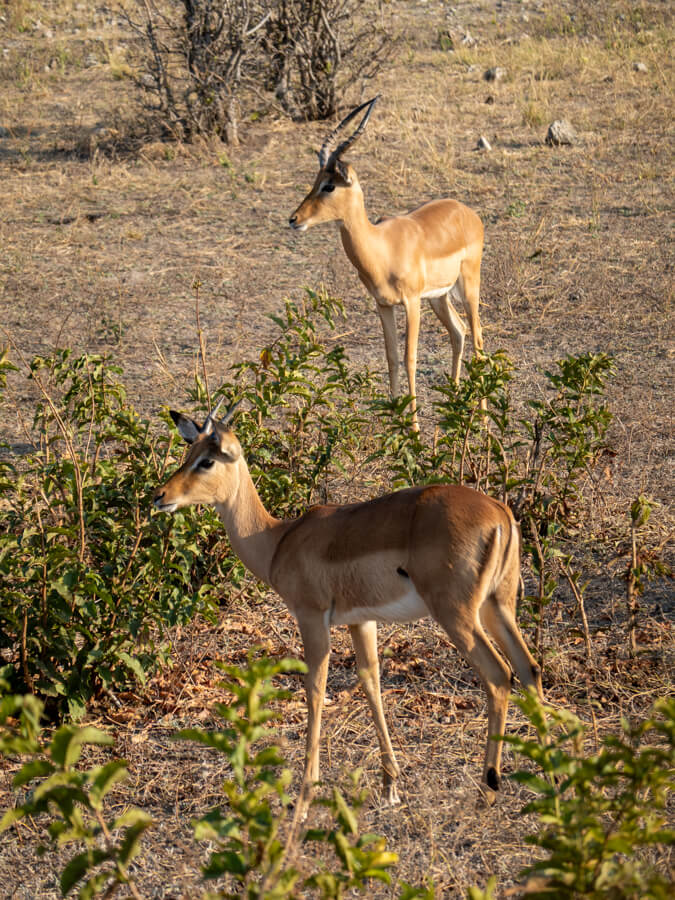
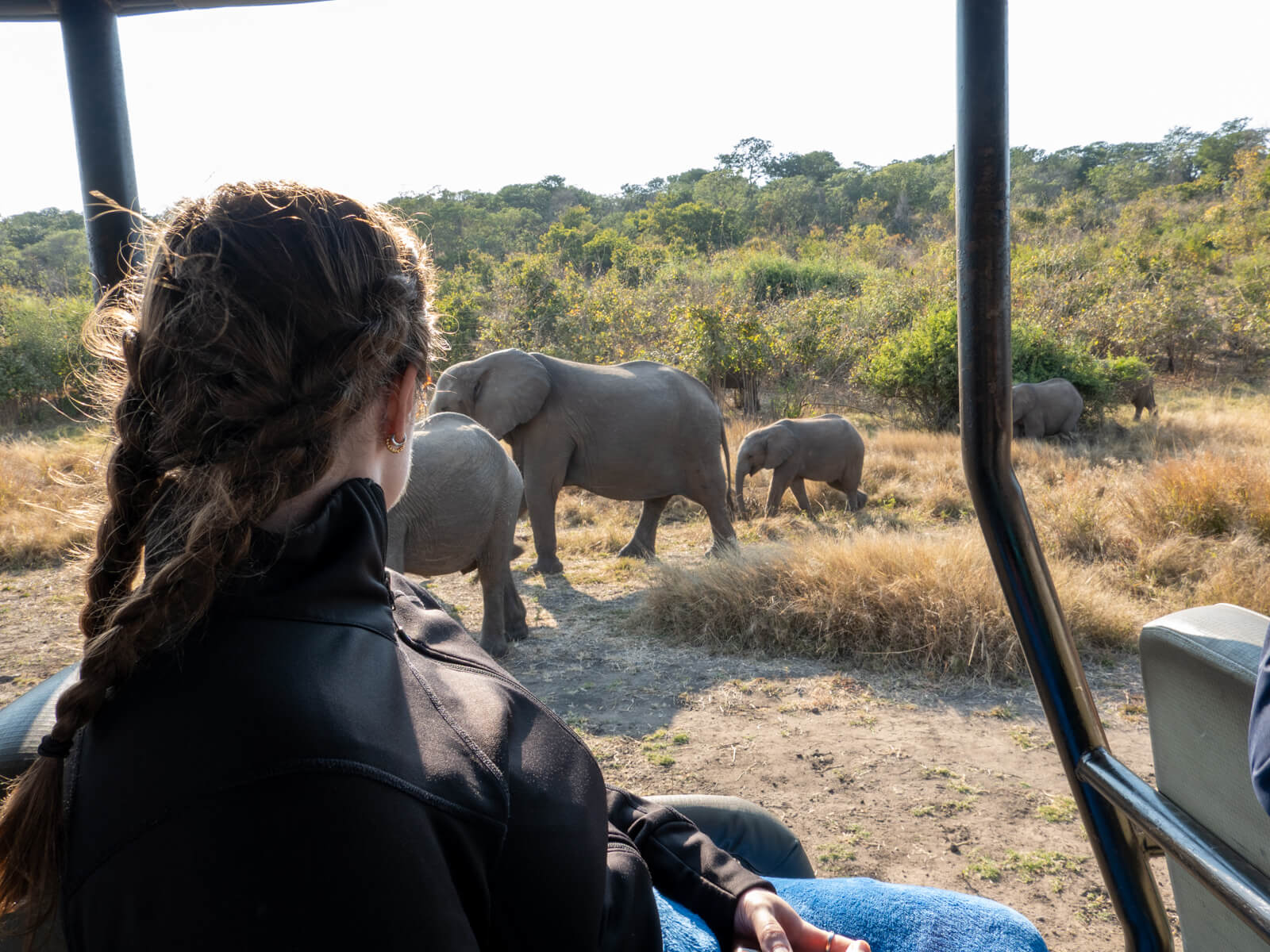
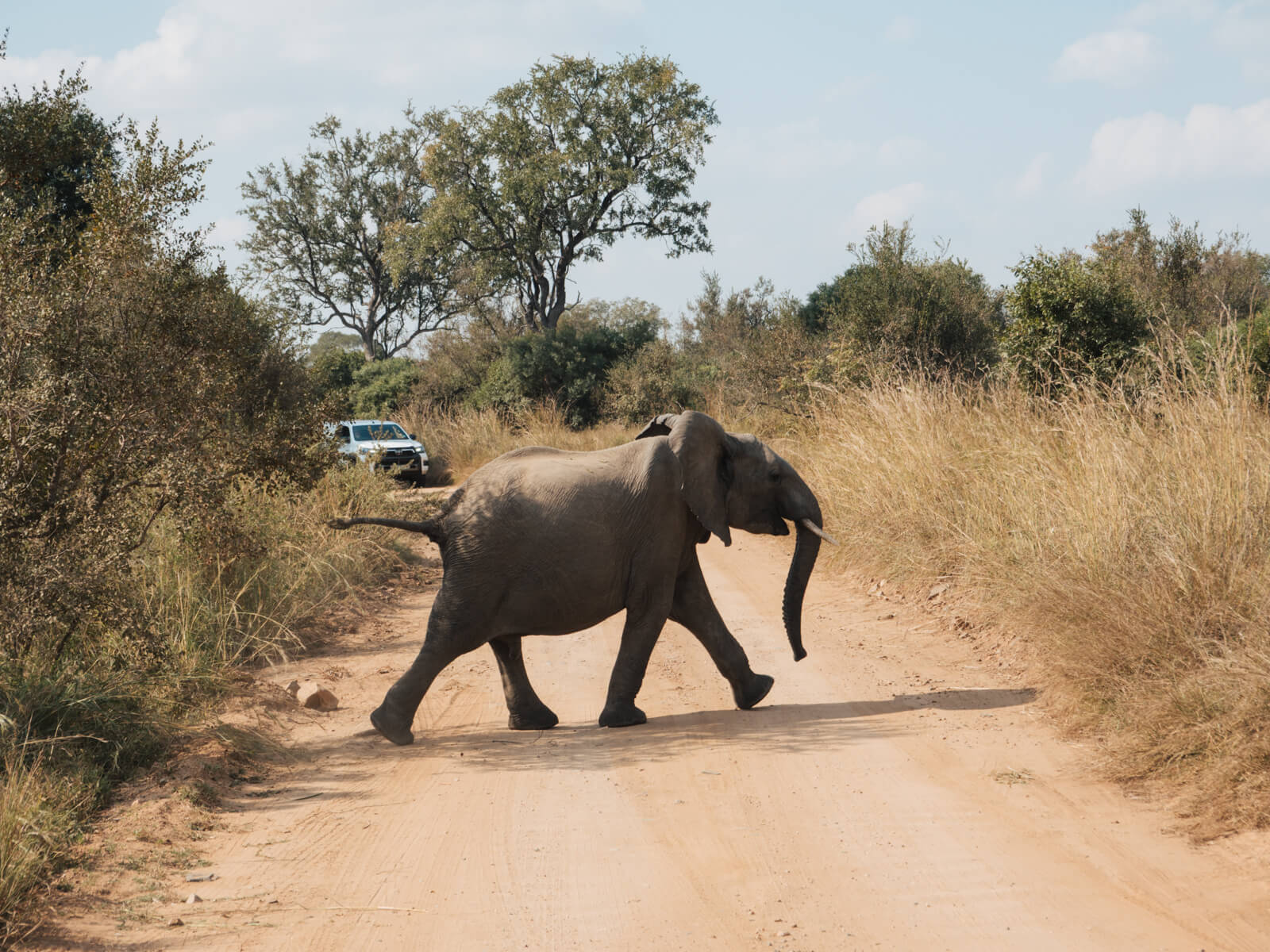
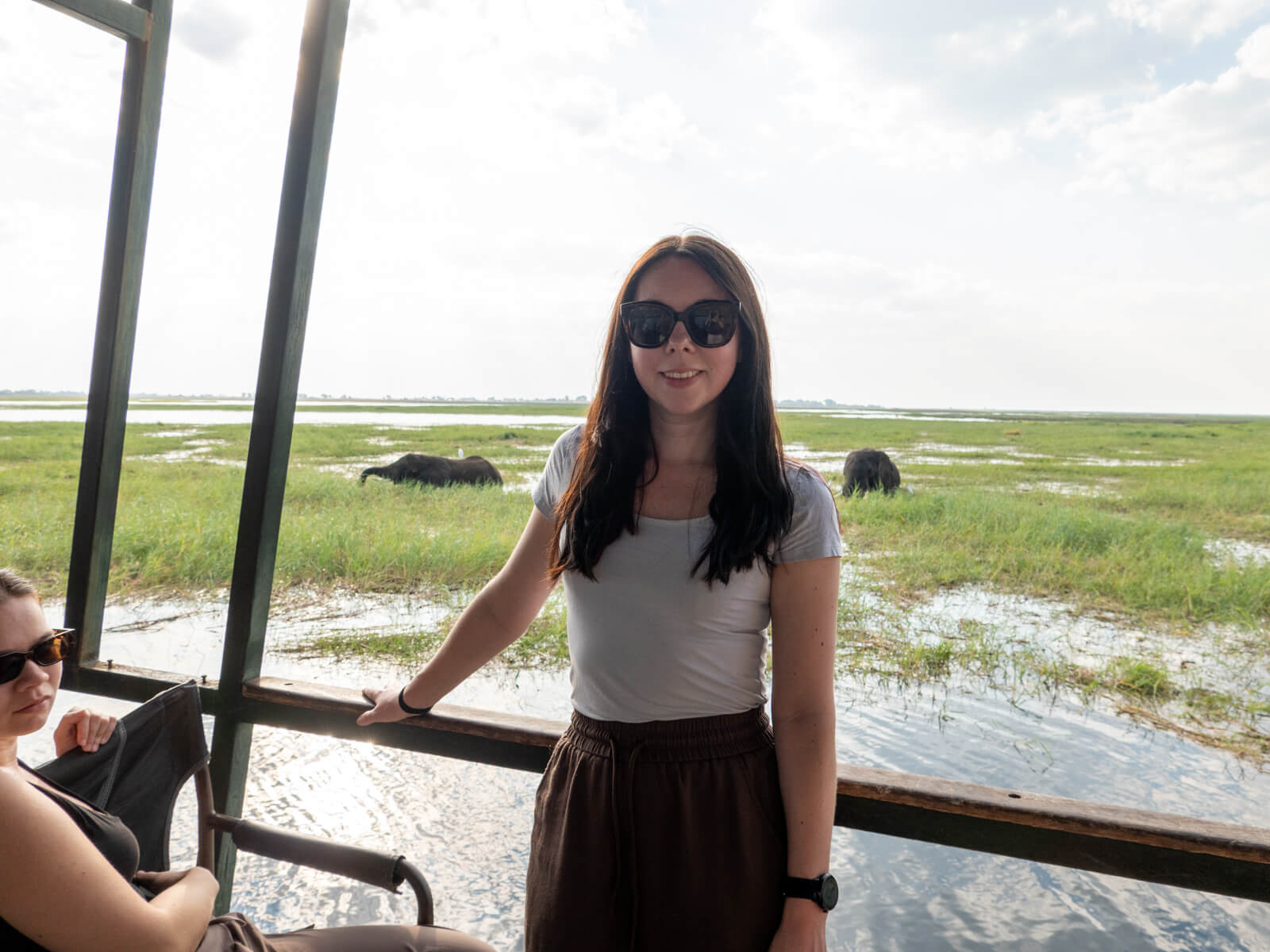
Chobe is particularly well known for elephants, and we saw plenty during our visit. Seriously, if you love elephants, you’ll love Chobe! We also saw a good variety of other wildlife here, such as giraffe, hyena, hippos, impala, and more.
The first half an hour in Chobe was quite fruitless, and I was beginning to feel quite disappointed that we hadn’t seen anything. Then all of a sudden, we entered this plains area where there was so much happening all at once. It got even better from here, as we drove towards the river where there was even more to see.
We also did a sunset cruise on the Chobe River, which I expected to be a nice evening but probably a bit sparse for wildlife. I was so wrong, though, as we saw elephants, crocodiles, hippos, buffalo, and more!
Between Chobe and the Okavango Delta, Botswana ended up being one of my favourite countries on this trip. I loved it so much, I wrote a whole blog post on why Botswana is so incredible.
Victoria Falls
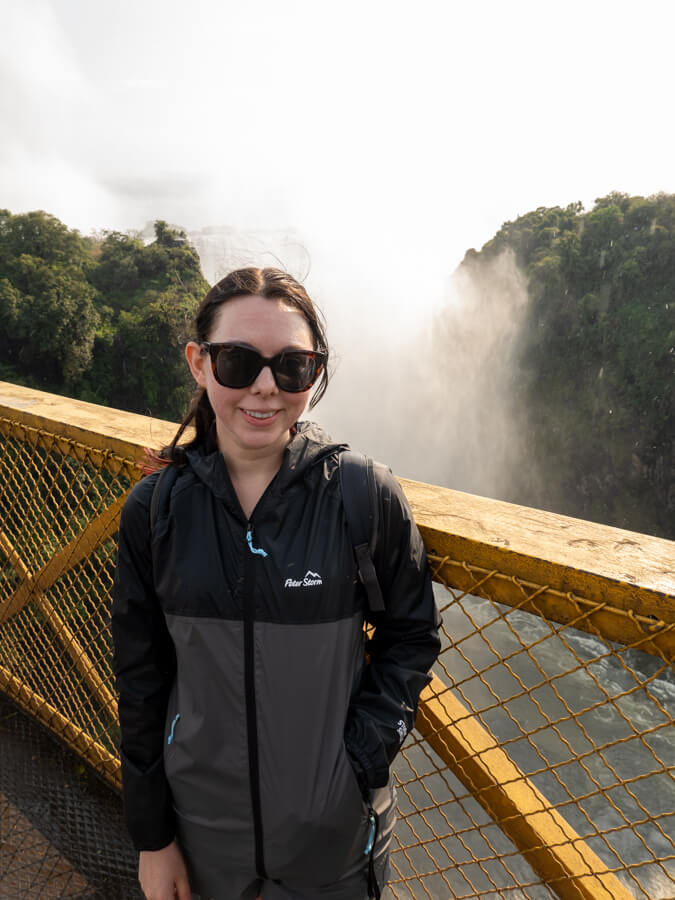
Victoria Falls was one of the highlights of the trip. As this is a large town rather than a national park, we were able to head out and explore on our own.
There’s a huge amount to do around Victoria Falls, from viewing the falls themselves to booking various adventure activities. People in my group did things like bungee jumping, helicopter rides, and white-water rafting. I’m not much of an adrenaline junkie, so three other members of the group and I decided to explore on foot.
We walked across Victoria Falls Bridge and over the border into Zambia, for no real reason other than to say we’d been there. The walk across was worth doing in itself, though, as the bridge has incredible views down into the gorge.
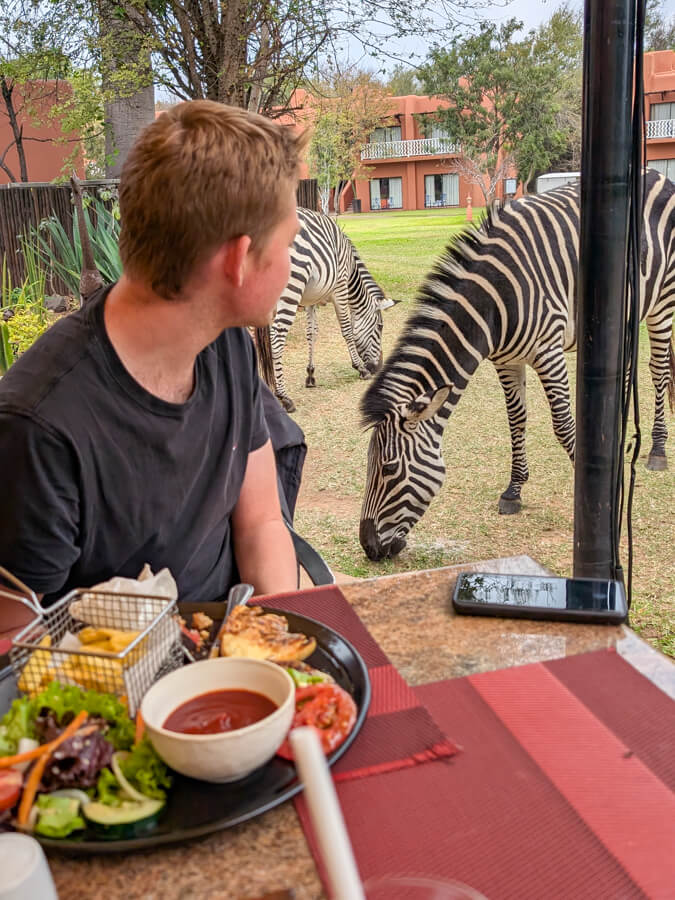
Once we reached Zambia, we decided to find somewhere for a drink and ended up at Avani Victoria Falls Resort. We’d barely sat down before spotting zebras grazing beside the swimming pool. Apparently, they just wander freely around the grounds! Of all the places I’d expected to see my first zebra in Africa, beside a hotel swimming pool wasn’t one of them.
Matobo National Park
The day we spent in Matobo National Park was my favourite day of the entire trip.
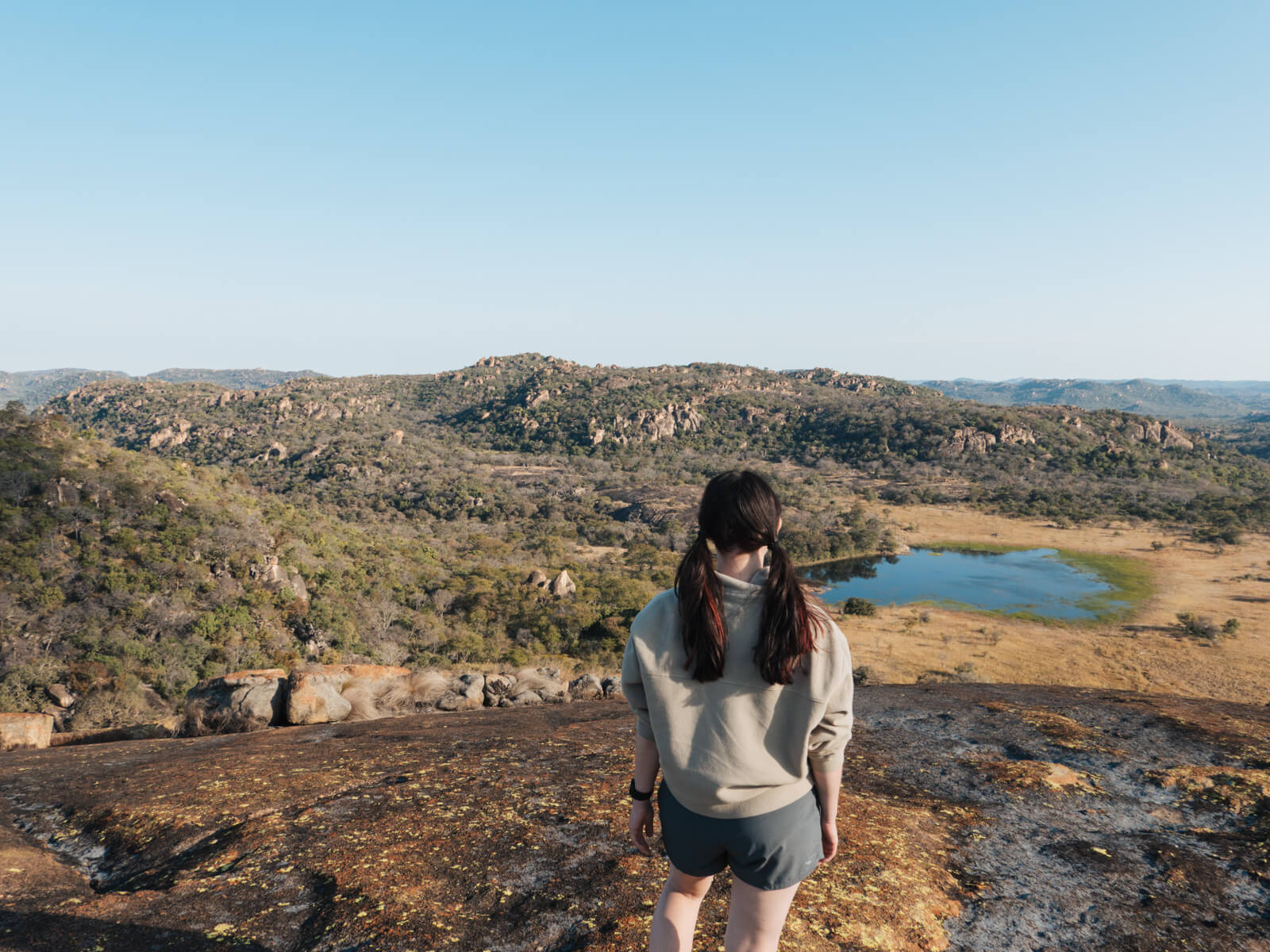
The landscape was unlike anywhere else we visited, with huge granite rock formations, open views, and some of the most beautiful scenery of the tour. Even without the wildlife, it would have been a memorable place to visit.
We spent the day with two local guides who took us around the park in jeeps, stopping periodically so we could get out and track rhinos on foot.
Seeing rhinos from a safari vehicle is impressive enough, but approaching them on foot felt much more intimate. The rhinos didn’t seem particularly bothered by our presence, although we, of course, kept our distance.
The guides also spoke to us about rhino conservation and the ongoing threat of poaching. Their passion was obvious, and you could tell how deeply they cared about the rhinos in the park. One of the guides in particular gave me David Attenborough vibes — he was just so interesting to listen to.
Later in the day, we hiked to a gorgeous viewpoint overlooking Matobo’s rocky landscape.
The combination of the scenery, rhino tracking, and time spent with the guides made this a real highlight. Several other people in the group also said it was their favourite day of the tour.
Kruger National Park
Kruger National Park was the clear wildlife highlight of the trip.
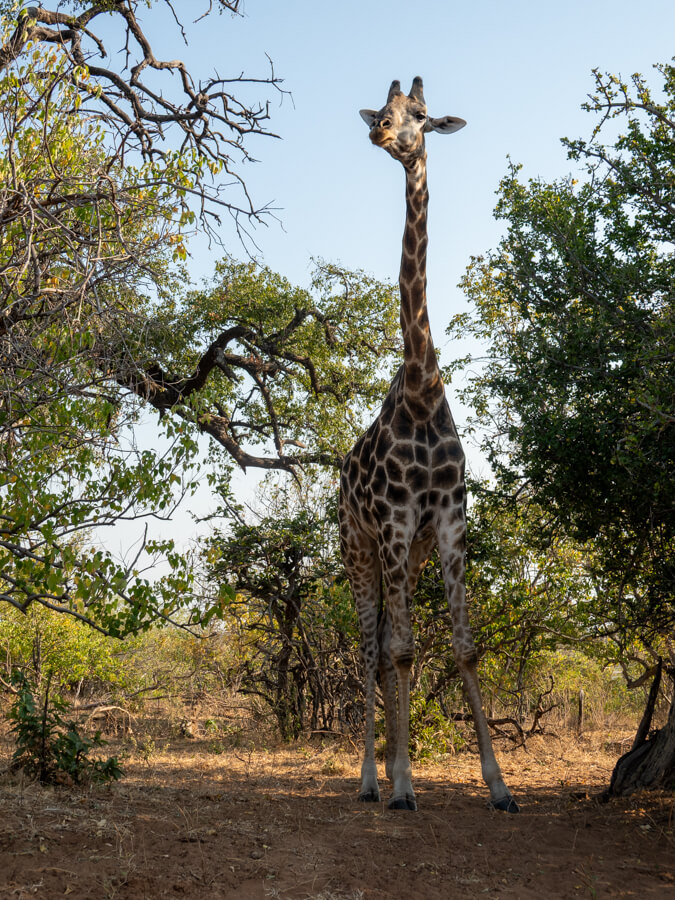
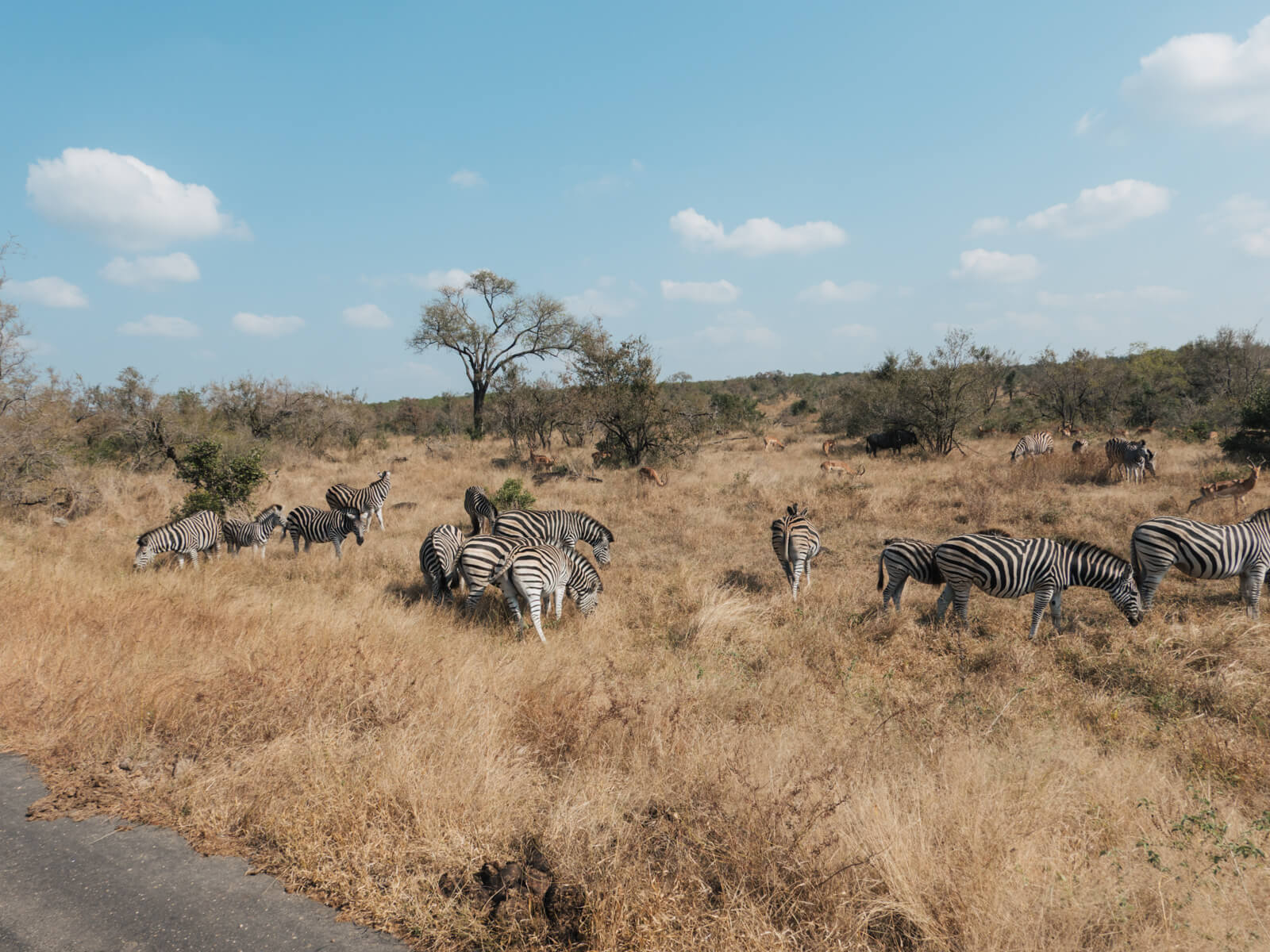
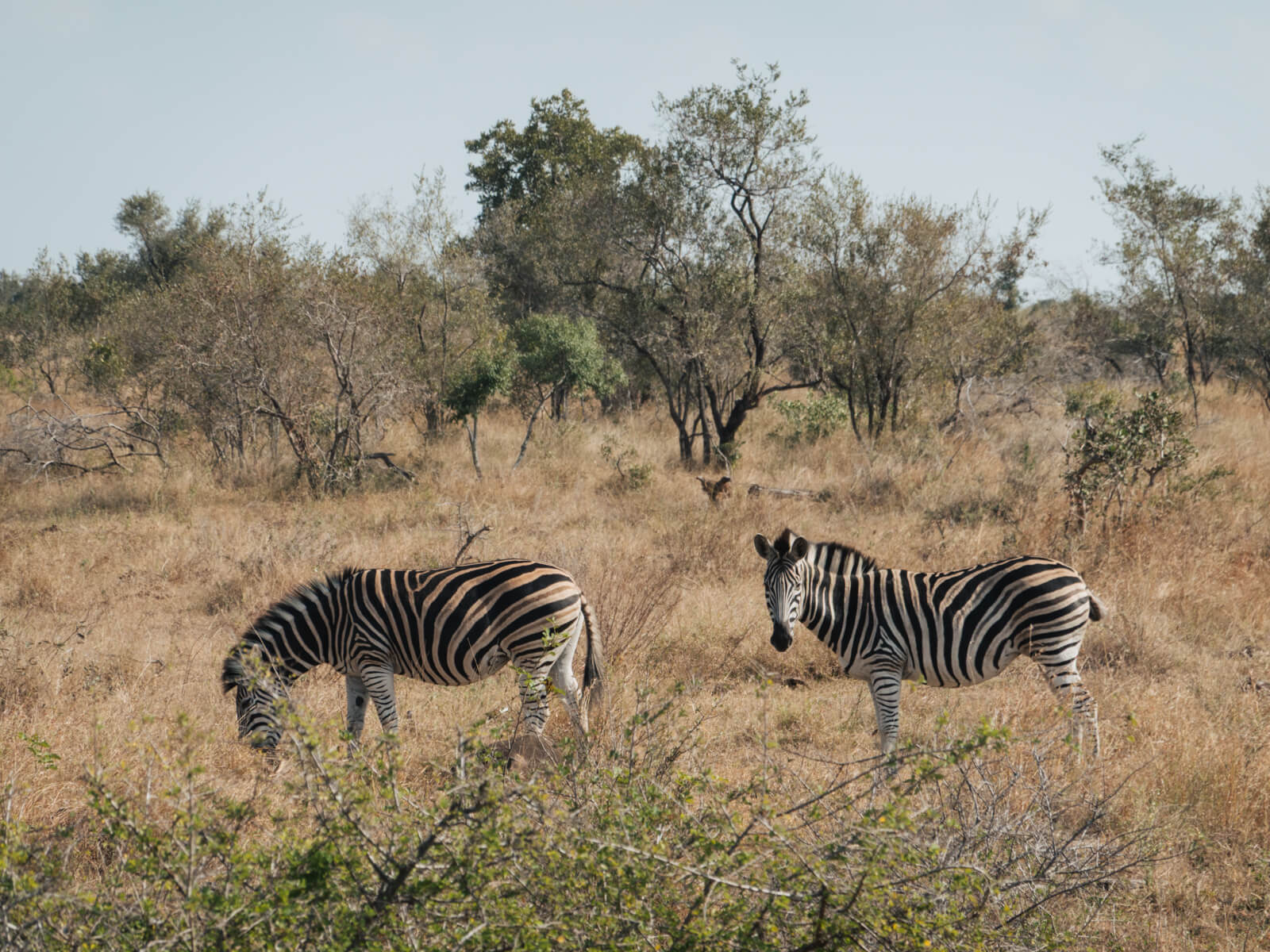
The sheer volume and variety of wildlife here was unmatched by anywhere else we visited. We saw all of the Big Five in Kruger, alongside zebras, impala, hyenas, crocodiles, giraffe, and plenty of other animals. There always seemed to be something happening, rather than long stretches of driving without a sighting.
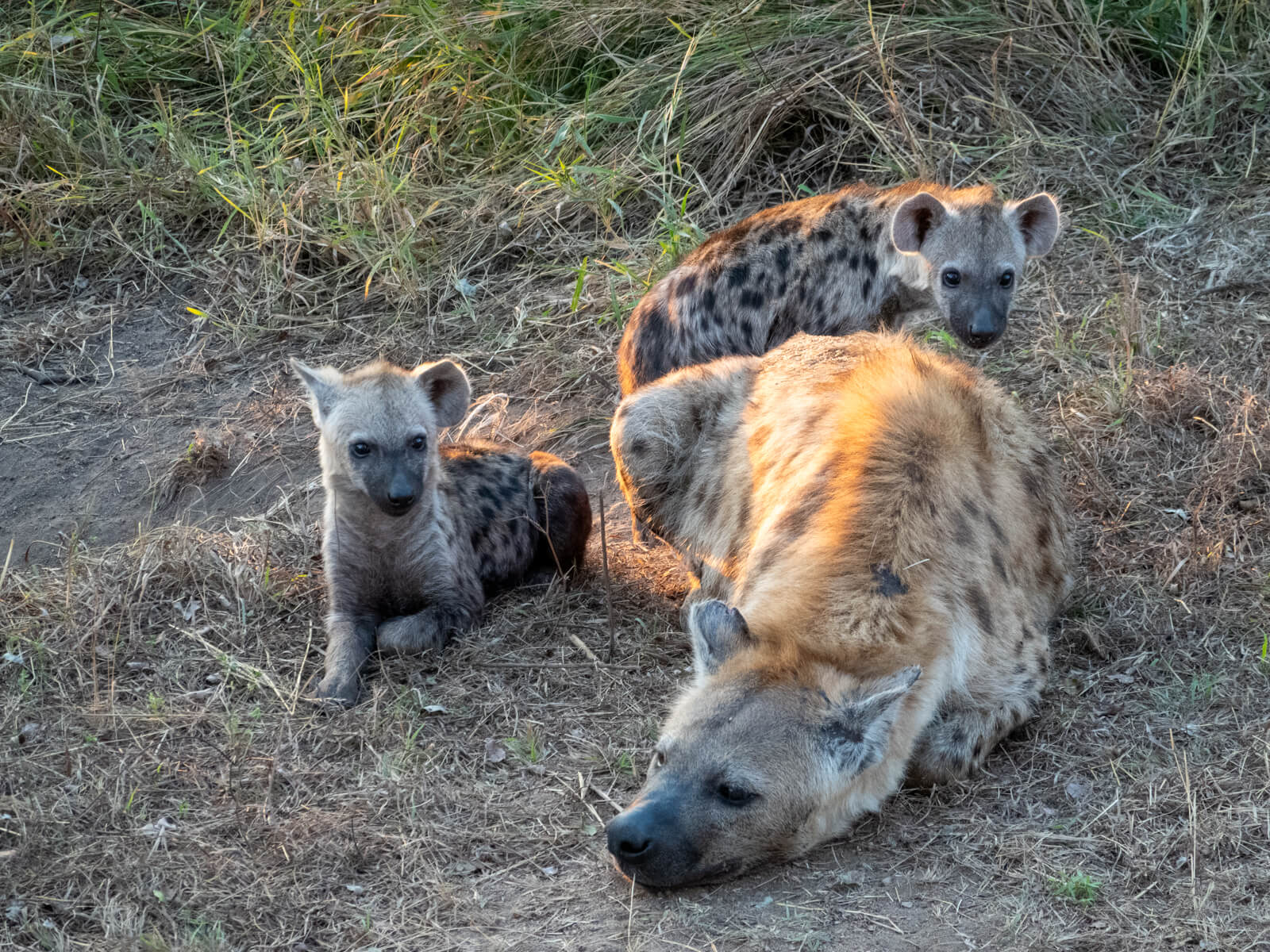
Our group also chose to book a night safari together, which wasn’t included in the tour. It turned out to be one of the best decisions we made. We saw three bachelor lions patrolling together, a leopard, hyena cubs, and more.
The full-day safari the following morning was just as good. We watched a lion chasing a zebra, and saw another leopard. We also saw huge numbers of elephants and zebras throughout the day.
Kruger felt noticeably richer in wildlife than the other parks on the itinerary. Matobo was my favourite day overall, but Kruger was easily the best destination for the quantity and variety of animals we saw.
What was the G Adventures Lando like?
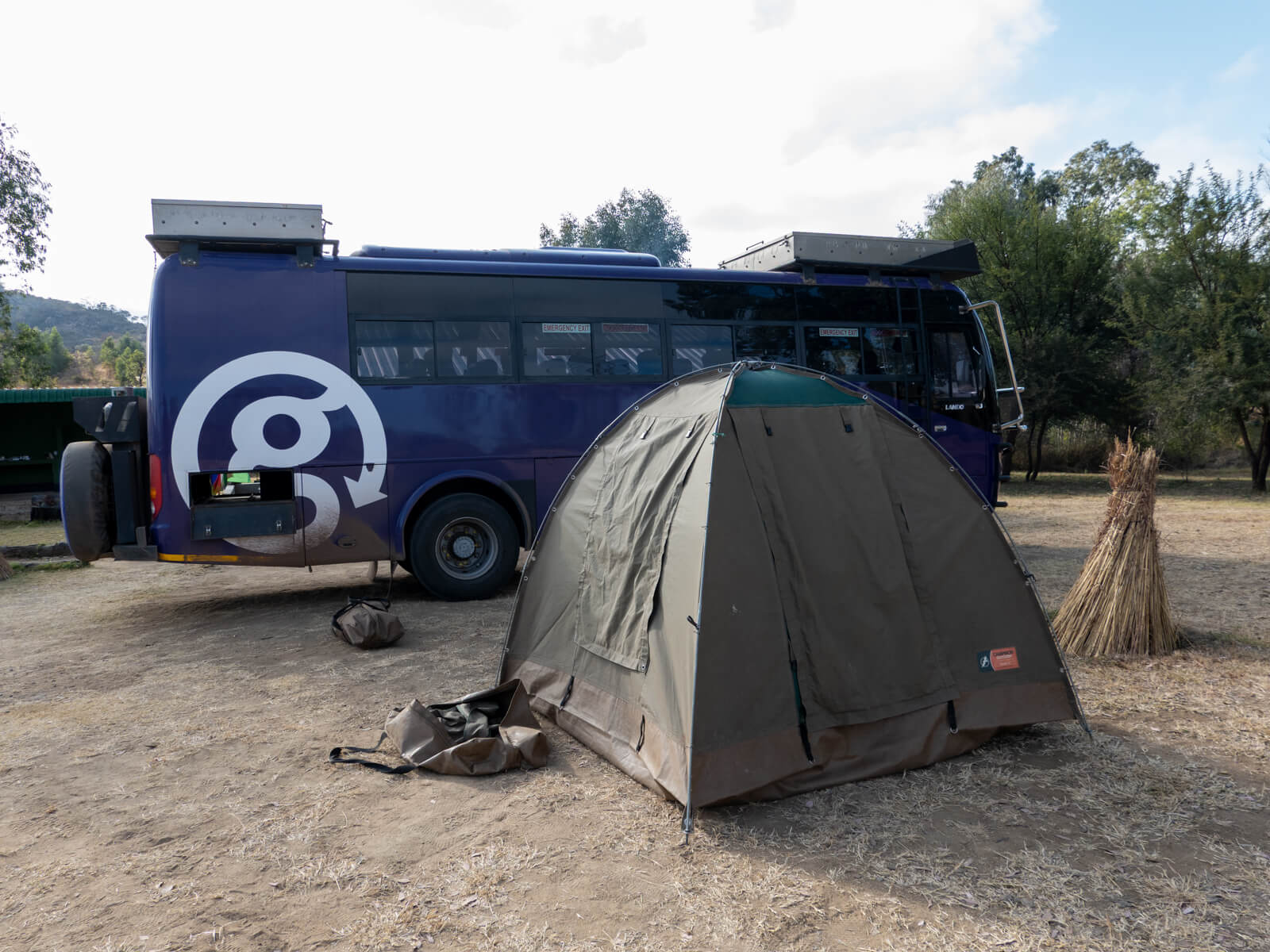
The Lando is G Adventures’ custom-built overland vehicle. It’s a big, purple truck that carries the group, luggage, tents, cooking equipment, food, drinking water, and pretty much everything else needed to keep the tour moving between campsites. I thought it was great!
Inside, there are individual seats for everyone, each with a USB charging port. Some of the driving days were very long, so I usually passed the time chatting, listening to music, looking out of the window, or attempting to sleep.
There was air conditioning, although its effectiveness left a little to be desired. We often relied on what we called “African air con,” which essentially just meant opening the windows. It worked okay when the truck was moving, although it also invited a fair amount of dust inside.
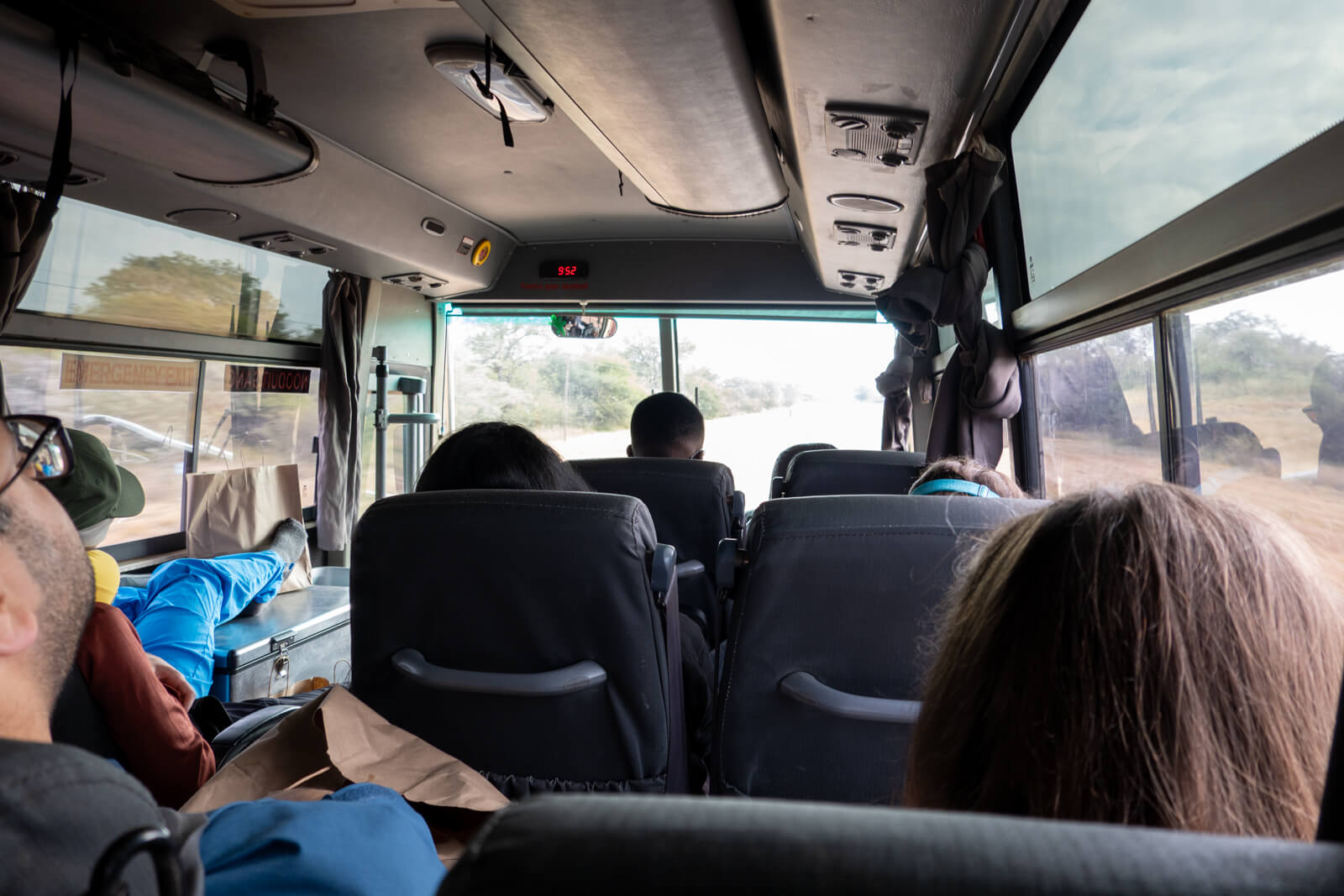
There was a larger charging station towards the back of the Lando for things like battery packs and cameras, which was useful when we were staying somewhere with limited electricity. The truck also carried a large tank of filtered drinking water, so we could refill our bottles throughout the trip rather than constantly buying plastic ones.
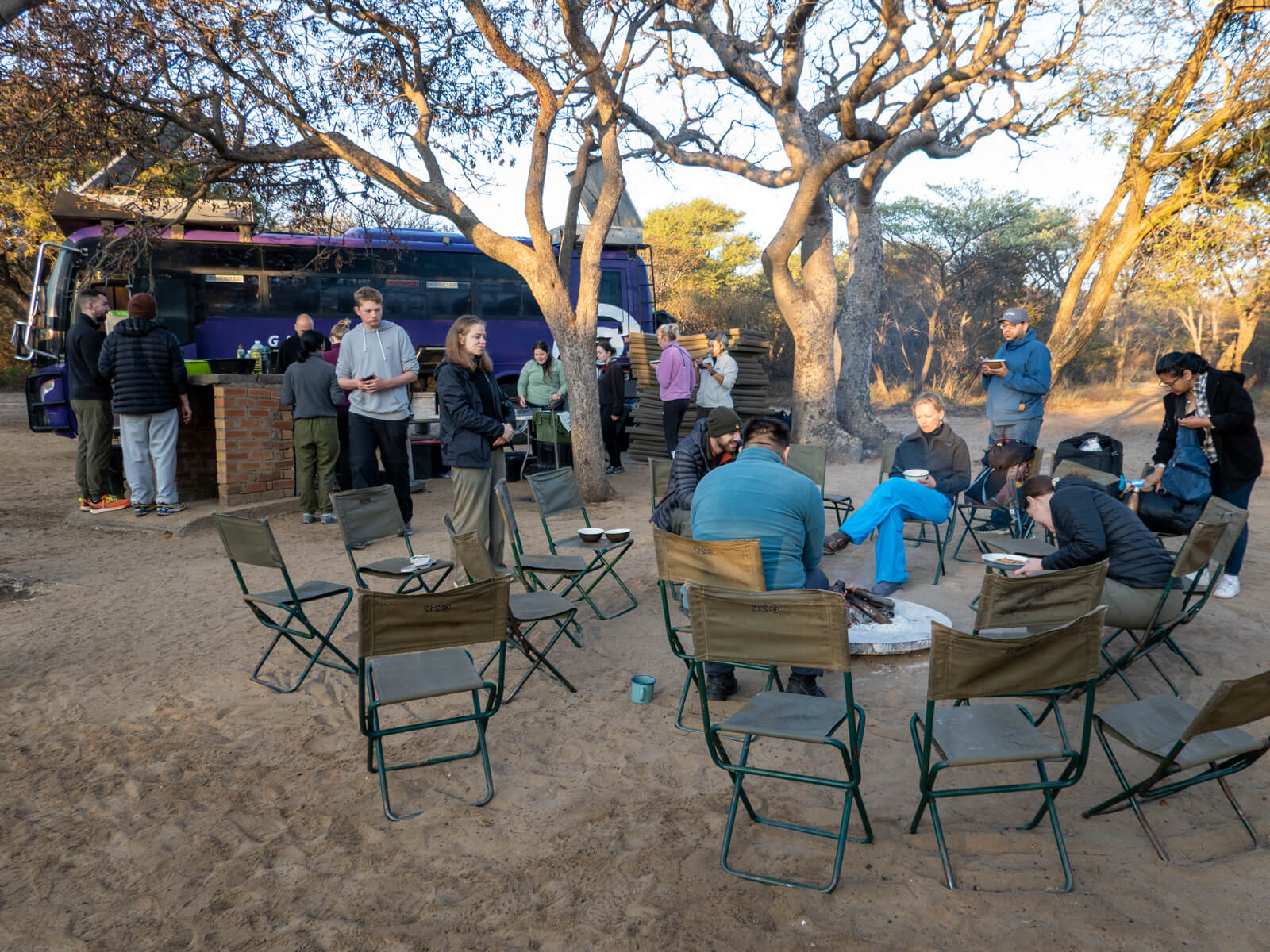
Underneath and around the seating area, there was enough storage for everyone’s luggage, alongside tents, camp chairs, food, fridges, cool boxes, and the rest of the group’s equipment. Each evening, we would unload what we needed, set up the tents, and arrange the chairs around the campfire.
The roads were generally better than I expected, although some sections were quite rough and bumpy. Regular stops were made for toilets, drinks, and snacks. When we were travelling through areas without any real facilities, we would stop for a “bushy bushy”, which is the polite overlanding term for hiding behind a bush to pee.
Despite the long journeys, I thought the Lando worked well. It was practical, spacious enough for the group, and equipped with everything we needed. The downside was not really the truck itself, but the unavoidable amount of time spent inside it. Covering three countries and several national parks in two weeks involves a lot of driving, however well-designed the vehicle.
What does participation camping actually involve?
Participation camping means everyone helps with the daily camp routine. When we arrived at a campsite, we would unload the Lando as a group, pitch the tents, and set out the chairs around the campfire. Then there was also a rota for cooking support, washing up, and cleaning the Lando.
Most of the duties only took around 15 to 20 minutes each day, so it wasn’t too annoying. The only time they became a little tiresome was when you were assigned to washing up after a three-course meal. (Most nights were not three course meals).
Still, I accepted the chores as part of being able to travel around Southern Africa without completely destroying my bank account. Everyone benefits from the lower price, so everyone should contribute. Don’t be the person who repeatedly tries to skive on their duties. People will notice.
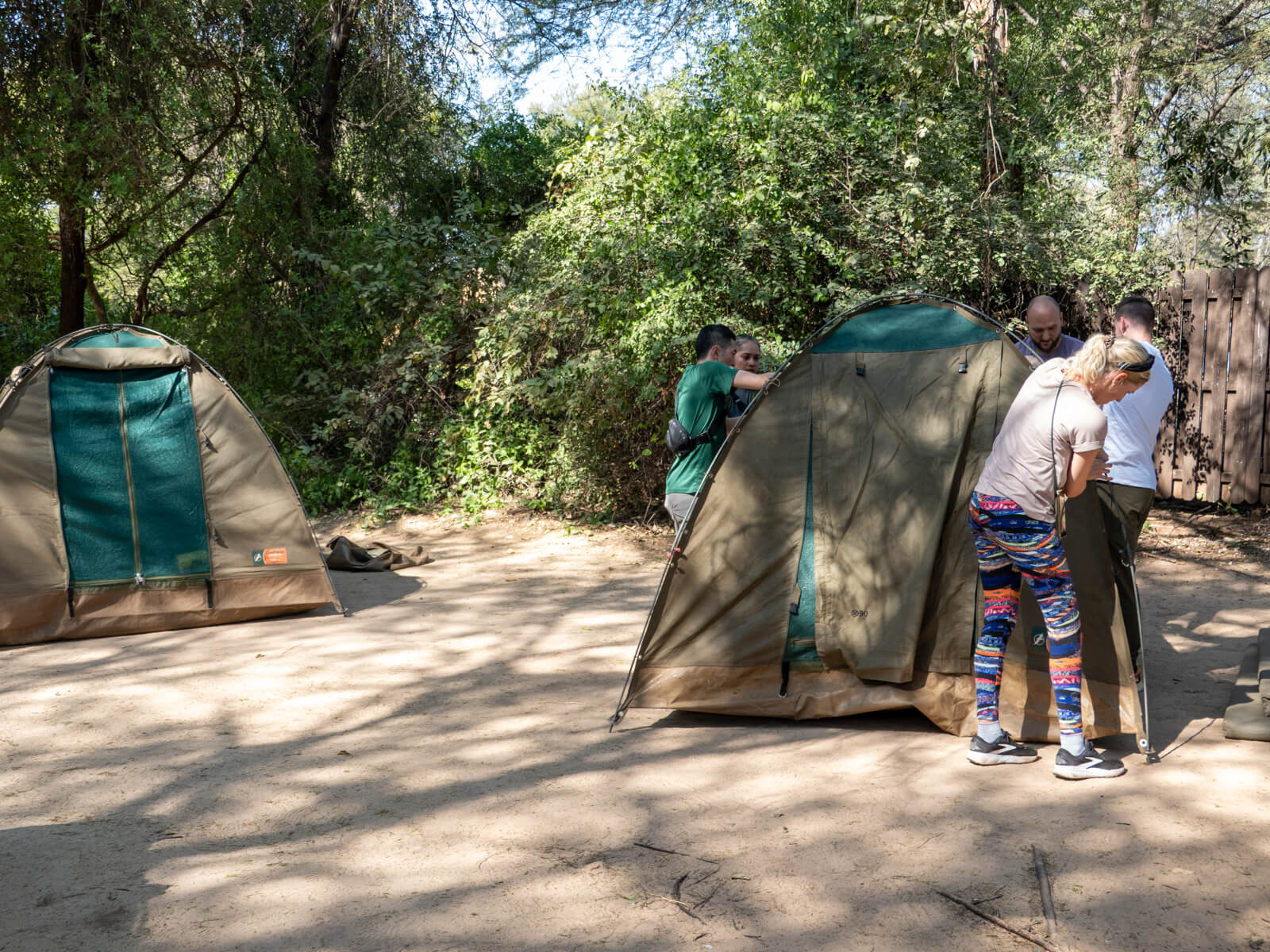
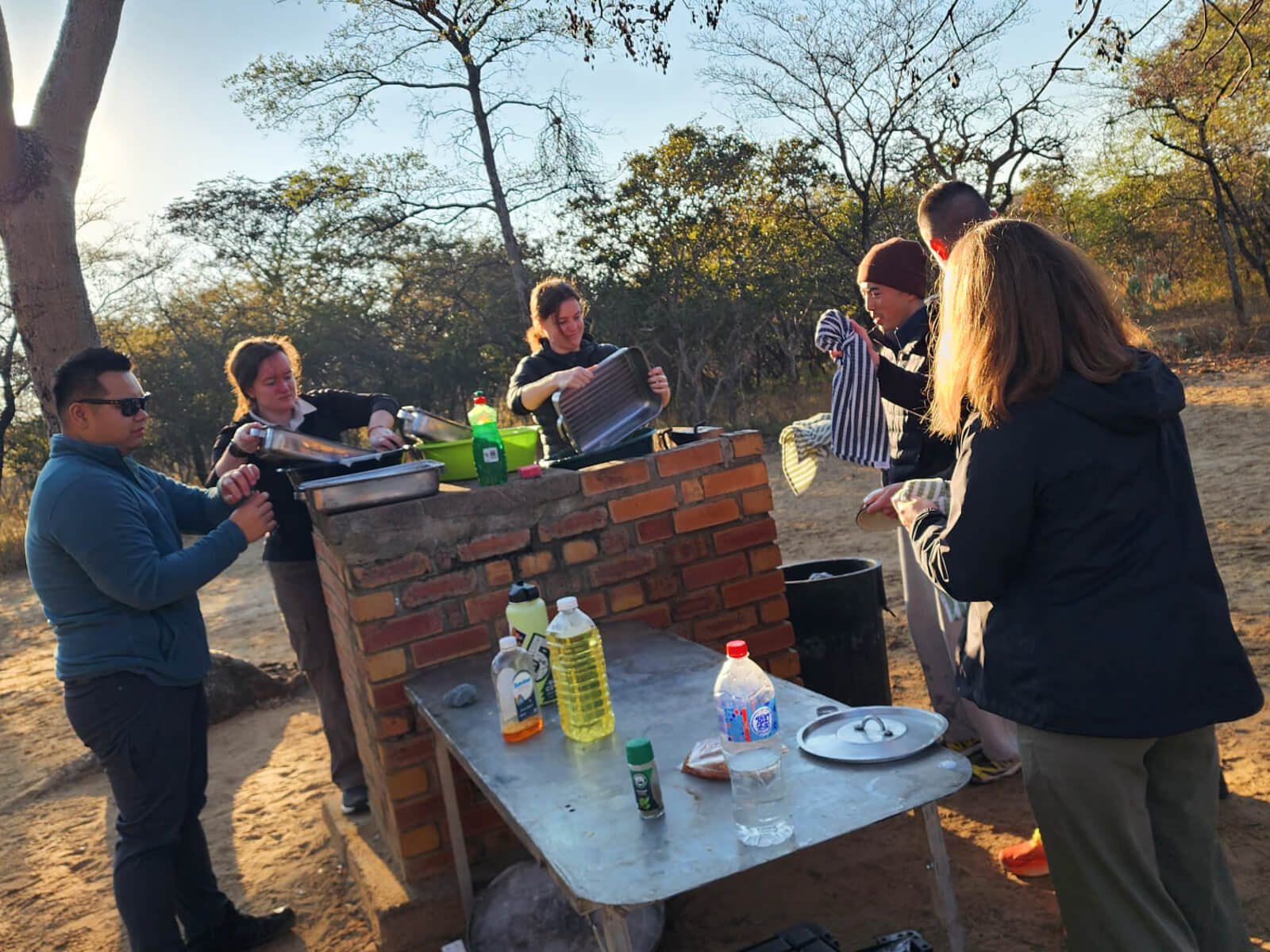
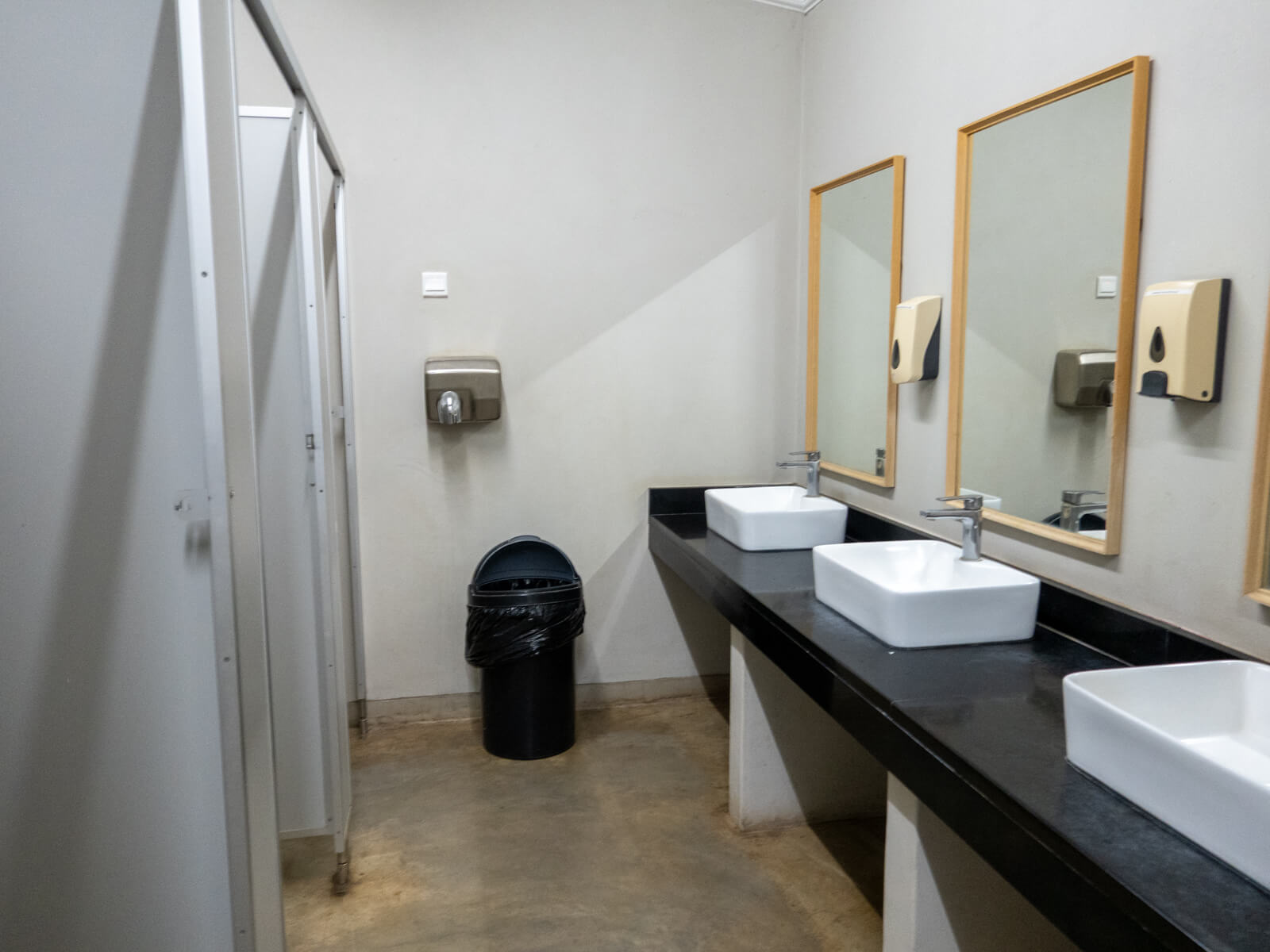
The camping itself was much more comfortable than I expected. I had expected basic bush camping, but most of the facilities were pretty decent. We stayed at campsites with toilets and shower blocks every night, and the showers were often hot, or at least lukewarm (although not always…). Many campsites also had electricity, Wi-Fi, bars, swimming pools, restaurants, and reception areas.
It’s worth adding, though, that I camp regularly and have done plenty of wild camping, so my tolerance for discomfort might be quite high. There were a couple of people in my group who did struggle a bit with the camping.
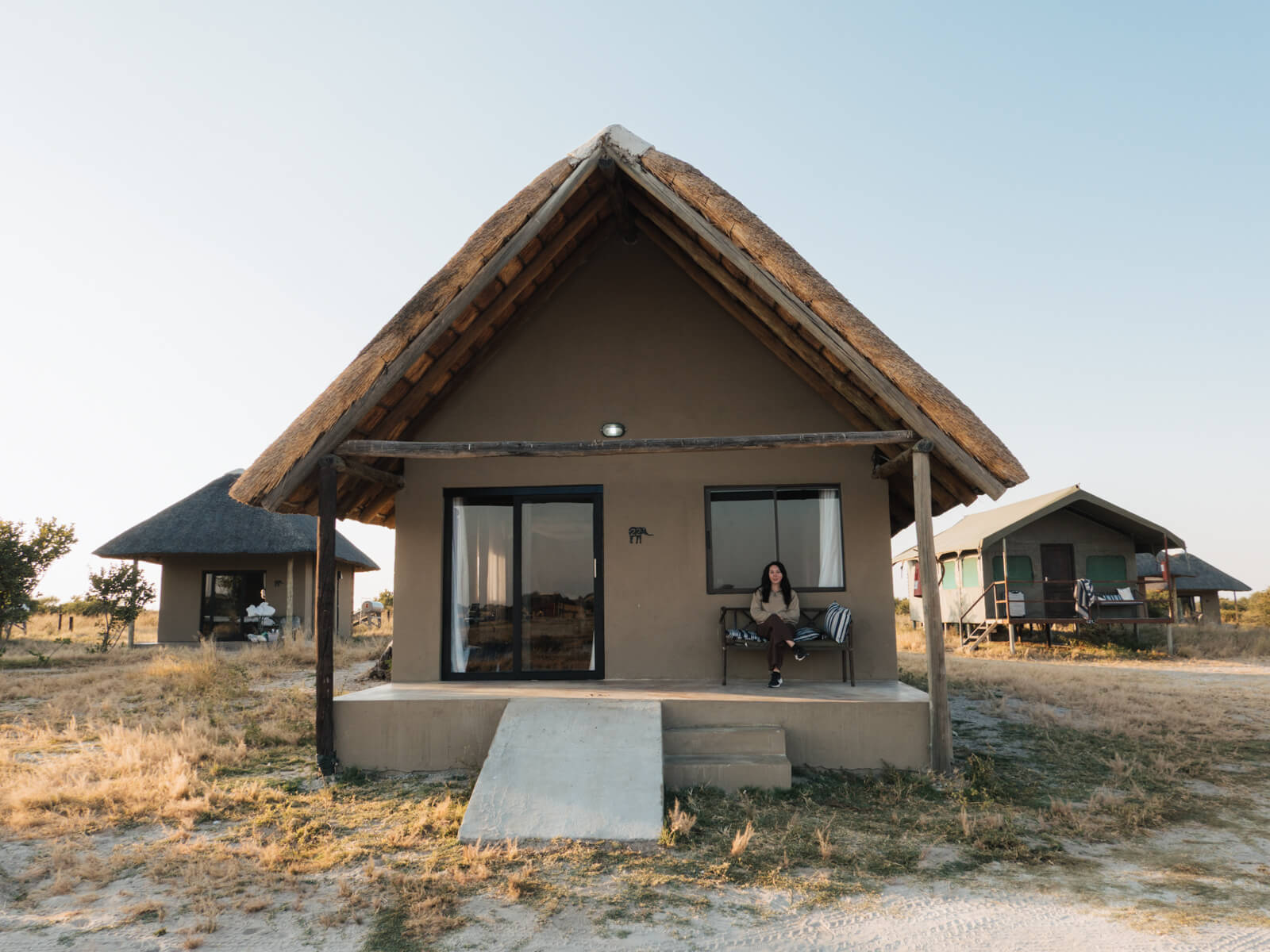
Most of the campsites also offered room upgrades, which you could pay for if you wanted a night away from the tent. A few people in our group upgraded almost every night, so the participation camping doesn’t necessarily mean you have to camp for the entire tour. Upgrading to rooms can add a fair amount to the overall cost, though.
What was the food like?
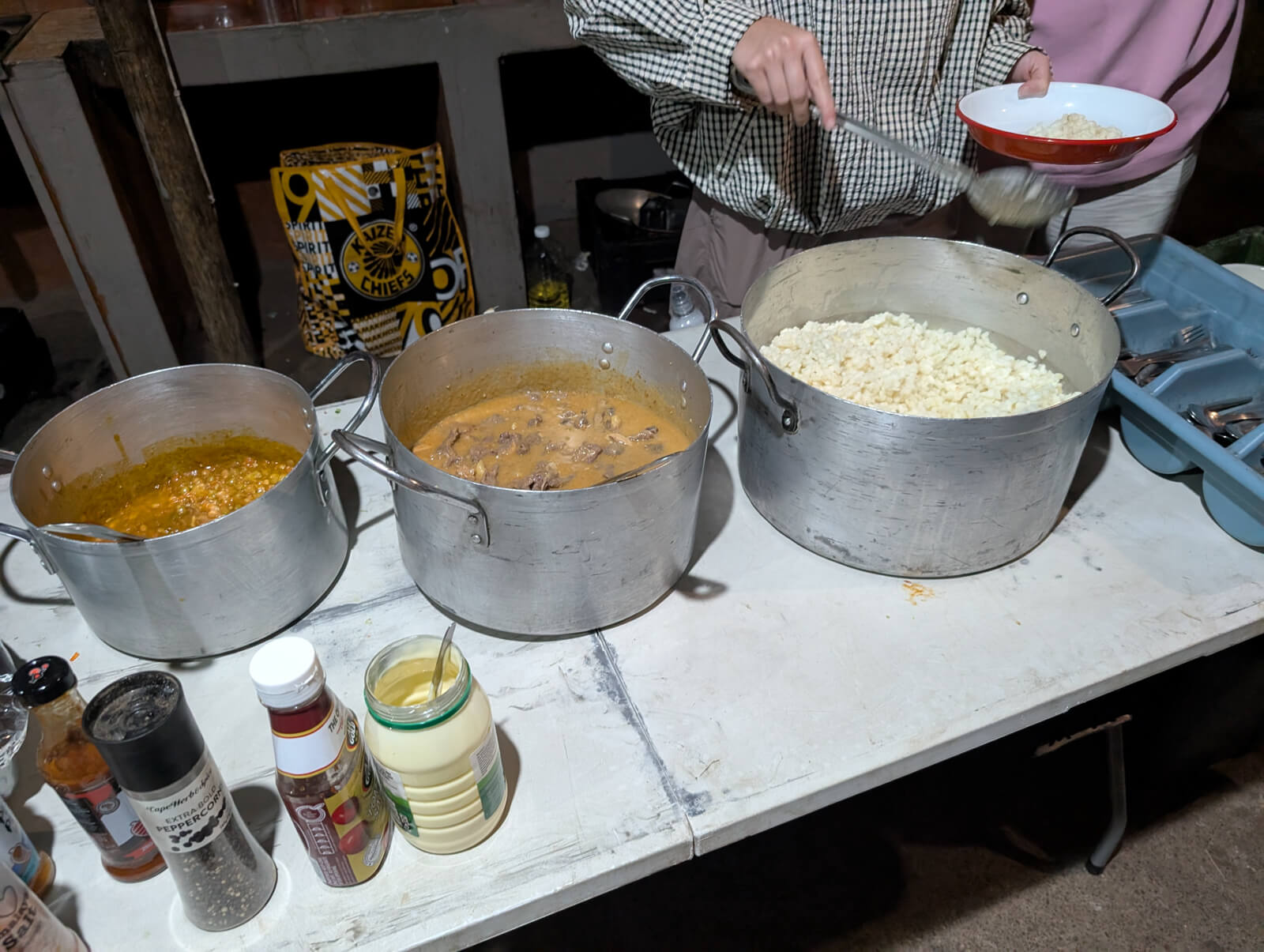
The food was decent, especially considering that most meals were being prepared for around 20 people at a campsite.
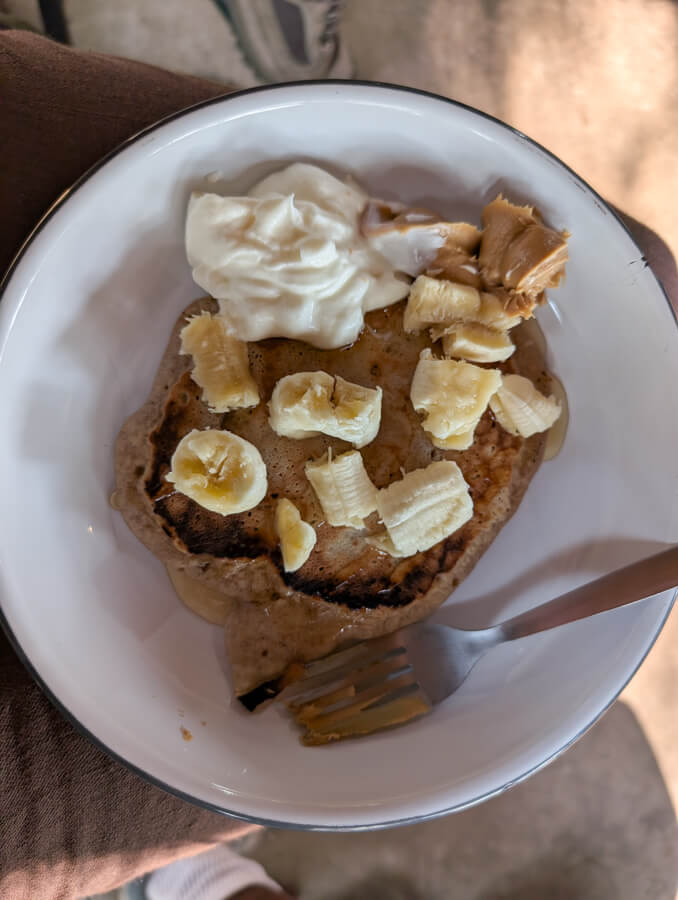
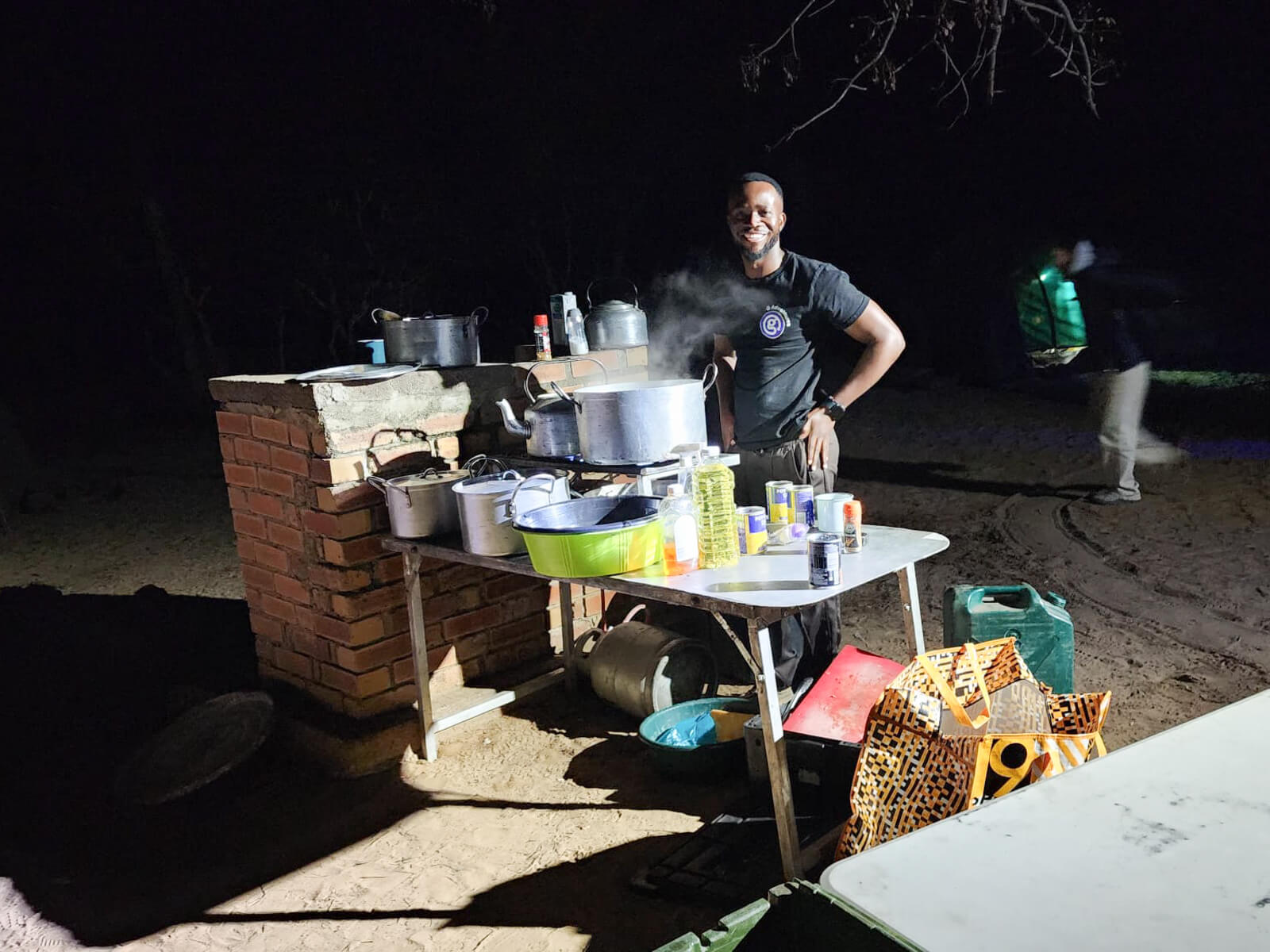
Our guides, Jerry and Evans, cooked many of our breakfasts and dinners at camp. Breakfast varied between oatmeal, toast, eggs, sausages, bacon, beans, and the occasional pancake or French toast. Tea, coffee, and hot chocolate were also provided, which was very welcomed after an early start.
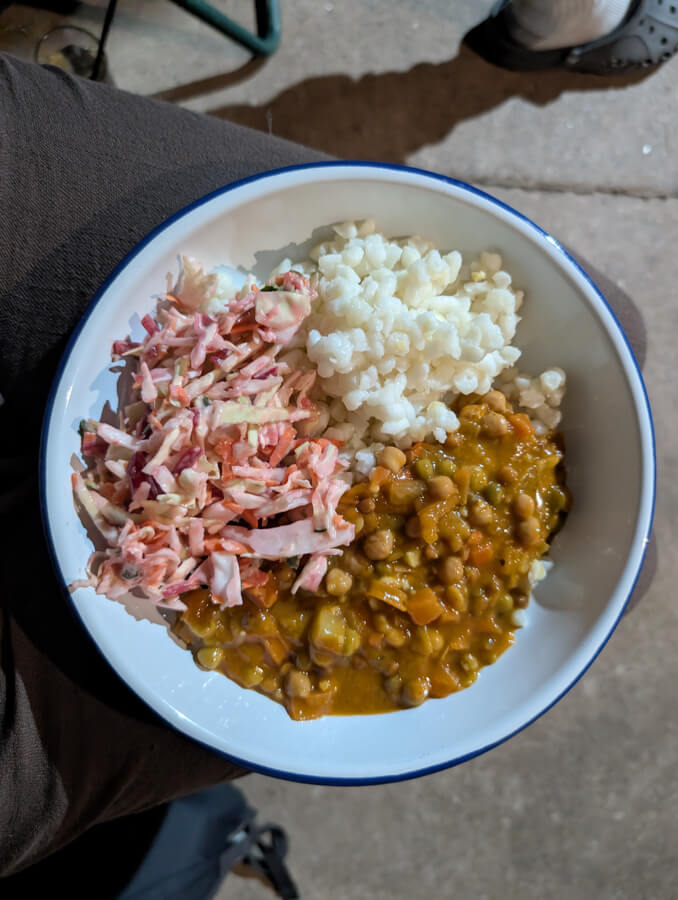
Dinner was usually something practical and filling, like curry, a pasta dish, or stew. The meals weren’t particularly fancy, but they were satisfying after a busy day. Some evenings we were treated to starters and desserts, too. This was great until you realised it was your turn to wash everything up.
We also occasionally ate at a campsite restaurant instead of cooking.
In the evenings, tea, coffee, and hot chocolate were available again, and we would sometimes roast marshmallows around the fire. It was a small detail, but it helped make the campsites feel sociable rather than simply somewhere to sleep before packing everything away the following morning.
On certain travel days, we were given money to buy our own lunch from a supermarket or restaurant. The allowance was quite generous, and I would usually get something like a wrap with fruit and a drink. Other people used theirs for McDonalds, KFC, or whatever else was available nearby.
What was the group like?
Sadly, the group dynamic was one of the weaker parts of the tour for me.
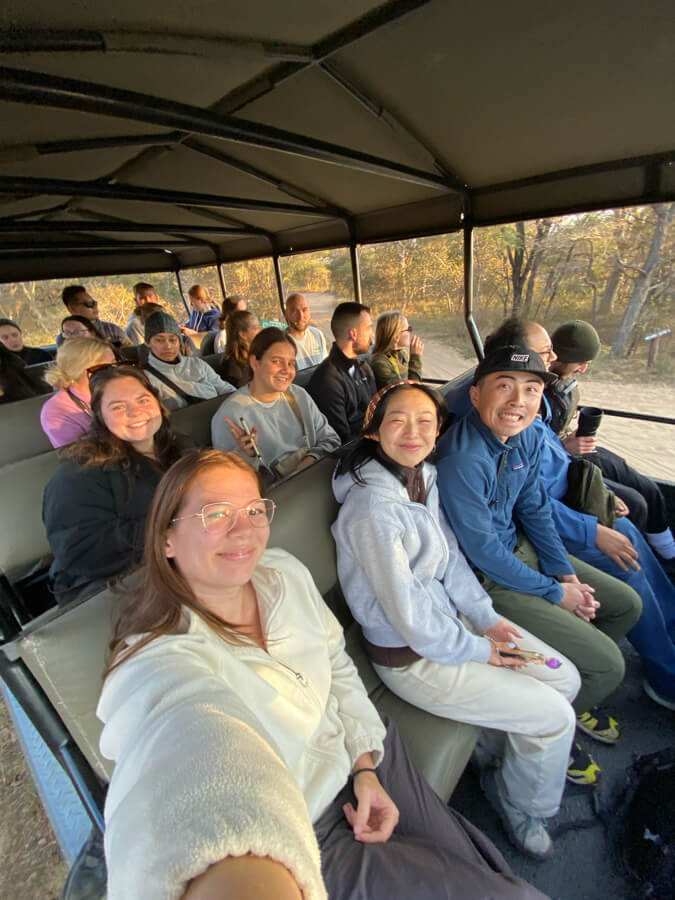
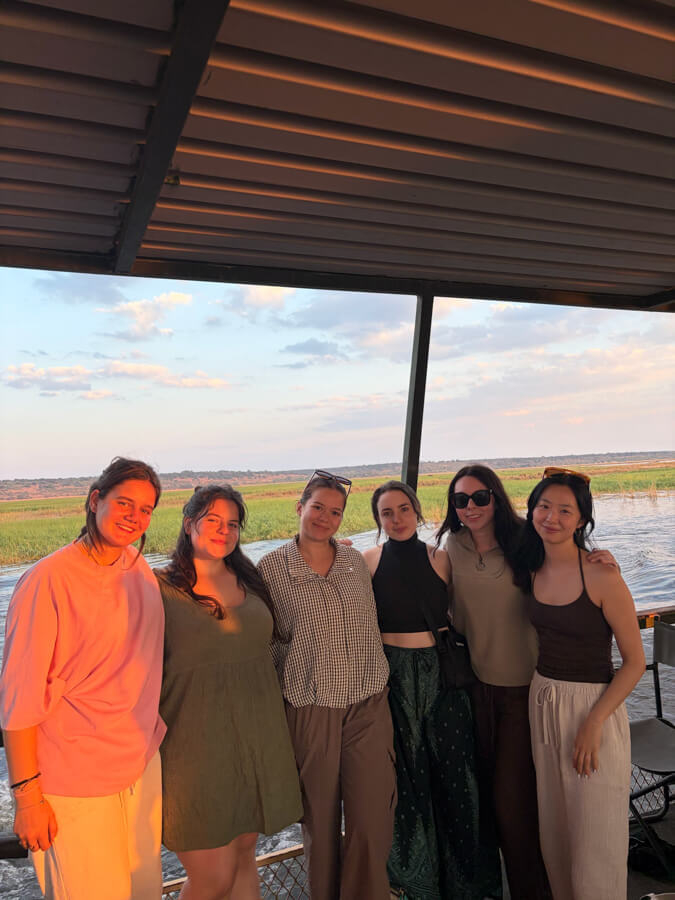
My group initially consisted of 22 people. It was myself and five other Brits, four Aussies, four Americans, three Canadians, three Germans, one Dutchie, and one Norwegian.
Most group trips I’ve taken have had a pretty easy, sociable atmosphere, where we’ve naturally mixed well and ended up becoming friends. This group felt more fragmented. There were plenty of people I really liked, but there was also some gossip and tension between certain members of the group, which made the atmosphere feel a bit awkward at times.
One person in particular seemed very keen to talk shit about other people behind their backs, which left a slightly sour taste in my mouth.
I think group dynamics matter more on an overland tour than they might on some other trips. You spend long days together on the Lando, share campsites, eat most meals as a group, and have limited opportunities to go off for some space. It’s difficult not to notice tensions.
Group dynamics are luck of the draw, though, so just because mine had some hostility at times, it doesn’t mean you’ll have the same.
Luckily, my tent mate was amazing. If you’re travelling solo, you’ll most likely be paired with someone of the same sex to share a tent with. Mine was from Canada, and she was really chilled and easy to talk to.
Also, one slightly unusual thing about Southern Africa Encompassed is that, although you book it as one 15-day trip, it’s essentially made up of two shorter G Adventures tours joined together. Victoria Falls is the changeover point between them, so the group can change halfway through.
When we reached Victoria Falls at the end of the first week, a few people finished their trip and headed home, while others continued on to different G Adventures tours in East Africa. Most of us stayed on for the second half of Southern Africa Encompassed, which eventually took us back to Johannesburg.
Four new people also joined the group in Victoria Falls for the second section of the trip. By that point, the rest of us had already spent a week travelling, camping, and eating together, so the changeover did shift the dynamic a little. It wasn’t a bad thing, but it’s worth being aware of.
What were the guides like?
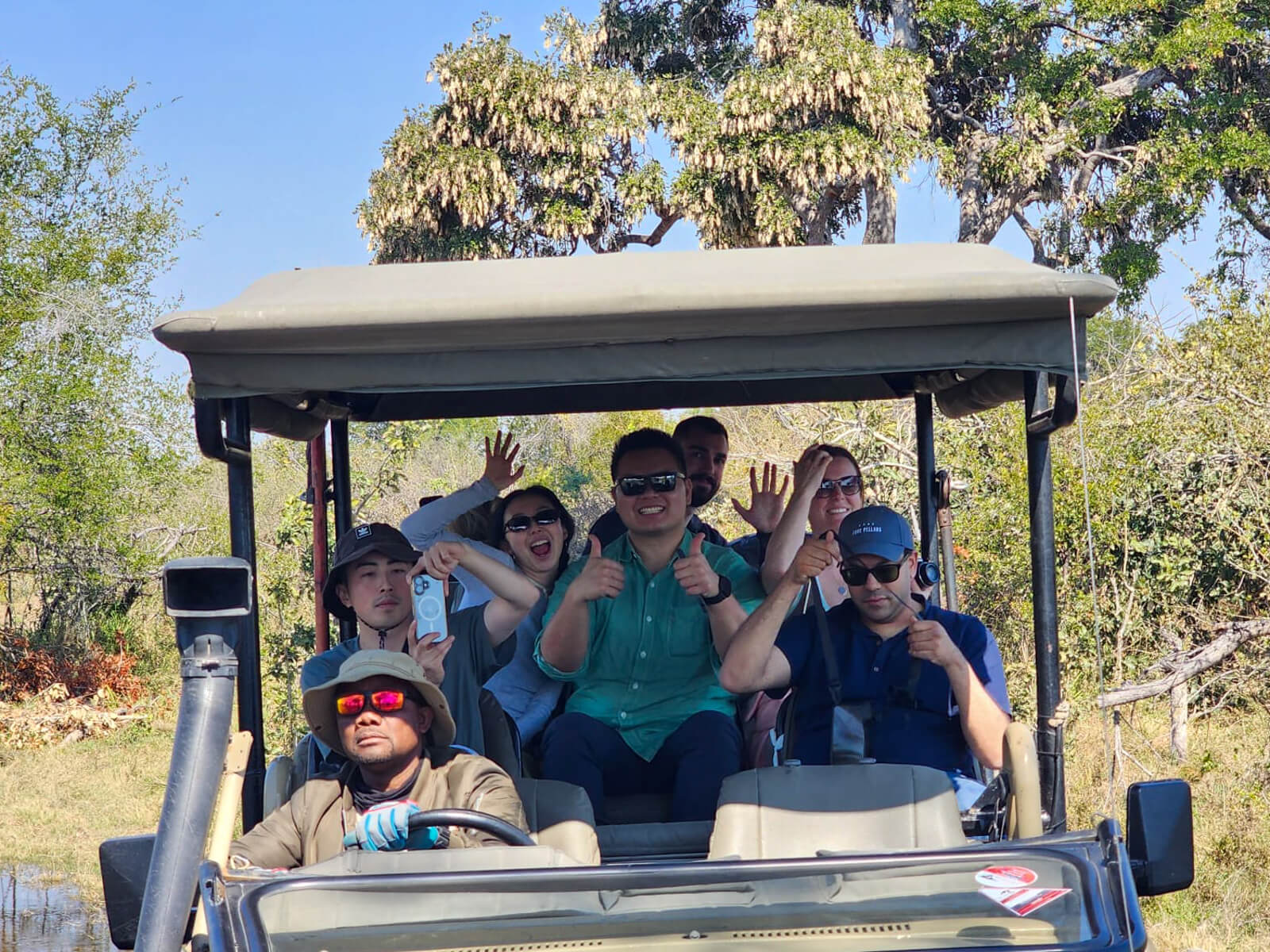
Our tour was led by two guides: Jerry, our driver, and Evans, our CEO (Chief Experience Officer). Both were fantastic!
Between them, they did far more than simply drive the Lando and tell us what time to meet each morning. They cooked many of our meals, helped organise camp, answered questions, explained the history and geography of the places we travelled through, kept the group entertained, and made sure the tour continued running smoothly.
Their working days must have been incredibly long. They were often awake before the rest of us, preparing breakfast for around 20 people before helping us pack up camp. Once we arrived at the next campsite, they would help unload the truck, organise the evening, and cook dinner before doing it all again the following morning.
Despite the early starts and long days, both Jerry and Evans were super positive and friendly throughout the tour. They were approachable, patient, and happy to answer our questions, even when they had probably already explained the same thing several times to several people.
How good were the wildlife experiences?
The wildlife experiences were the main reason I booked this tour, and damn, did they deliver! Each destination offered something different, but Kruger and Matobo were the clear highlights for me.
The sheer volume and variety of animals we saw in Kruger was unmatched by anywhere else on the trip. We saw all of the Big Five there, alongside large numbers of zebras, impala, giraffe, etc. There always seemed to be something happening. It was also the only place we saw big cats.
During our full-day game drive, we watched a lion chasing a zebra, saw a leopard, and saw incredible vistas filled with zebra, buffalo, impala, and giraffe all hanging out together. These were the sorts of sightings I had hoped for before the trip, but I had not expected to see so many of them in such a short space of time.
Our group also decided to book an additional night safari in Kruger, which was not included in the tour. It turned out to be one of the best decisions we made. We saw three bachelor lions patrolling together, another leopard, hyena cubs, and several nocturnal animals we wouldn’t have been likely to encounter during the day.
Matobo National Park stood out for different reasons. The number of animals was lower than in Kruger, but tracking rhinos on foot with our local guides was far more personal than watching them from a vehicle.
The two guides, both called Ian, also spoke openly about rhino conservation and the ongoing threat of poaching. Their connection to the rhinos was obvious, and their passion made the experience feel far more meaningful than simply ticking another animal off a list.
Overall, the tour offered an excellent variety of wildlife experiences. Kruger was the best destination for the sheer quantity and diversity of sightings, while Matobo provided the most distinctive and memorable day.
The Okavango Delta, Chobe, and Khama were also great places where we saw and experienced a lot, but Kruger and Matobo were definitely the winners for me.
How much did the tour really cost?
I paid approximately £1,600 for the 15-day Southern Africa Encompassed tour. My return flights from London to Johannesburg cost around £700, and my visa for Zimbabwe cost £50, bringing the basic cost of the trip to roughly £2,350 before optional activities and personal spending.
Some of the activities on the itinerary were optional, which allows travellers on a tighter budget to skip them if needed. I paid approximately:
- £30 for the Chobe game drive
- £18 for the Chobe sunset cruise
- £50 for the Kruger game drive
I spent another £150 or so on additional food, drinks, snacks, and other purchases during the trip.
Altogether, the trip cost me roughly £2,600, although this doesn’t include other expenses such as travel insurance or clothing I bought beforehand.
Considering that £2,600 covered return flights, transport through three countries, accommodation and meals, several national parks, and two weeks of wildlife experiences, I thought it was pretty good value.
You’ll definitely want to budget beyond the advertised tour price. Optional game drives and activities are a major part of the experience, and I wouldn’t have wanted to miss the Kruger or Chobe game drives simply because I’d only budgeted for the base tour.
| Expense | What I paid |
|---|---|
| G Adventures tour | £1,600 |
| Return flights from London | £700 |
| Zimbabwe visa | £50 |
| Chobe game drive | £30 |
| Chobe sunset cruise | £18 |
| Kruger game drive | £50 |
| Other food, drinks, and spending | £150 |
| Approximate total | £2,600 |
🐘 Interested in this tour? Check current prices.
Is the tour right for you?
This tour is a great choice if you want to see lots of wildlife, visit several countries, and avoid the hassle of organising a complicated overland route yourself.
I think it’s particularly well suited to first-time safari travellers. The itinerary gives you a broad introduction to several different parks and wildlife experiences. For my first visit to Southern Africa, I appreciated having such a variety of things to see.
It’s also a good option for solo travellers, as you join a group of like-minded people who you can share the experience with.
The tour will probably suit you if:
- Wildlife is the main reason you want to visit Southern Africa
- You are happy camping for most of the trip
- You enjoy sociable group travel
- You want someone else to handle transport, campsites, border crossings, and park logistics
- You are comfortable with early starts
- You don’t mind helping with camp duties
- You want to visit several destinations without paying luxury safari prices
- You can tolerate long days on the road
However, I would think carefully before booking if you really hate long journeys. Some days involved really long days of driving. This was the biggest downside of the tour for me.
The trip would also be a poor fit if you’re looking for a relaxing holiday. The itinerary is packed. There were quite a lot of early mornings, either to begin a long driving day, pack up camp, cross a border, or make the most of dawn (when many animals are active) for a game drive.
To be fair, I am quite a good morning person and generally don’t mind getting up early. But because I was in Africa during the winter, some mornings were pretty cold. Packing up a tent in the dark when it’s cold and damp from dew is not really a vibe.
For me personally, the amazing wildlife encounters completely made up for the downsides.
Final verdict: Is Southern Africa Encompassed worth it?
Yes, this trip is absolutely worth it!
The tour delivered exactly what I had hoped for: a huge variety of wildlife experiences across Southern Africa. And I was able to experience it all in a relatively affordable way without having to deal with the complicated logistics myself.
Southern Africa Encompassed is not a luxury safari, nor is it a particularly restful holiday. It’s busy, sociable, occasionally tiring, and packed with activities. For me, that was exactly the point, and I came home feeling that I had seen an incredible amount for the money I spent.
🐘 Ready to travel around Southern Africa with G Adventures? Book your spot!
Thank you for reading! If you found this post useful, I’d be grateful if you would consider using the affiliate links below when planning your travels. I’ll make a small commission at no extra cost to you. This will help me to keep this blog running. Thanks for your support — Lauren.
Accommodation – Booking.com
Flights – Booking.com
Travel insurance – World Nomads
Excursions & tours – Viator
Outdoor gear – Decathlon
eSIMs – Airalo
Alternatively, you could buy me a coffee to say thanks!


About The Author
Lauren Pears is a freelance travel writer and blogger who writes about active adventure travel. She’s been blogging for almost 10 years, and has written for publications such as Lonely Planet, World Nomads, and Southeast Asia Backpacker.
